
What would you ask 100+ of the world's best sustainable tourism leaders next?
Do you ever read something on LinkedIn and think, ‘Nice little post you’ve got there, but I know what you are. You’re AI in disguise and you can’t fool me!’?
This is what we’re up against now. It’s becoming really, really tough to distinguish what’s real online. But the problem is not people using AI. Not everything written with AI is soulless, and not all soulless writing is written by AI. The problem is when we start reading something thinking it was crafted with human care, only to realise that AI has had a very heavy hand, and we don’t know if we can trust it anymore.
We can’t claim to have all the answers but to start, we’re setting expectations for our readers upfront. This edition of our newsletter was lovingly written and edited by humans.
Now do us a favour and read it to the end since we poured our blood, sweat and tears into it! We’ve even added a bonus answer.
This month, we asked our community:
Suppliers (from farmers to wine merchants, ground transport services to in-destination experiences) are critical to tourism. But engaging them in your sustainability journey isn’t always easy. How do you bring them closer to your 4C vision and engage them meaningfully in your journey?
Here are four rich and insightful answers, from Ecuador to Nepal:
“Forging relationships with local suppliers is fundamental. As a company, we can’t live in a bubble.”

Carolina Mosquera
We bring suppliers into our 4C vision through education.
Ecuador is a developing country and the people who work for us work extremely hard to support themselves and their families. They don’t have the mental room to think about sustainability, much less to think about how, through their work, they could help others who are in need.
So it’s important that we set rules that others have to comply with, and that we help them understand why these rules exist.
Forging relationships with local suppliers is fundamental. Our company can’t live in a bubble. If we treat our surroundings poorly, it has a tremendous negative effect on our company.
Our employees are based in Ecuador and we constantly ask them how they’re building relationships with local suppliers because they’re the ones representing the company. Our employees already have economic stability in their lives, and they are the ones in a position to work for the people in their community who need it.
“Food is always a great hook to ensure attendance in a country where the equivalent of ‘Good Morning’ is ‘Have you eaten!’”

Marcus Cotton
Managing Director
Tiger Mountain Pokhara Lodge, member since 2022
On the lunch he wishes he’d hosted 10 years ago
For years we didn’t deal with supply chain at all. It was too difficult, too complicated. The biggest issue in Nepal was what I call industrial espionage: everyone’s thinking, ‘why do you want this information?’
I had a colleague who ran a dairy in Pokhara. I’d known him for years, we used to meet for coffees. He wouldn’t let me into the dairy to see it, to understand it. We knew the dairy was clean and hygienic, so it wasn’t that he was hiding a little monster. He just would not do it, because he was sure in his own heart that we were out to get him in some way.
So we called all our suppliers, ostensibly for a nice thank-you lunch up at the lodge. Food is always a great hook to ensure attendance in a country where the equivalent of Good Morning is “Have you eaten!” Everyone turned up, including a few suppliers we didn’t know we had, because they had brought their friends along.
Once they were safely tucking into their rice and curry, I started to talk about why we do things the way we do. Then I gave them a challenge. Our beer arrives in mini crates with shrink wrap over the top: totally unnecessary, totally unrecyclable. The supplier isn’t responsible for that. So I said: “Do you know the distributor? Introduce us. Not so we can cut you out. We want to get to the brewery so we can locate the plastic source and change it.”
The trick is to forge a real partnership with your suppliers. And people really took it on board. Before I knew it, the thing had changed from a nice lunch into a seminar on how we can get rid of plastic. I feel a bit of an imbecile for not doing this ten years ago!
“By choosing to serve and talk about local wines and spirits, we give smaller producers exposure to a new audience while giving guests a much stronger sense of place.”
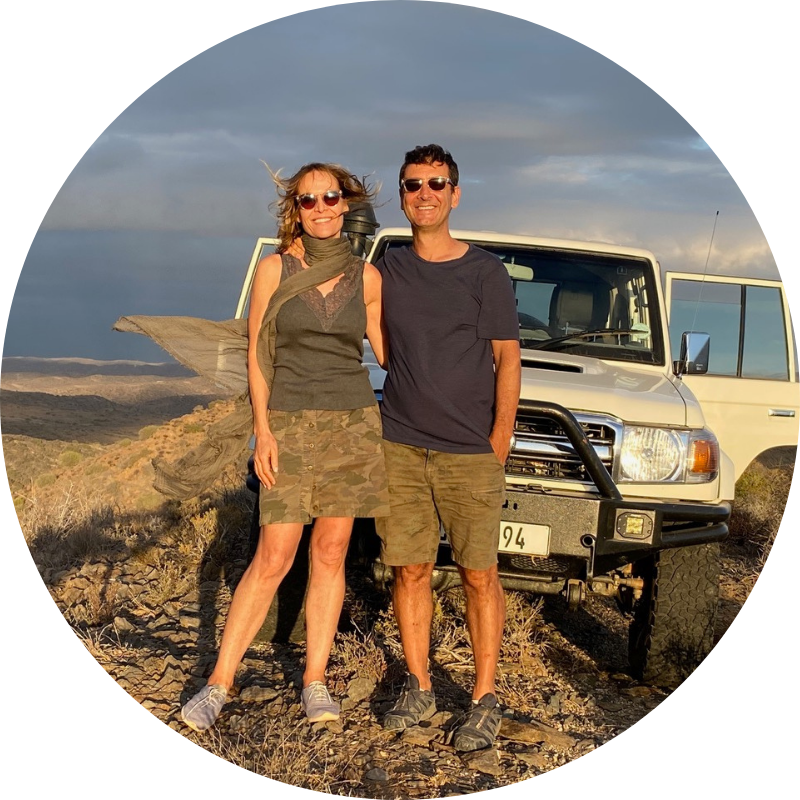
Nico & Koemie Marais
A simple, good example is our decision to change the Aardvark Bioreserve wine and spirits list so that it focuses exclusively on producers from the Klein Karoo (wine list here).
Our international guests often know the great wine regions of Stellenbosch and Franschhoek, but very few arrive knowing the small, distinctive producers of our own region. By choosing to serve and talk about these local wines and spirits, we give smaller producers exposure to a new audience while giving guests a much stronger sense of place.
For us, this is where the relationship begins. A purchasing decision creates a conversation; the conversation creates a relationship; and that relationship gives us an opportunity to talk about what responsible, conservation-led tourism can look like in the Klein Karoo.
“At Singita, we invite suppliers to participate in community initiatives with us.”

Dr. Andrea Ferry
Sustainability LEAD
Singita, group member since 2024
On INVITING SUPPLIERS TO JOIN IN ON COMMUNITY INITIATIVES
Our approach comes down to three things:
Provide guidance. We have a ‘Suppliers’ Guide to Sustainability’ available for download from our supplier portal.
Invite suppliers to our properties and discuss our conservation mission (where possible)
Invite suppliers to participate in community initiatives with us. For example, in South Africa, our food providers make the delivery of resources whenever we have an early childhood development drive
Bonus notes from the field
More community members weigh in:
the safari collection team | SASAAB, A Global Ecosphere Retreat® SINCE 2022
“It took us six months to eventually find the right person in that company.”
The Safari Collection has 4 properties operating in 5 different regions of Kenya, and one procurement office. Rallying every person to do things the right way is no easy feat. Over the years, they’ve put a huge amount of effort into creating clear, practical Standard Operating Procedures (SOPs) and sustainability policies so that anyone who walks into the procurement office knows how things work, and why.
More broadly, the thought process behind every sourcing decision goes like this:
Who can we work with locally? If we can’t find a suitable supplier, who can we work with regionally? If that doesn’t work, how can we source what we need from other African countries?
Their superpower is having the patience and care to educate suppliers on why they do things the way they do. Take their nut supplier as an example. The supplier was sending 65g packets of nuts when they actually needed bulk packaging. There was a guy down the road selling 5kg bags of nuts for a cheaper price. Instead of switching to the cheaper supplier, they spent 6 months finding the right person to speak to because they liked their current suppliers’ nuts and "the quality was really, really good." It came down to "discussing our needs openly and eventually getting our current supplier to understand what we do and how we’re using their product. And honestly, they were more than happy to oblige once we’d explained our ‘why’."