Our 4Cs in Action with Aracari in Peru
How I Made This: This article was written by sustainable luxury travel expert and journalist, Juliet Kinsman, with no assistance from AI (except to check for any spelling errors!).
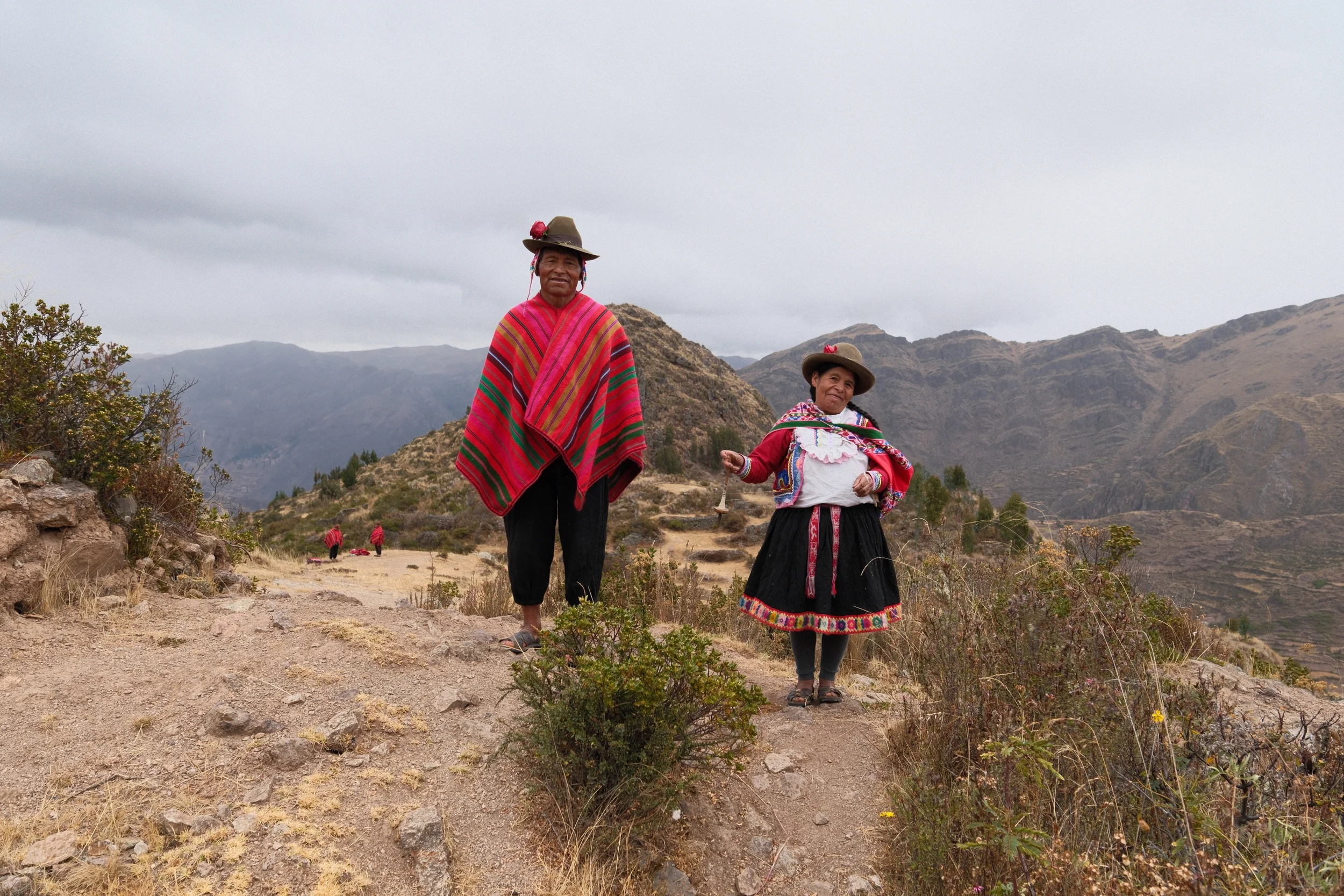
📸Photo by Marcella Echavarria
Lamay, at 9,560ft in Peru's Sacred Valley, showed me what high-end, low-volume, community-based tourism should look like — and reminded me of the true value of established travel designers like The Long Run member Aracari.
“Nourishing chats over chicha (corn beer) and hearing local lore in a tiny town showed me the power of the 4Cs at play in Peru’s Sacred Valley”
Lamay: Where the Andean world still feels whole
Franco Negri is a passionate entrepreneur who lives and breathes community-based tourism. He founded La Base Lamay in the Sacred Valley of Peru as a small local tourism initiative committed to a fair, responsible way of doing business.
Franco has worked with Aracari, one of Peru's leading DMCs, since the beginning — and today, they're one of its biggest partners.
In Lamay, a village where time seems to stand still and only 6,000 people call home, these tours offer a rare, real-life glimpse into how a slower, more intentional way of exploring can be the most enriching.
Nourishing chats over chicha and hearing local lore in a tiny town showed me the power of the Long Run’s 4Cs at play in Peru's Sacred Valley, as we discovered how building a deeper relationship with a place — rather than simply having a transaction with it — is what rewards luxury travellers most, and those hosting them.
Community
Sensitive community experiences suited to discerning travellers don't happen overnight. They're down to Franco spending years in Lamay, building genuine trust with the local community, and paying fairly for work that uplifts people and lets them hold on to centuries-old traditions and rituals. Nothing is staged for these tours: locals go about their day, timed so that over a few hours, visitors can pop by or walk alongside them.
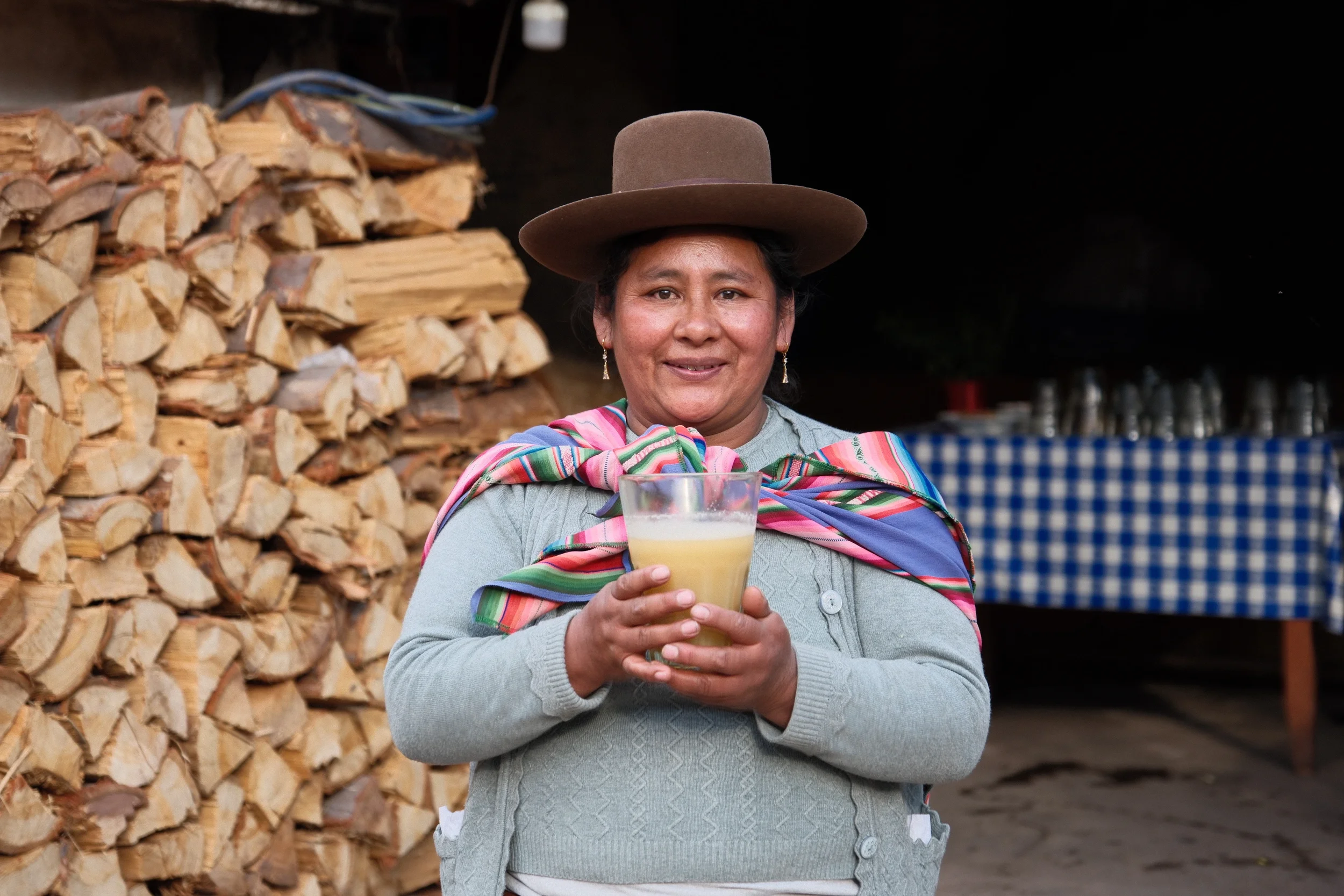
📸Photo by Marcella Echavarria. Sacred fermented corn beer is an important cultural connector.
At a traditional chichería, we watched chicha de jora — the sacred fermented corn beer — being made the old-school way, the corn dried out in the sun as part of the process. It's an important cultural connector.
Culture
At La Base Lamay, community members — or campesinos — sit at the heart of every decision about what to showcase of real life in their real world, and it's astonishing how many local customs are being preserved and protected through these walks and talks.
At the 17th-century Lamay Church, we heard the bells toll in a specific way that signalled someone in the community has passed — and it was incredibly touching to see the whole village gather. That's because they think of their community as an extension of family: a sentiment being lost in our increasingly online, individualistic worlds.
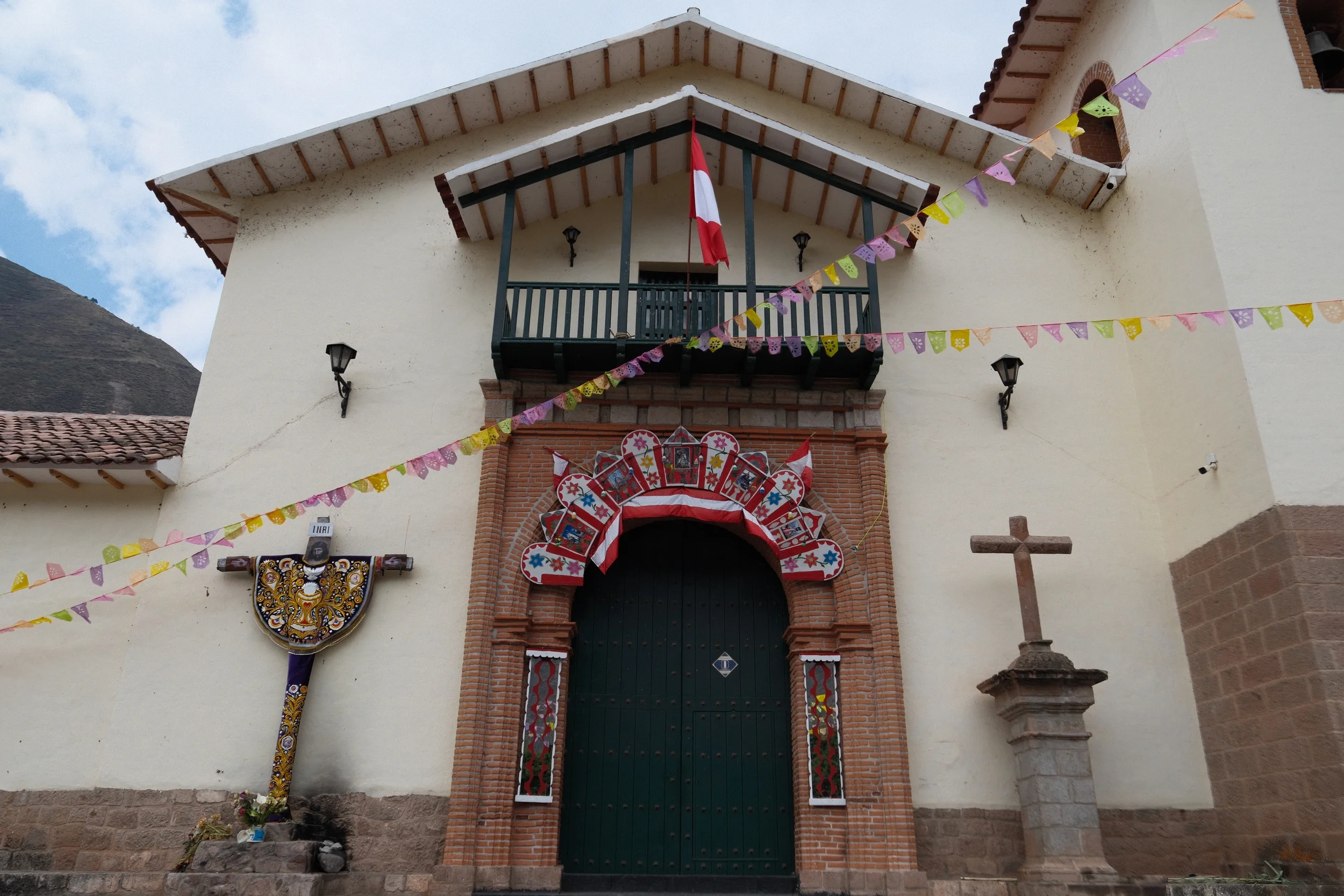
📸Photo by Marcella Echavarria. The church’s bell still tolls in a specific way to signal that a community member has passed.
Down the road, we met the village bakers, up at 3am and not stopping until 7pm. (Those who consider guinea pigs pets, please look away now — they're still very much a delicacy in these parts, with many turning to the communal oven to roast their cuy.)
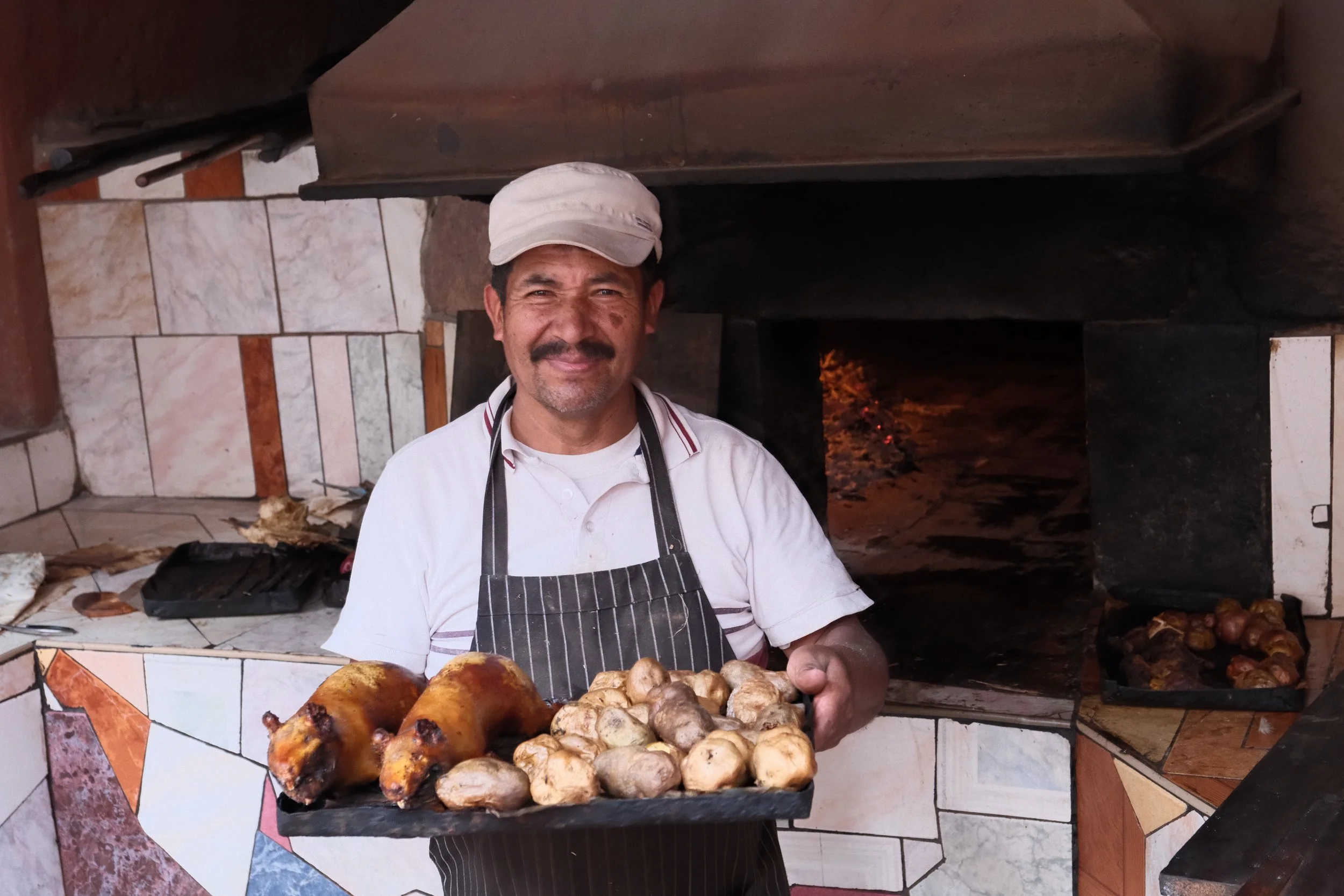
📸Photo by Marcella Echavarria. “And for the lady, perhaps a roasted guinea pig?”
Conservation
Franco supports local farmers through La Base Lamay's restaurant and marketplace, as well as through Indigenous-positive, community-first experiences built on established trust between everyone involved. This is more than just an authentic window into Peruvian life — the income from these travel experiences means Andean subsistence farmers can carry on with their natural, low-yield way of tending their land.
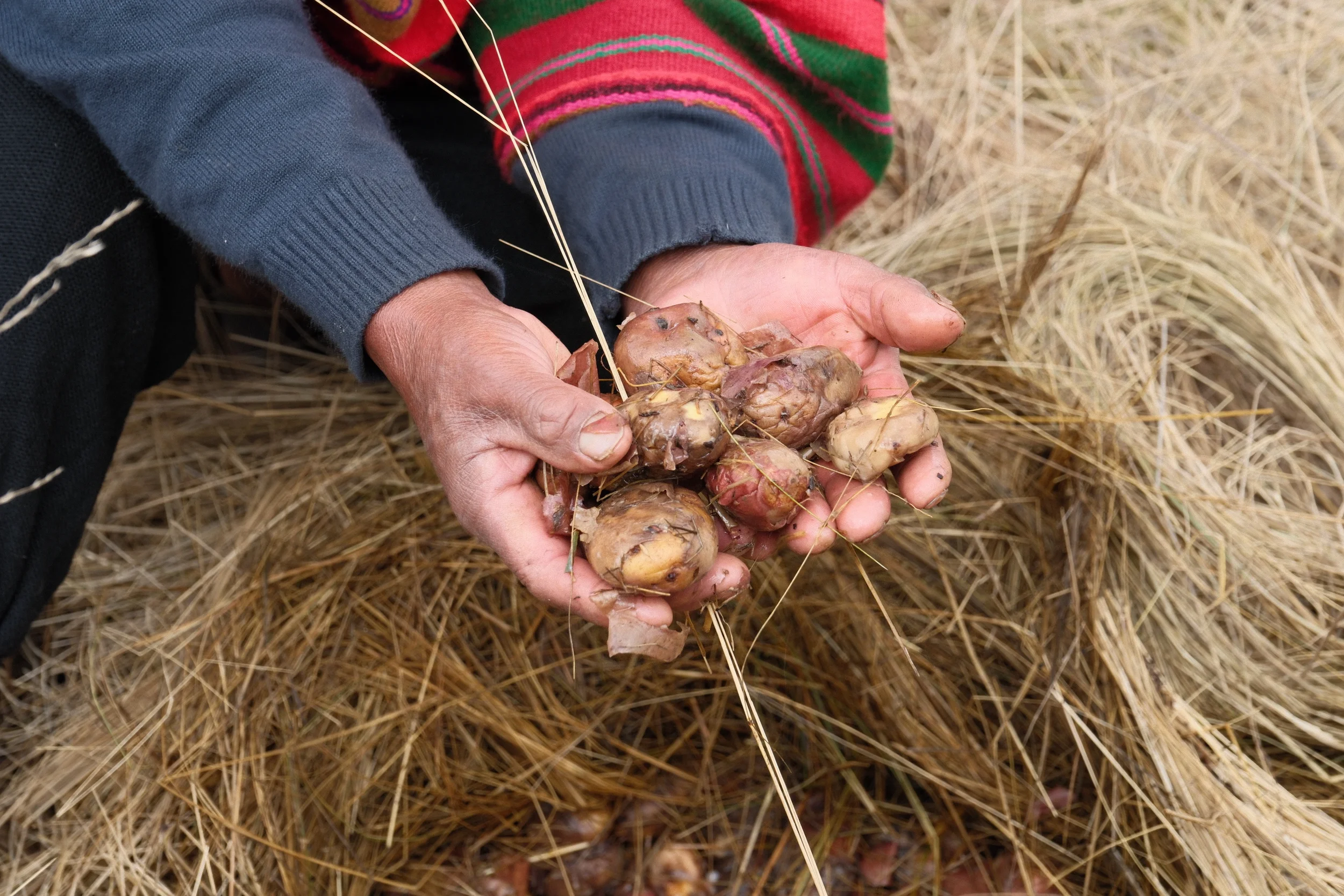
📸Photo by Marcella Echavarria. Chemical-free potatoes farmed by local peruvians. They don’t look perfect but they’re far more nutritious.
Fully organic, no chemicals, and in direct opposition to big agriculture, it isn't a way of earning much beyond what feeds their own diets, since they can't compete commercially with large-scale farming — yet their gentle, hand-tooled tilling is so much kinder to the environment that it serves everyone to subsidise their income through tourism. They may not grow the same volume of perfectly symmetrical fruit and veg as the big-ag mono-croppers, but what they produce is far more nutritious — better for everyone, and enough for them to still meet their own dietary needs.
Commerce
What's especially important about this case study is that every link in the chain involves fair compensation. La Base Lamay channels tourist spend, via soles, straight into Lamay's local economy, funding the trail system and native reforestation. Everyone involved in the tours is fairly tipped, and everyone has a say in what gets shared with visitors and what stays theirs. We hear the word "stakeholders" a lot in sustainable travel — but having a say as well as a pay cheque is what makes this such a great display of The Long Run energy and ethos.
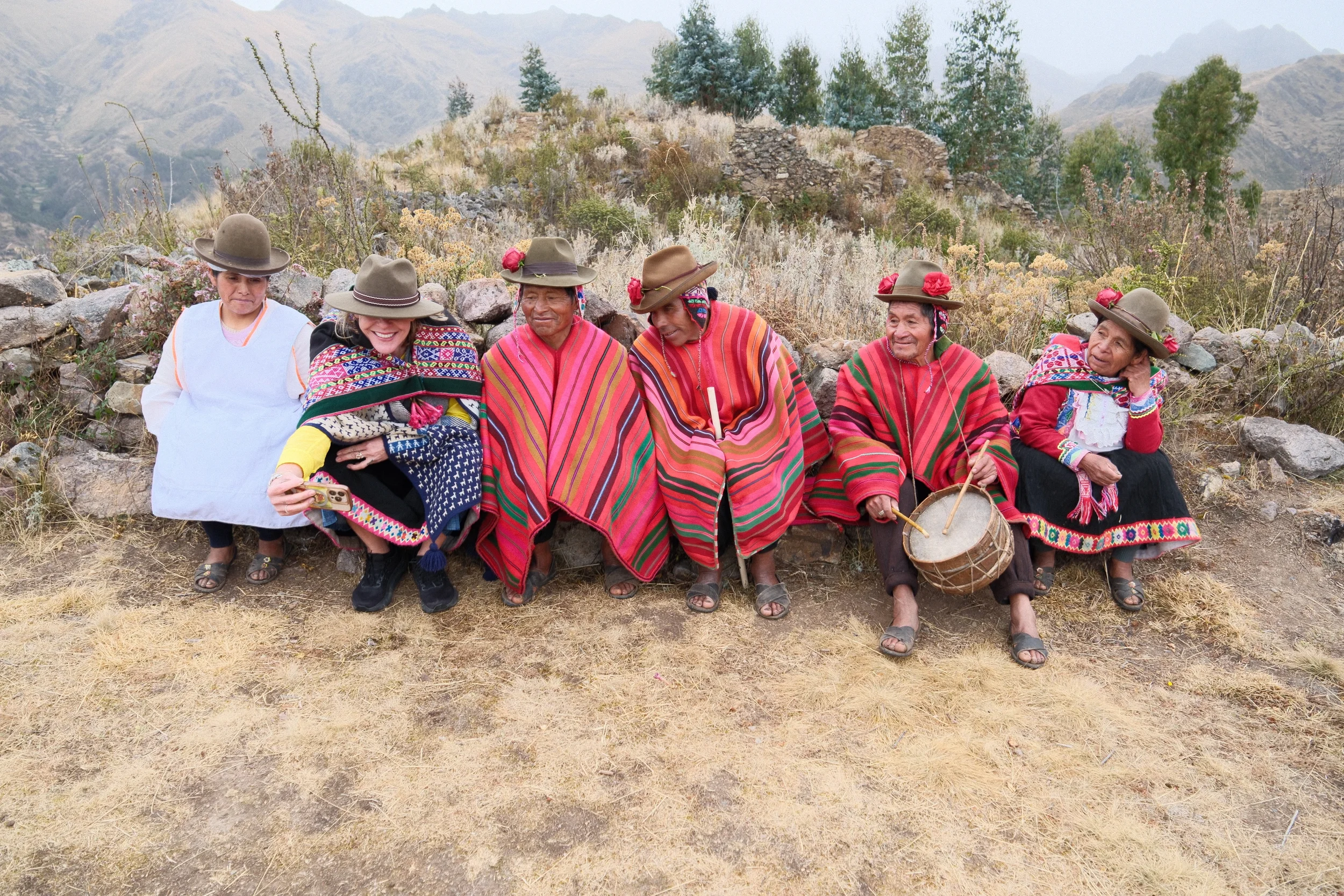
📸Photo by Marcella Echavarria. La Base Lamay which has worked with Aracari to create respectful travel experiences where everyone in the community benefits.
We love this story of our 4Cs in practice: redistributing tourism from Peru's big-hitting, better-known stops to a small town off the beaten track. Conservation, community, culture and commerce, all honoured through effective regenerative tourism funded by trips booked through Aracari — our favourite flavour of experiencing new corners of this wide, wonderful world.
Juliet Kinsman travelled with Aracari to Peru in August 2026. For more solutions-led stories, follow Juliet Kinsman on Instagram.