
Tourism, Climate, and Nature at COP30: Outcomes and Implications for Nature-Based Tourism Operators
COP30 in Belém delivered a complex but consequential set of outcomes for the climate and nature community, particularly for organisations working at the intersection of tourism, conservation and community wellbeing. Expectations were high: this was the first COP hosted in the Amazon, the first centred explicitly on deforestation and nature-based solutions, and one of the largest climate gatherings ever held in a tropical forest region. While the final political agreement did not provide the clarity many hoped for, especially around fossil fuel phase-out and deforestation roadmaps, COP30 also produced meaningful advances in forest conservation, land rights, adaptation finance and implementation mechanisms.
For nature-based tourism operators, these developments signal a global shift. Climate and biodiversity are now treated as inseparable, with ecosystems, Indigenous leadership and landscape-level governance positioned as core elements of climate stability. Understanding this shift is essential for operators whose work depends on thriving natural systems and resilient communities: the foundations of every landscape where The Long Run’s members operate.
This overview synthesises insights from UNFCCC decision texts, technical briefings from institutions such as the World Resources Institute and Carbon Brief, publicly released materials from the Tropical Forests Forever Facility (TFFF), direct reflections from Long Run members who attended COP30, including Pedro Treacher, Thaís Corral, Katie Weintraub, and takeouts from Dr Anne-Kathrin Zschiegner and Katy Roxburgh - Expert Consultant specialising in environment and global development campaigns and advocacy.
Our aim is to provide a clear, practical summary of what COP30 means for tourism organisations committed to conservation, community partnership and long-term stewardship.
Top 6 COP30 Takeaways for Nature-Based Tourism Operators
1. Nature is now recognised as essential climate infrastructure
COP30 reinforced scientific consensus that climate action and biodiversity protection cannot be separated. Forests, oceans and intact ecosystems sit at the centre of global climate stability. This was reflected in negotiation summaries and multiple side-event briefings presented by UNFCCC scientific bodies.
2. Forest and nature finance gained new long-term architecture
The Tropical Forests Forever Facility (TFFF) launched with over US$6.7 billion secured and long-term ambitions of up to US$125 billion, according to official COP30 materials. This marks a shift towards performance-based payments for keeping forests standing, with at least 20% directed to Indigenous Peoples and local communities as primary stewards.
3. Land rights were elevated as a frontline climate strategy
The Forest & Land Tenure Pledge was renewed with US$1.8 billion for 2026–2030, and the Intergovernmental Land Tenure Commitment (ILTC) saw nine tropical forest countries pledge to legally recognise 160 million hectares of Indigenous and community land by 2030. These figures come from official announcements made in Belém. Rights-based conservation is increasingly viewed as one of the most effective levers for protecting biodiversity.
4. Adaptation moved decisively up the agenda
COP30 committed to at least tripling global adaptation finance by the mid-2030s, a development critical for tourism-dependent landscapes already facing fires, heat, storms and flooding. While delivery mechanisms still need refinement, the signal is significant.
5. Implementation is now as important as negotiation
Despite cautious political language, COP30 consolidated mechanisms for forests, methane, grids, oceans and climate-resilient health systems. Independent analyses by Carbon Brief and Outrage + Optimism described this as the emerging “implementation reality”: costs of clean energy continue to fall, renewable deployment is accelerating, and new nature-finance pipelines are opening.
6. Tourism is firmly on the COP map
Through UN Tourism’s in-person Tourism Days in Belém and Travalyst’s global online sessions, tourism was positioned as a recognised climate and nature actor. Brazil’s launch of one of the first national tourism emissions inventories underscored the need for clearer governance, better sector data and stronger alignment with national climate goals.
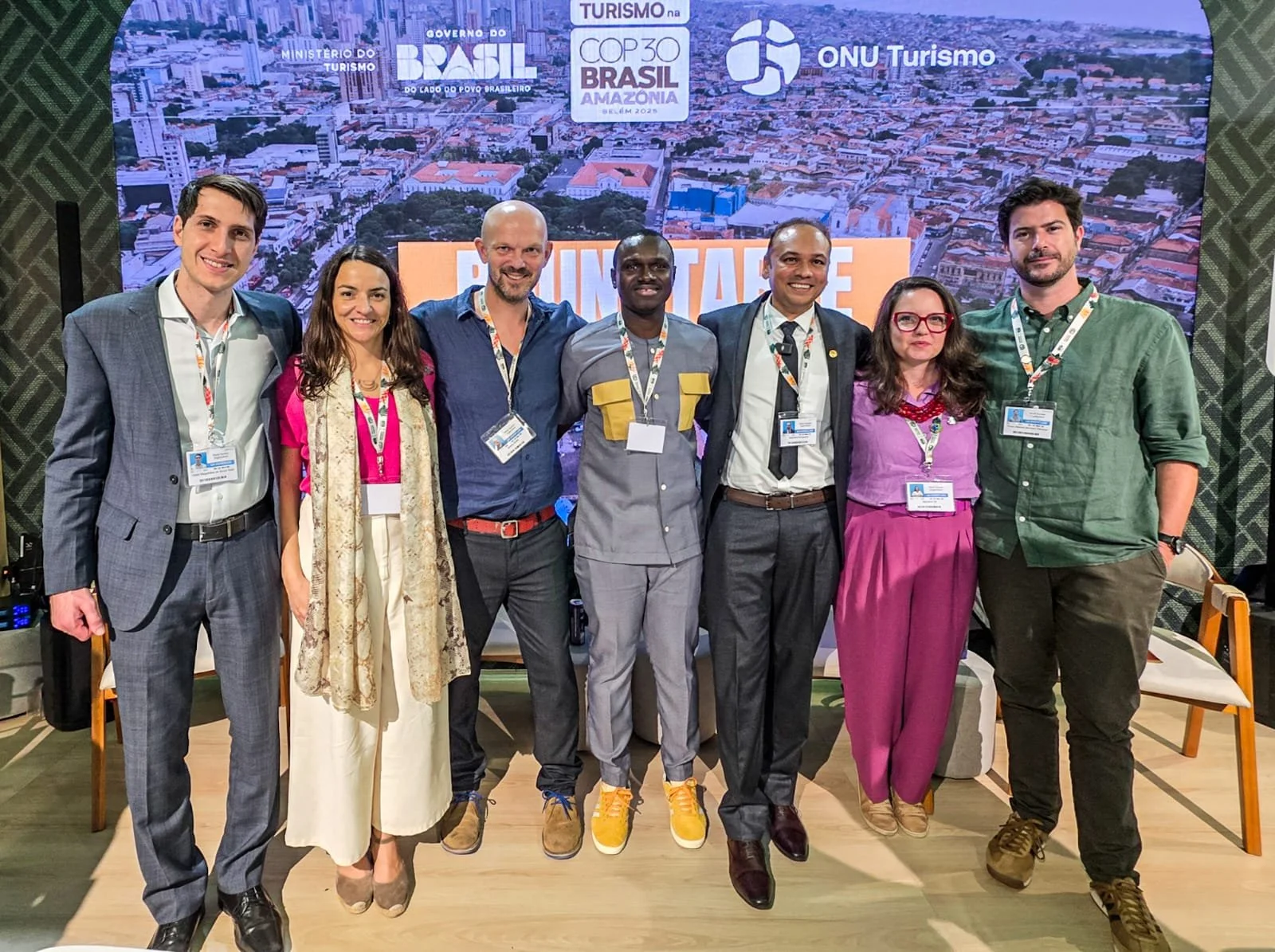
UN Tourism - Tourism Thematic Days at COP30
COP30 Outcomes: Progress, Gaps, and the Implementation Challenge
Christiana Figueres described COP30’s overall result as “neither a radical success nor a dramatic failure.” Three elements of the “Belém political package” stood out:
Key baselines were reaffirmed
IPCC science remains the basis for negotiations.
The 1.5°C temperature limit was reiterated, even while acknowledging temporary overshoot.
The need for full implementation of NDCs was confirmed.
Adaptation and just transition saw meaningful progress
Adaptation finance will be at least tripled by the mid-2030s.
A new Just Transition mechanism was launched to support countries through socio-economic restructuring.
A new Global Implementation Accelerator (GIA)
This two-year process aims to close the gap to 1.5°C and coordinate action on transitions away from fossil fuels and halting deforestation. However, it did not secure the binding roadmaps many countries requested.
Where COP30 fell short
No explicit commitment to phase out fossil fuels; the word “fossil” does not appear in the final text.
No global deforestation roadmap was formally adopted.
Many developing nations felt their concerns around finance and equitable transition were insufficiently addressed.
Yet the broader economic momentum from falling renewable costs to rising nature-finance commitments, suggests that implementation, not negotiation, is increasingly driving climate action. For tourism businesses rooted in nature, this shift is highly relevant.
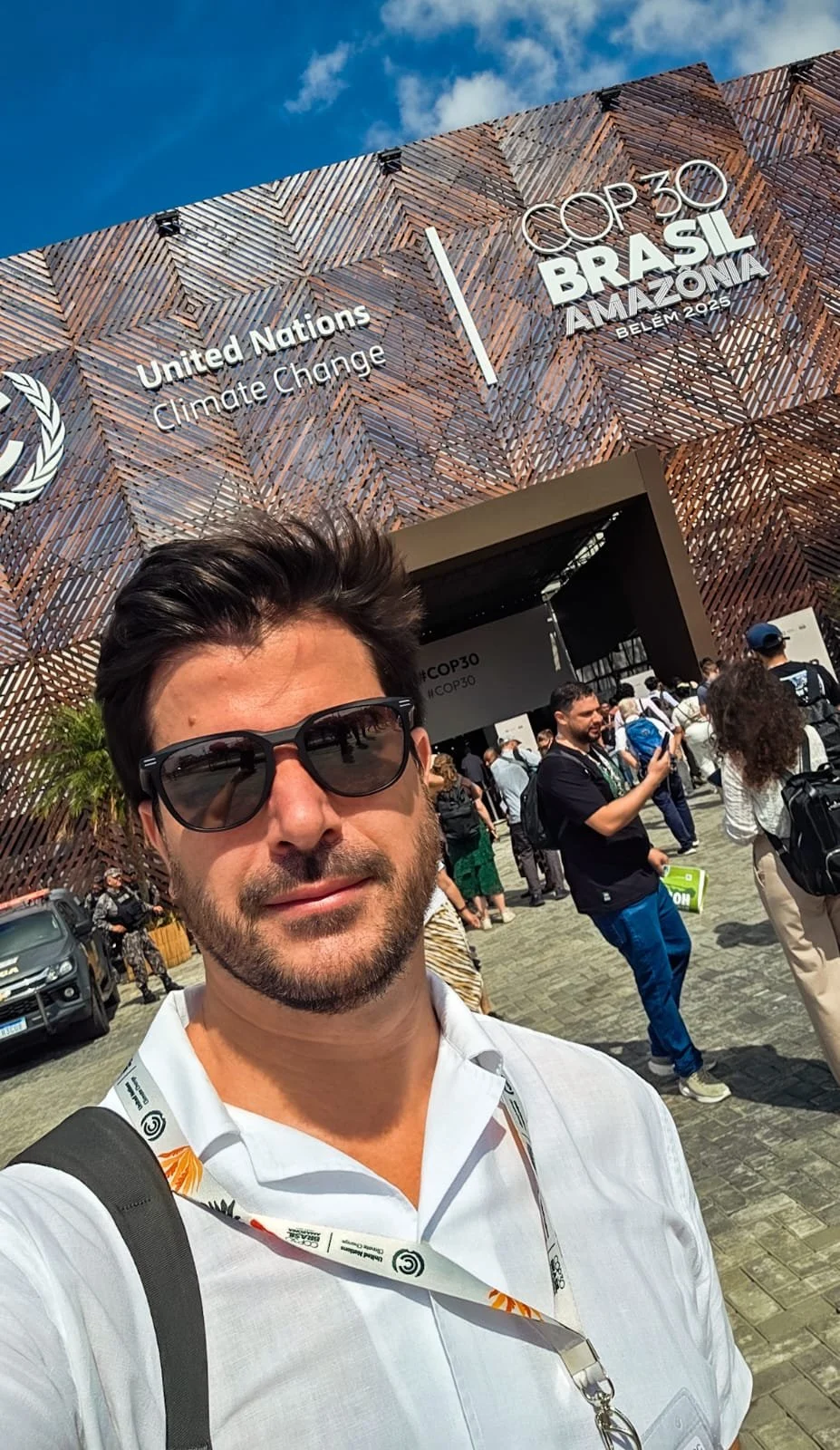
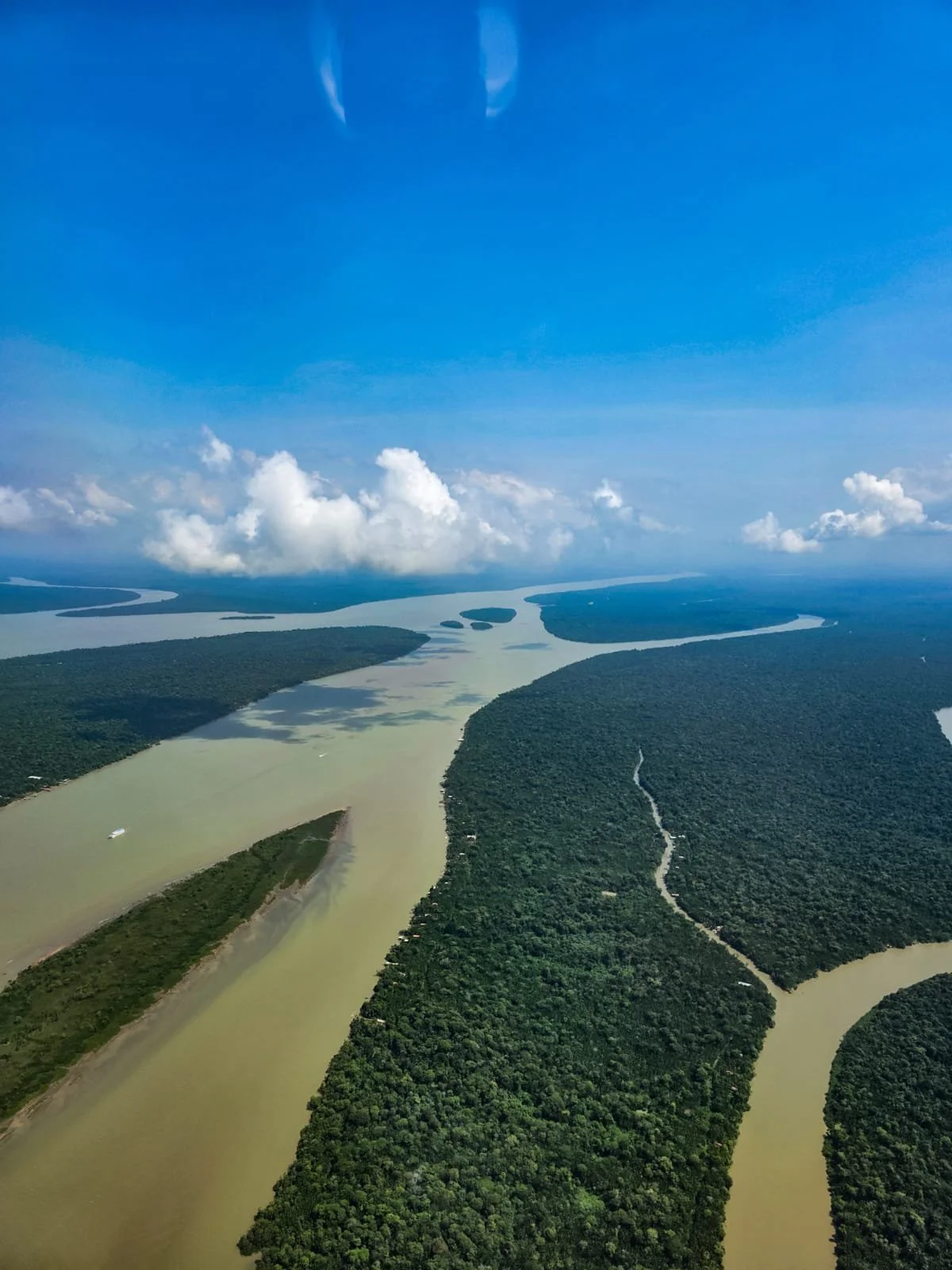
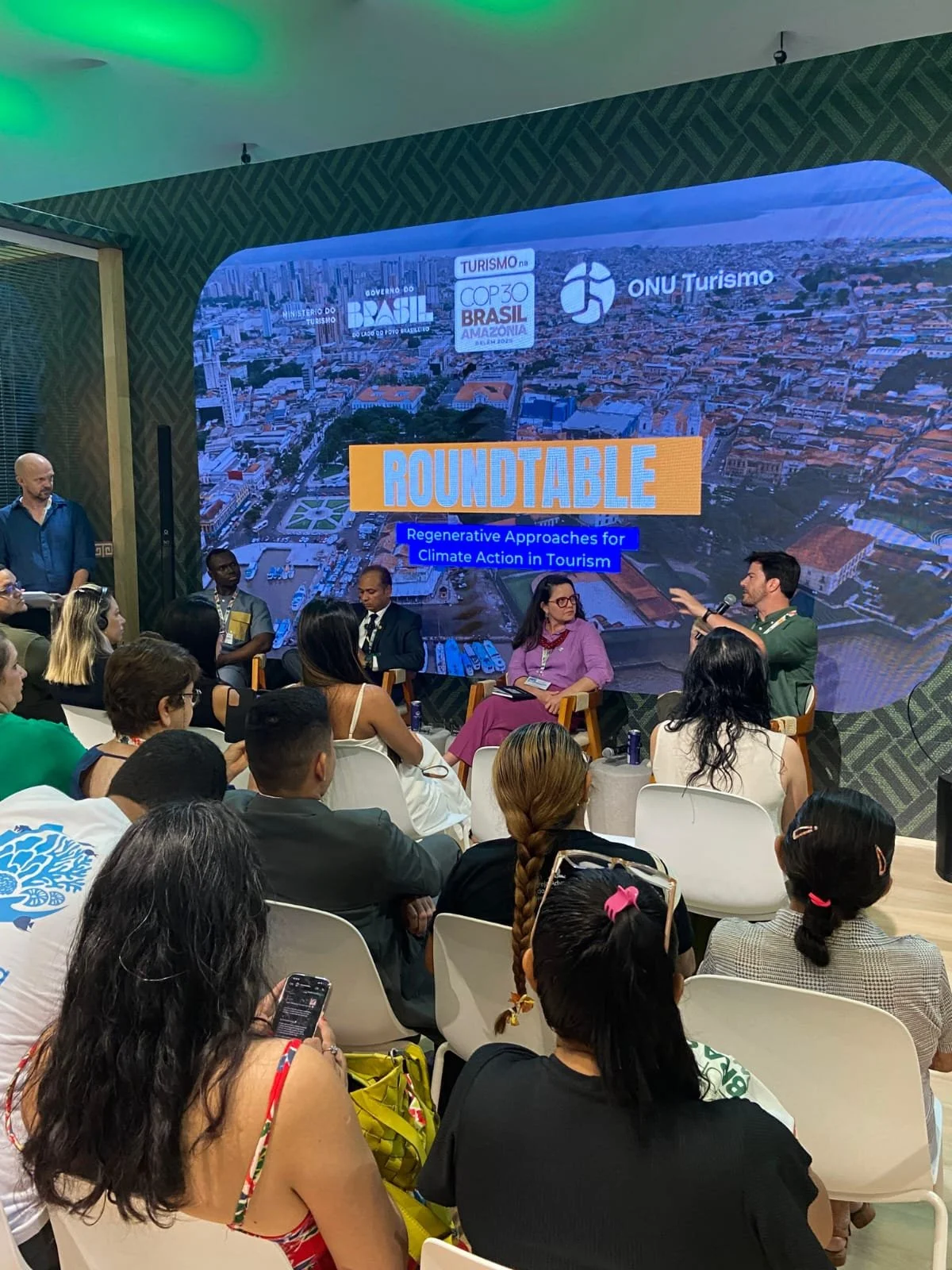
Pedro Treacher, CEO of Pousada Trijunção participated in the UN Tourism days
Forests, Land Rights and Nature Finance: The Real Breakthroughs
If political negotiations were cautious, the nature agenda was far more transformative.
Forest and land-rights commitments
As summarised by the World Resources Institute and official COP coalition releases:
Forest & Land Tenure Pledge 2.0:
Renewed and expanded to US$1.8 billion, supporting Indigenous and local community tenure rights.
Intergovernmental Land Tenure Commitment:
At least 160 million hectares of Indigenous and community land to be legally recognised by 2030.
Community-based Amazon protection:
Brazil and partners launched mechanisms (e.g., ARPA Comunidades) to strengthen local governance over tens of millions of acres.
As James Deutsch noted in his public COP commentary, these commitments represent one of the strongest global recognitions that lasting forest protection depends on Indigenous and community leadership backed by secure rights and direct finance.
Tropical Forests Forever Facility (TFFF)
According to TFFF’s official COP30 briefing:
Over US$6.7 billion in initial sponsor capital was secured.
Long-term ambition reaches US$125 billion.
At least 20% of payments are allocated to Indigenous and community groups.
These developments position nature not as an environmental add-on, but as critical climate infrastructure.
A living classroom in Belém
Pedro Treacher, CEO of Pousada Trijunção, described: “In Belém, climate and biodiversity were part of everyday life… Houses and civil-society spaces created a living classroom, embedding climate consciousness into Amazonian daily life. This felt like the beginning of a generational shift.”
Women-led Regeneration in Belém
Throughout COP30, Thaís Corral, founder of Sinal do Vale and Katie Weintraub, Brazil Network Lead for SHE Changes Climate participated in women-led and community-driven discussions focused on restoration, bio-economy models and climate resilience. Their contributions highlighted:
the central role of women in land stewardship,
regenerative food systems and seed networks,
the importance of trust-based partnerships, and
tourism’s potential to uplift local economies while restoring ecosystems.
From agroforestry in the Atlantic Forest to community climate planning, their experiences reaffirmed that regeneration is rooted in local knowledge, dignity and autonomy and that tourism can help amplify these efforts through authentic collaboration and investment.
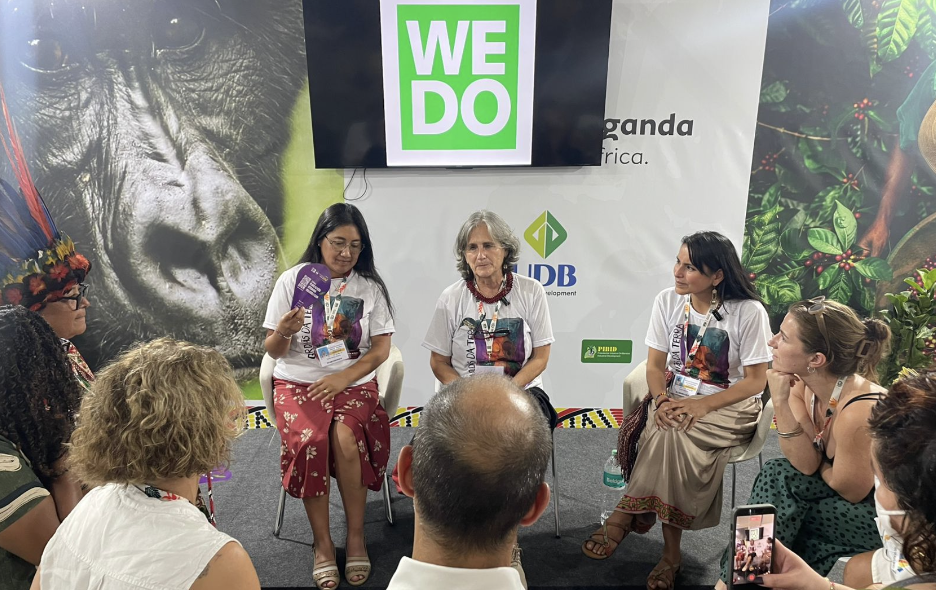
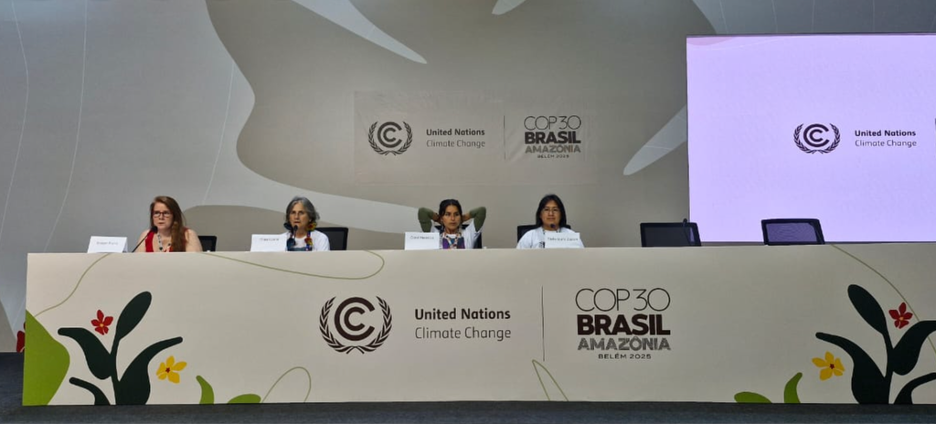

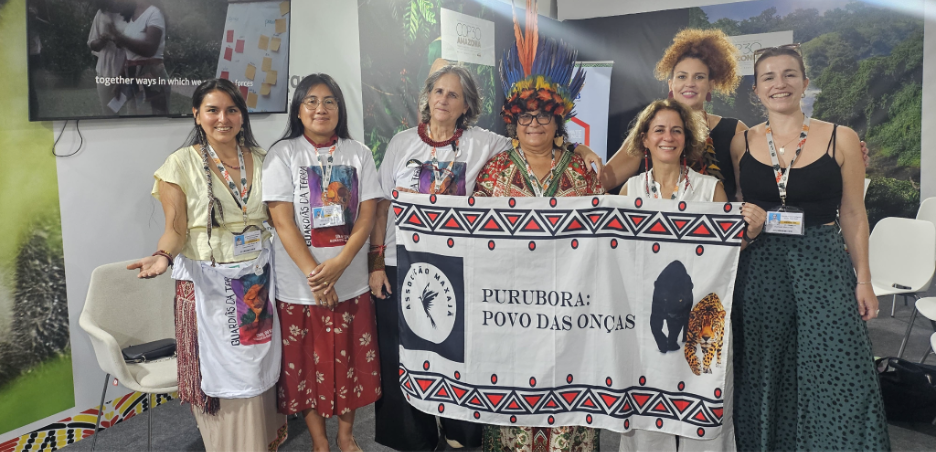
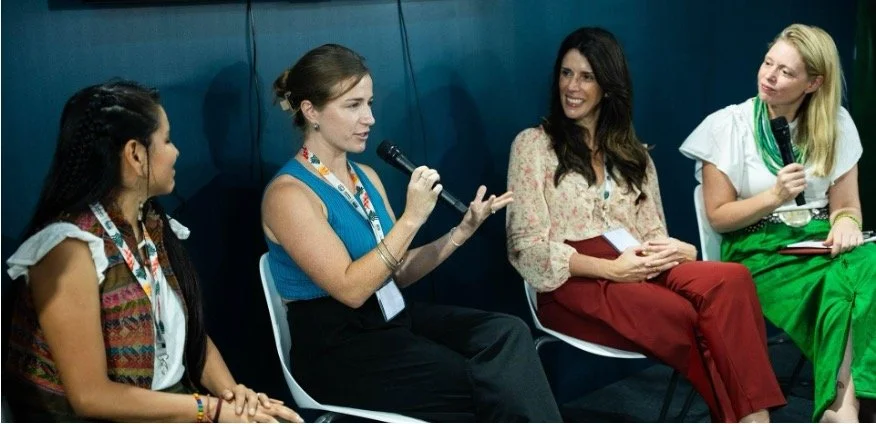
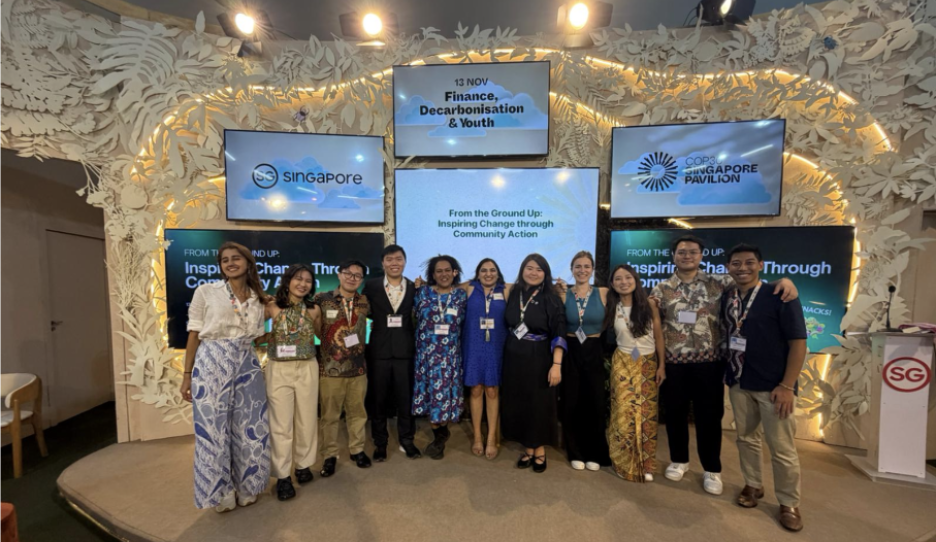
Guardians of the Land: Participation in COP30 sponsored by WEDO
Tourism at COP30: A Unified Effort to Accelerate Climate and Nature Action
The Tourism industry had its strongest presence at any COP to date. Across in-person and digital platforms, the sector aligned around shared priorities:
1. Governance and national leadership
Brazil showcased a national tourism emissions inventory and explored climate integration into national planning a model other destinations are encouraged to follow.
2. Regenerative and nature-based approaches
UN Tourism advanced regenerative tourism as a viable pathway for mitigation, adaptation and community wellbeing, with examples from Amazonian community tourism, rangeland restoration and protected area stewardship.
3. Climate risk and resilience planning
Escalating risks such as fires, flooding and extreme heat demand destination-wide adaptation strategies. Tools like the Travel Foundation’s Destination Risk Scan were highlighted as essential for long-term planning.
4. Decarbonisation limits and demand management
With sustainable aviation fuel currently under 1% of global use, participants emphasised the need for long-term aviation reforms and demand-side models such as “travel less, stay longer.”
5. Data, verification and shared standards
There was strong consensus that tourism needs consistent, credible and interoperable data. Frameworks such as Travalyst’s Travel Impact Model and UN Tourism reporting guidance were identified as practical solutions.
6. Capacity-building and equity
SMEs, the majority of tourism enterprises, need accessible tools, financing pathways and training. COP30 also foregrounded the leadership of women, youth and Indigenous communities in climate resilience.
Together, these discussions established tourism as an active contributor to climate and nature solutions, not a passive beneficiary.
Three Big Messages for Nature-Based Tourism Businesses
Drawing from COP30 outcomes and reflections from members who participated in Belém, three clear messages emerge:
1. Empower Local, Indigenous and Community Leadership
COP30 confirmed a global shift: locally led conservation is foundational to climate stability. This aligns with multiple scientific studies presented at COP demonstrating that biodiversity outcomes are strongest in territories with secure community rights.
What tourism operators can do:
Move from consultation to co-governance by embedding community representation in decision-making.
Establish long-term agreements outlining rights, roles and benefit-sharing structures.
Support leadership pathways for women and youth.
Use tourism’s storytelling power to elevate community voices, local knowledge and cultural integrity.
Tourism businesses will increasingly be expected to demonstrate that they operate with and for local custodians.
2. Strengthen Data Foundations and Storytelling
As highlighted across UN Tourism and Travalyst sessions, tourism cannot access climate or nature finance without stronger, verifiable data.
Katy Roxburgh summarised this clearly: “Until tourism strengthens its data foundations, it will remain under-recognised as a conservation actor.”
What this requires:
Build simple, robust systems to measure emissions, biodiversity, water use, livelihoods and cultural outcomes, ideally aligned with global indicators and The Long Run’s 4Cs framework.
Use data for narrative integrity: impact should be visible, verifiable and accessible to guests, partners and funders.
Avoid reporting fragmentation by collaborating around shared models and frameworks.
Pair metrics with authentic, place-based storytelling.
3. Get Investment-Ready for Nature Finance
Nature finance is accelerating rapidly, but tourism projects often lack the structures required to receive and manage these funds.
What tourism operators can do:
Map conservation and community outcomes clearly and transparently.
Strengthen governance to build donor and investor confidence.
Resource the “unfunded middle”: baselines, feasibility work, project development.
Highlight tourism as a proof of concept for regenerative economic models.
Champion community-led proposals, particularly those led by women and youth.
Unless tourism operators become investment-ready, they risk being excluded from the emerging nature-finance landscape.
Conclusion: Tourism Shows That Regeneration Is Economically Viable
As Dr Anne-Kathrin Zschiegner, Executive Director of The Long Run reflected:
“COP30 signals that tourism must embrace its role as a delivery mechanism for climate and biodiversity solutions, with community leadership and transparent data at the core.”
Entering 2026, tourism is positioned not only as a beneficiary of healthy ecosystems, but as a credible mechanism for delivering climate and biodiversity outcomes. COP30 made three expectations clear:
Local leadership must guide.
Data must underpin credibility.
Investment-readiness must unlock action at scale.
The Long Run community is already modelling what this alignment looks like in practice, on the ground, and in partnership with the people who steward the world’s most important landscapes.