
For the past decade, pangolins have quietly shaped conservation at Tswalu.
What began in 2015 as a set of research questions has grown into one of the most sustained pangolin research programmes in southern Africa. Over ten years, patterns emerged that short-term studies would never have captured. Rainfall cycles. Behavioural shifts. Subtle welfare indicators hidden beneath a species that rarely shows distress.
Now, as Tswalu becomes an official release site for rescued and rehabilitated pangolins, that decade of context matters more than ever.
We spoke to Dr. Wendy Panaino, Head Ecologist at Tswalu, about what ten years in the same landscape can teach you, why pangolins are both clumsy and hardcore, and what the next chapter looks like.
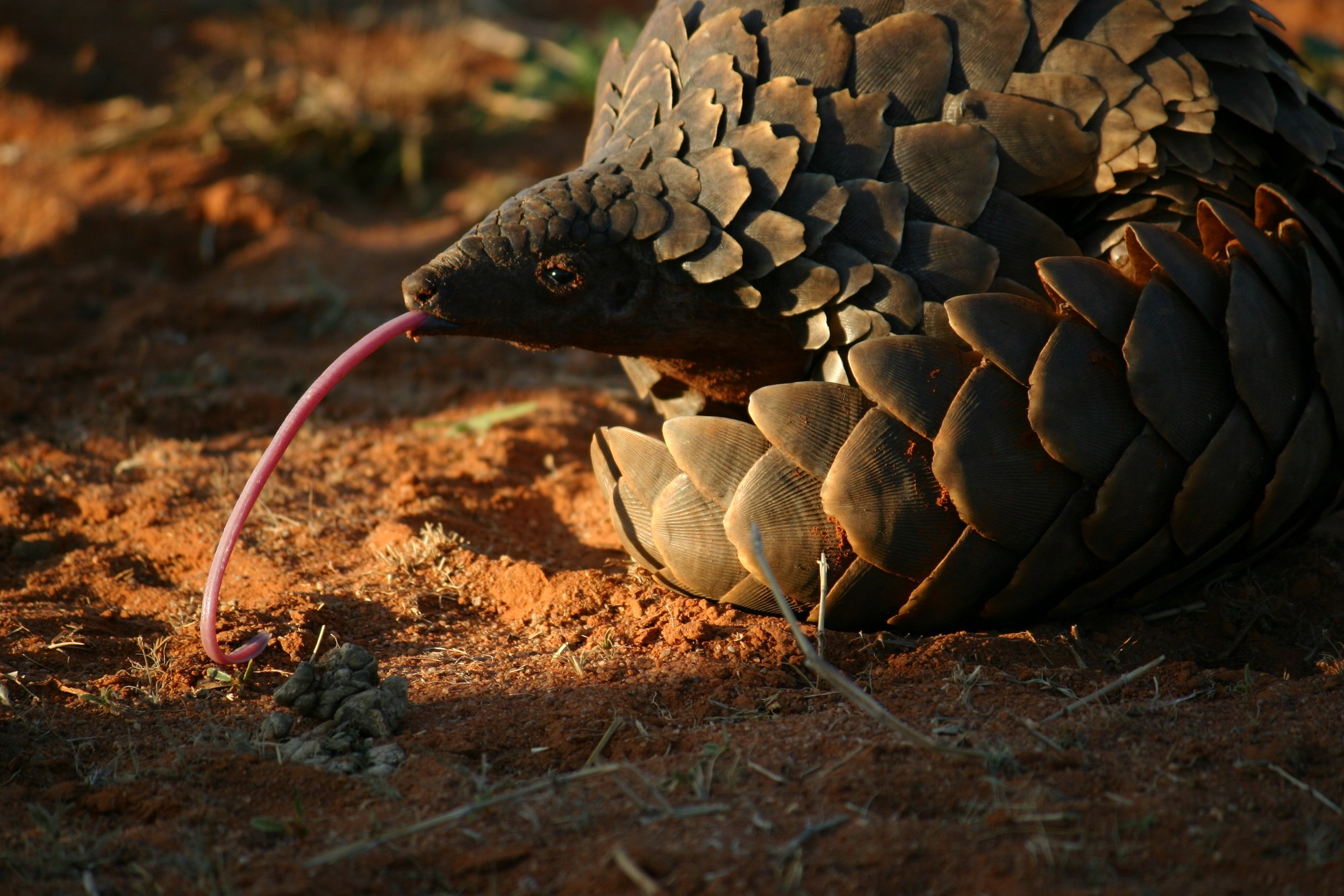
Credit: Tswalu Pangolin Research, Oppenheimer Generations.
Q: You’ve just reached the ten-year mark of studying pangolins at Tswalu. Did you always intend for it to become a decade-long body of work?
Dr. Panaino:
Not at all! It wasn’t a grand plan. We started with a set of questions around pangolin ecology when I arrived in 2015. Each project generated more questions. We supported another student, then another…
Looking back, the way it progressed was actually perfect, but it wasn’t designed that way. It evolved organically. Where we are now, stepping into pangolin introductions, would not have been possible without those earlier years.
At the time, each project felt small. Now you realise that every one of them built the foundation for this next chapter.
Q: What does a decade of watching the same species in the same landscape reveal that short-term research would miss?
Dr. Panaino:
The biggest lesson is how much context matters.
The prime example is from my fieldwork between 2015 and 2017. It was a particularly dry period. At that point, we thought we knew something about pangolins.
For example, we estimated they ate around 15,000 ants a night on average.
Then after 2021, we had significant rainfall. The environment changed completely. Suddenly pangolins were eating three or four times that amount.
If we had stopped when I stopped, we would have said, “Cool. Pangolins eat 15,000 ants a night.” But it can be so much more than that, depending on conditions.
Working with a species over ten years, across dramatic changes in climate and insect abundance, allows you to see real trends. Not just seasons, but cycles.
That is the value of long-term work.
Q: How does rainfall influence pangolin behaviour?
Dr. Panaino:
Food availability is the driver.
In dry years, pangolins often shift their activity patterns and become more diurnal in winter. Initially, we thought that was temperature-driven.
After the rains, when insect abundance increased, they stayed nocturnal through winter.
That tells us something important. When food is predictable and abundant, they can afford to remain nocturnal. When it is scarce, they are forced to shift. That shift is a sign of energetic stress.
We now understand that activity patterns are indicators of welfare. If we release a pangolin and it suddenly becomes active during the day in the middle of summer, we know something is wrong.
That is something we would never have known from short-term research.
Q: You’ve described pangolins as both “hardcore” and incredibly stoic. What do you mean by that?
Dr. Panaino:
Pangolins are not very good at physically showing when they are not doing well.
They will keep foraging, keep doing their thing. They’re very hardcore. They’re like, “If I’m a bit sick, I’m not going to let you know.”
Their body temperature can fluctuate by six to eight degrees in a bad year. For context, one to two degrees would hospitalise a human. Six to eight degrees would be fatal. Yet pangolins survive it.
They are incredibly resilient, but they need to be given the chance to be resilient.
If we create environments that are too degraded or unstable, we remove their ability to be “hardcore.” They can cope with extremes, but not necessarily the ones we impose.
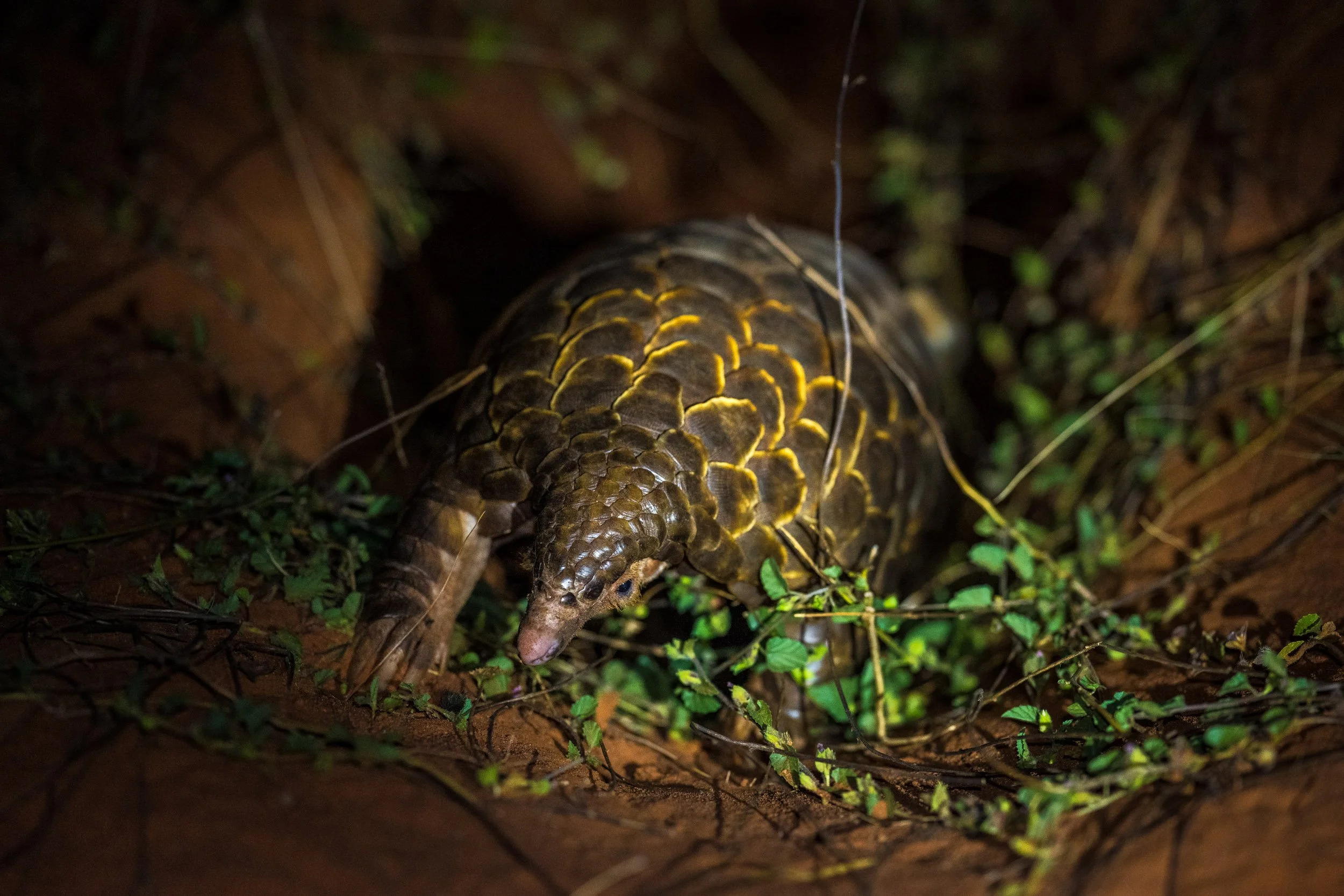
Credit: Tswalu Pangolin Research, Oppenheimer Generations.
Q: And yet, you also describe them as clumsy?
Dr. Panaino:
Oh, they are ridiculously clumsy!
They’re always falling into burrows and flinching at twigs that go past. They are completely silly little things.
They look prehistoric, almost dinosaur-like. They have this tiny little face and their eyes blink. They just have this natural charm.
It is hard to describe the feeling of being near a pangolin. You really have to experience it.
Q: As of 2026, Tswalu is now an official release site for rehabilitated pangolins. Why now?
Dr. Panaino:
We have tried releases in the past, but without dedicated monitoring you release an animal and then it disappears. You do not know if it survived.
Now we have the capacity to do it properly.
We have a full-time PhD dedicated to monitoring released pangolins. That was non-negotiable for me. If we are going to release them, we must collect the data.
The past decade gave us context. We now understand what normal looks like for a resident pangolin. When a released pangolin behaves differently, we know something is off.
That makes all the difference.
Q: how do you measure whether the released pangolins are coping or not?
Dr. Panaino:
One of the things we’re looking at is step rate. A lost pangolin is probably moving more urgently, trying to find food or a burrow. That means it’s working harder and under more physiological stress.
So we measure how fast it’s moving and whether that slows down over time.
We also look at foraging frequency, distance moved, weight changes and activity patterns.
A resident pangolin knows where its food is. A released pangolin doesn’t. So we’re trying to quantify how well they’re coping and how long it takes them to settle.
Q: Do the released pangolins surprise you in their resilience?
Dr. Panaino:
There’s variation between individuals. But the rehab process has come a long way. Pangolins are only released when the vets are confident they are strong and healthy.
I still believe they are incredibly resilient. They just need time and space to be resilient.
We’ve also noticed, anecdotally, that they often move back in the direction they came from. We don’t fully understand pangolin navigation, but there seems to be something there. Some kind of homing instinct.
There are still so many questions.
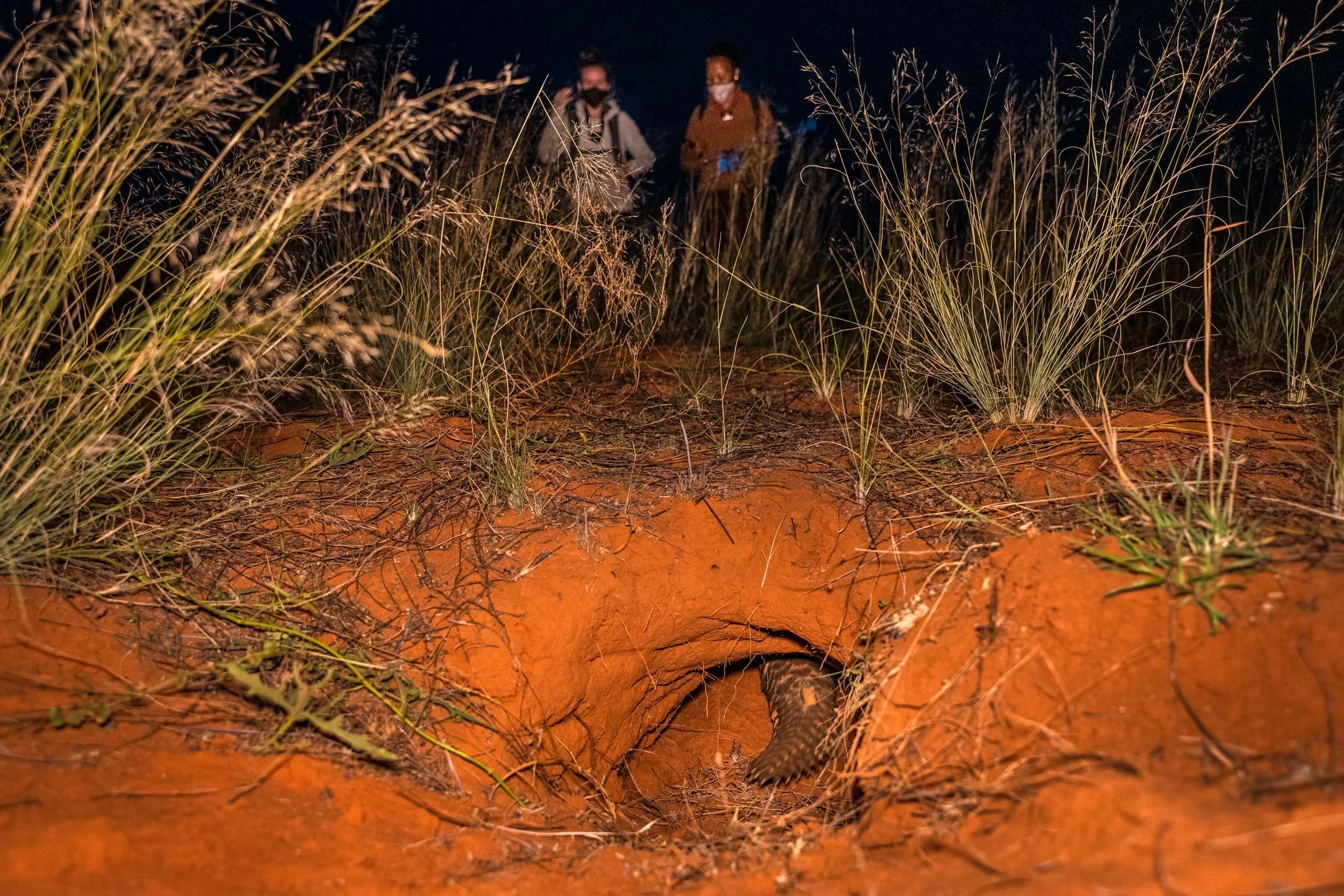
Credit: Tswalu Pangolin Research, Oppenheimer Generations.
Q: What has been your biggest lesson in conservation over the last decade?
Dr. Panaino:
Conservation is not for the light-hearted! You have to have thick skin. Tough decisions need to be made.
But if you’ve got good data to back up your decisions, it makes it the easiest job in the world.
At Tswalu, we use EarthRanger. It has been such a game changer! But it doesn’t manage itself. Someone has to drive it. You have to push, chase people for data, make it competitive, make it fun.
If you want good data, someone has to take responsibility for it.
Q: What excites you most about the next chapter?
Dr. Panaino:
The ability to give pangolins another chance.
We have the space here at Tswalu! Release options in the Northern Cape are limited. But now we can say, “Bring the pangolins. Let’s see what happens.”
But this is long-term. We’re not going to know in a year whether it’s successful. It’s a three- to five-year focus at least.
The more we do this, the more questions we’ll have. That’s just how it works.
Ten years of watching the same species in the same landscape gave Tswalu something invaluable: context. The ability to recognise when something is normal and when something is not. The confidence to intervene and the humility to admit when something is unknown.
As Tswalu begins its next decade with rescued pangolins, the work remains the same in spirit. Observe closely, collect good data, and give wild animals the chance to be hardcore.