
How our members use EarthRanger to turn guests into citizen scientists
How We Made This: This article was written entirely by humans. We use AI to pull quotes from our meeting recordings.
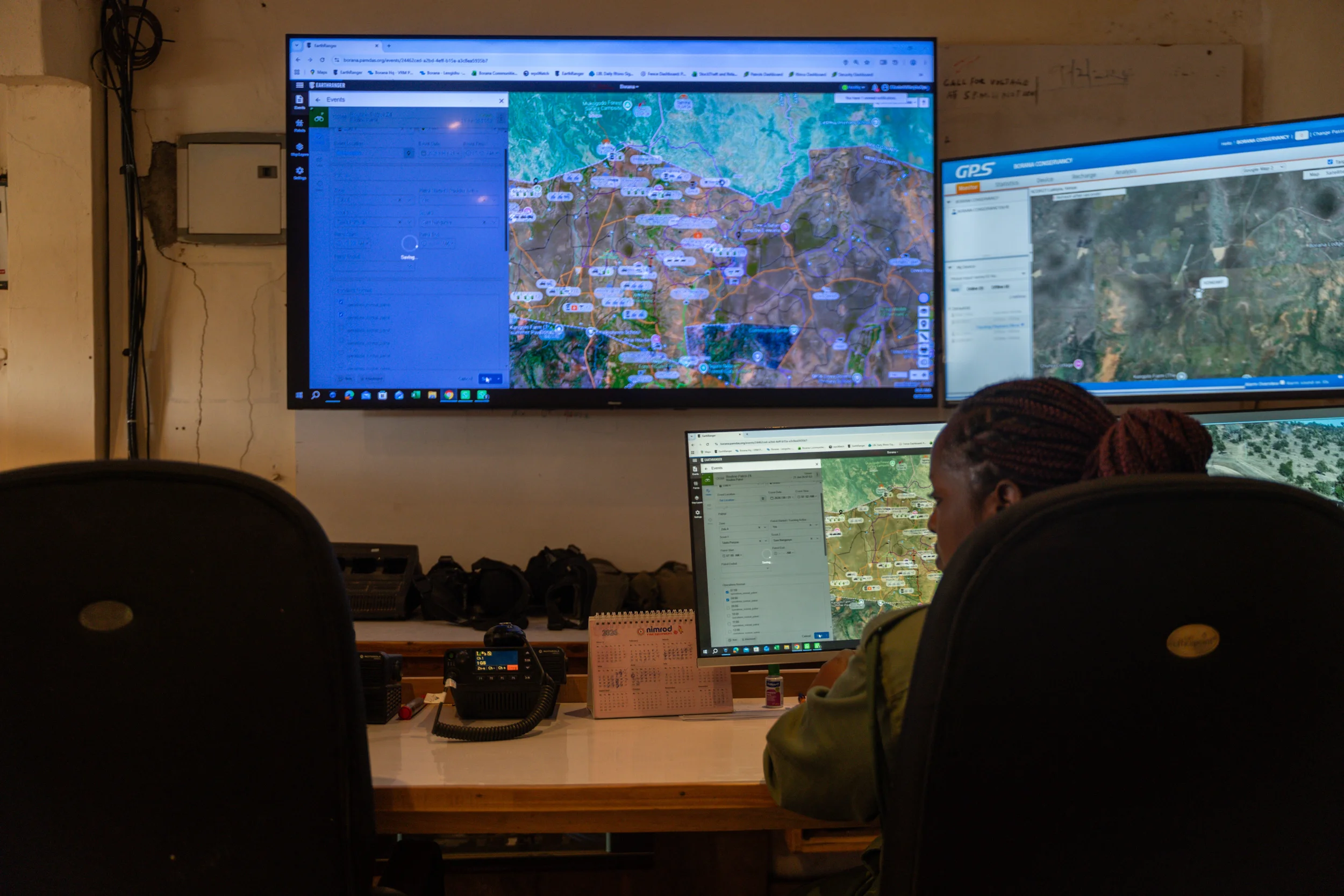
"The real light bulb moment was we went into Borana's operations room," says Ollie Dixon, tech consultant at Nikoi and Cempedak Islands, long-time members of The Long Run. "It's this room at their 'back of house' where all the rangers commune. There were two or three rangers in there monitoring endangered rhinos' exact movements on these massive screens."
It's the kind of room that makes you think you've strolled onto the set of a CIA thriller, not a conservancy in Kenya. "It was a whole different level to conservation. I'd never seen anything like it."
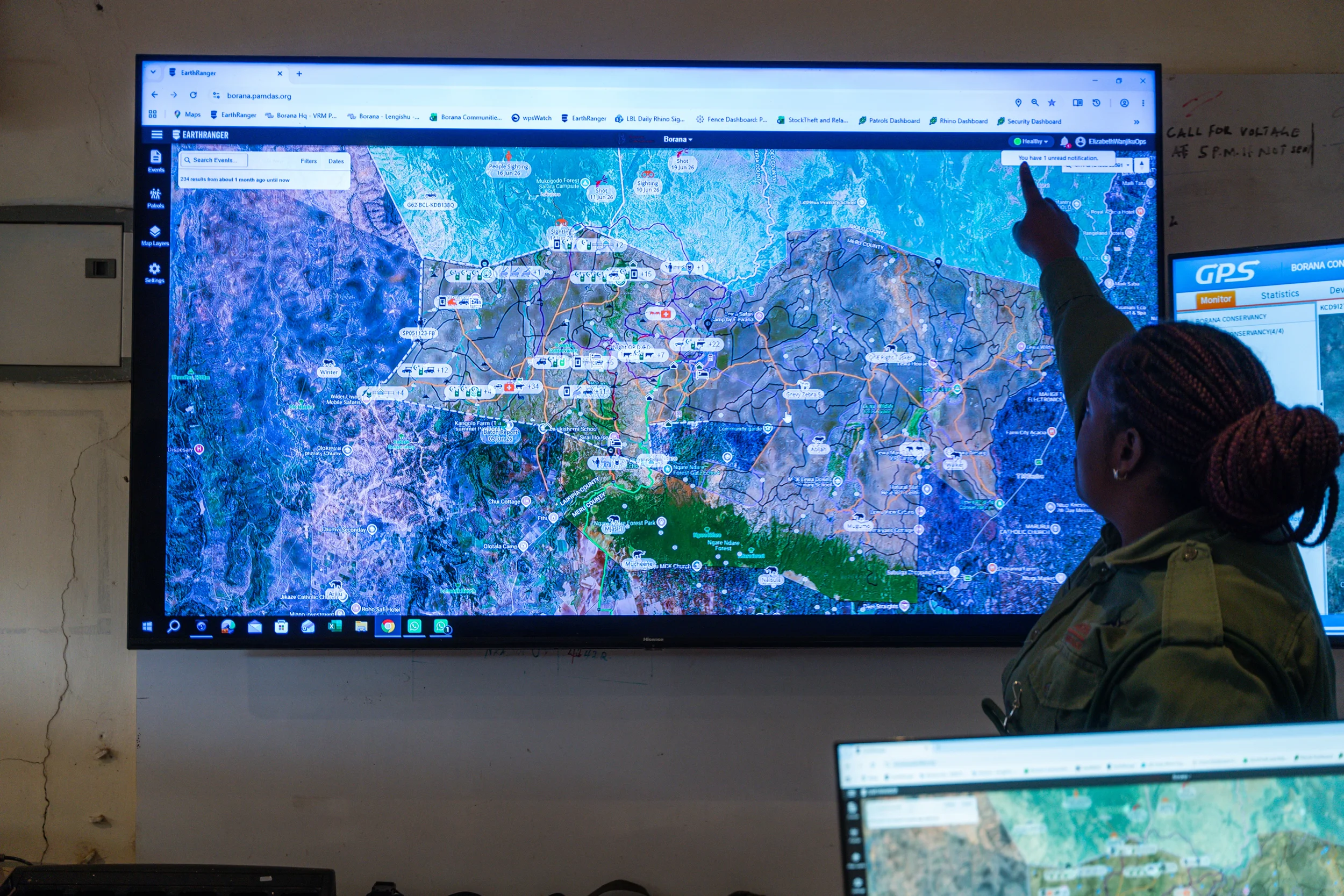
Borana’s highly sophisticated command center. 📸 photographed by Brian Siambi.
Ollie has grown up amongst conservationists. But even he felt a sense of awe, and slight envy, looking at this sophisticated setup.
Borana Lodge, another long-time member and Global Ecosphere Retreat, are regarded as one of our community’s EarthRanger superusers. The astonishing sophistication of their conservation operation, using EarthRanger’s free technology as the shared data layer tying it all together, has become the thing other members can't stop talking about after they visit.
Billie Dumaliang of Masungi Georeserve visited a few months ago and had a similar reaction: "The most fascinating place I visited wasn't the savannah. It was the operations room." She's now heading back to the Philippines bristling with ideas on how she can utilise EarthRanger to give her team the real-time information they need to keep animals, habitats, and communities safe.
This is exactly what happened to Ollie and Andrew Dixon. Using the insights they learned from Borana, they asked themselves, “How can we turn daily wildlife encounters into useful conservation data, and get guests involved while we’re at it?”
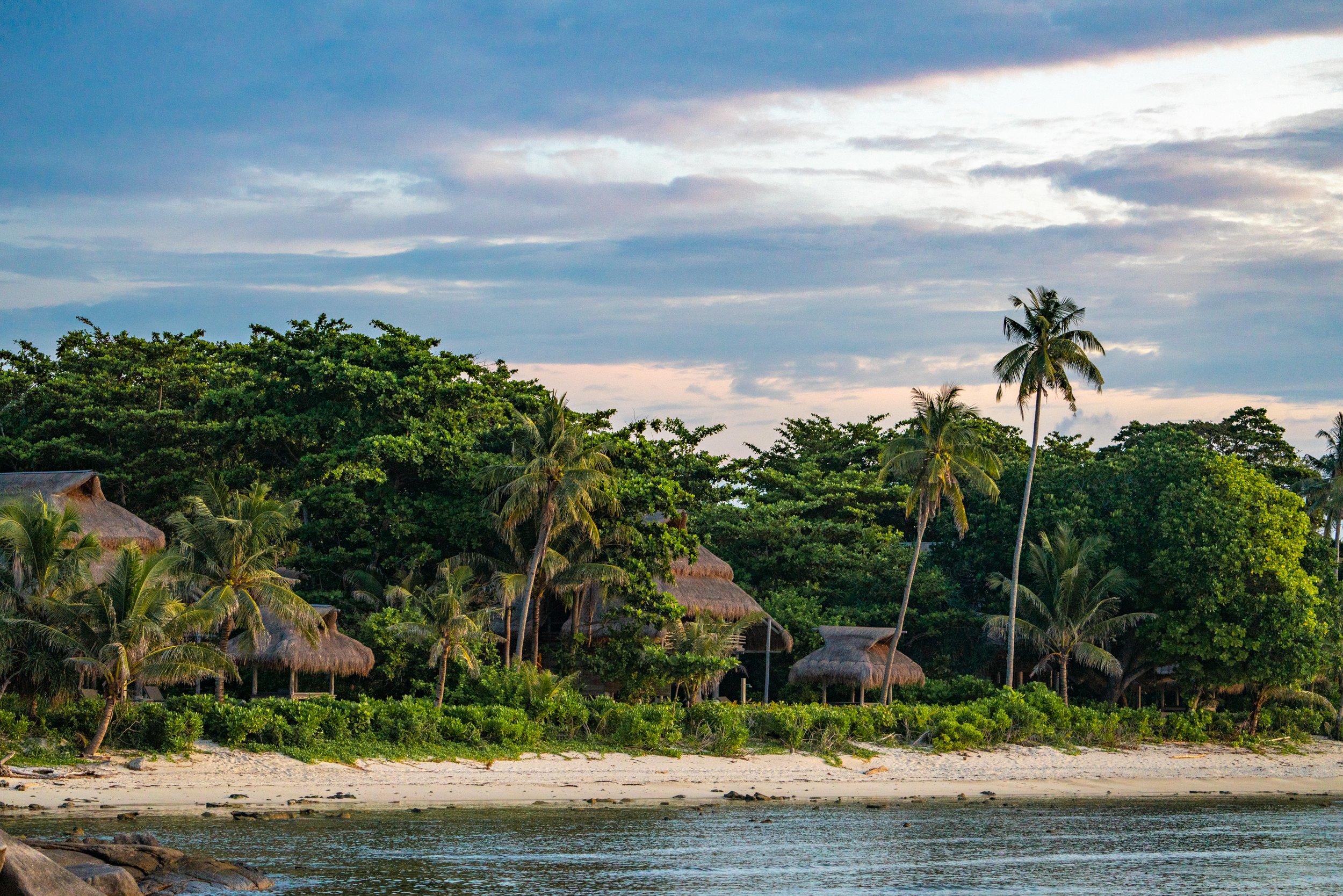
For some perspective, Nikoi’s entire island is the size of Borana's back-of-house👀
Rather than try to replicate Borana's setup, the Nikoi team focused on what they have: a small but enthusiastic conservation team, a newly-built guest app, and guests. Lots of them. Often, more than 60 on the property at any given time.
They figured they could nudge guests to record wildlife sightings through the guest app. Curious guests suddenly become "citizen scientists," and Nikoi suddenly gets 60 extra pairs of eyes at any given time to track their island's wildlife.
"There were limitations to our project, and I think that naturally then led to trying to engage and involve guests," Ollie says.
Their 3-step approach: focused, affordable, fun
Working within their limits, Nikoi's approach came down to three decisions:
Stay focused on a few important species (the resident otters, birds, turtles)
Use affordable off-the-shelf equipment the island's own team can maintain
Make participation part of the process by getting staff and guests to log what they see.
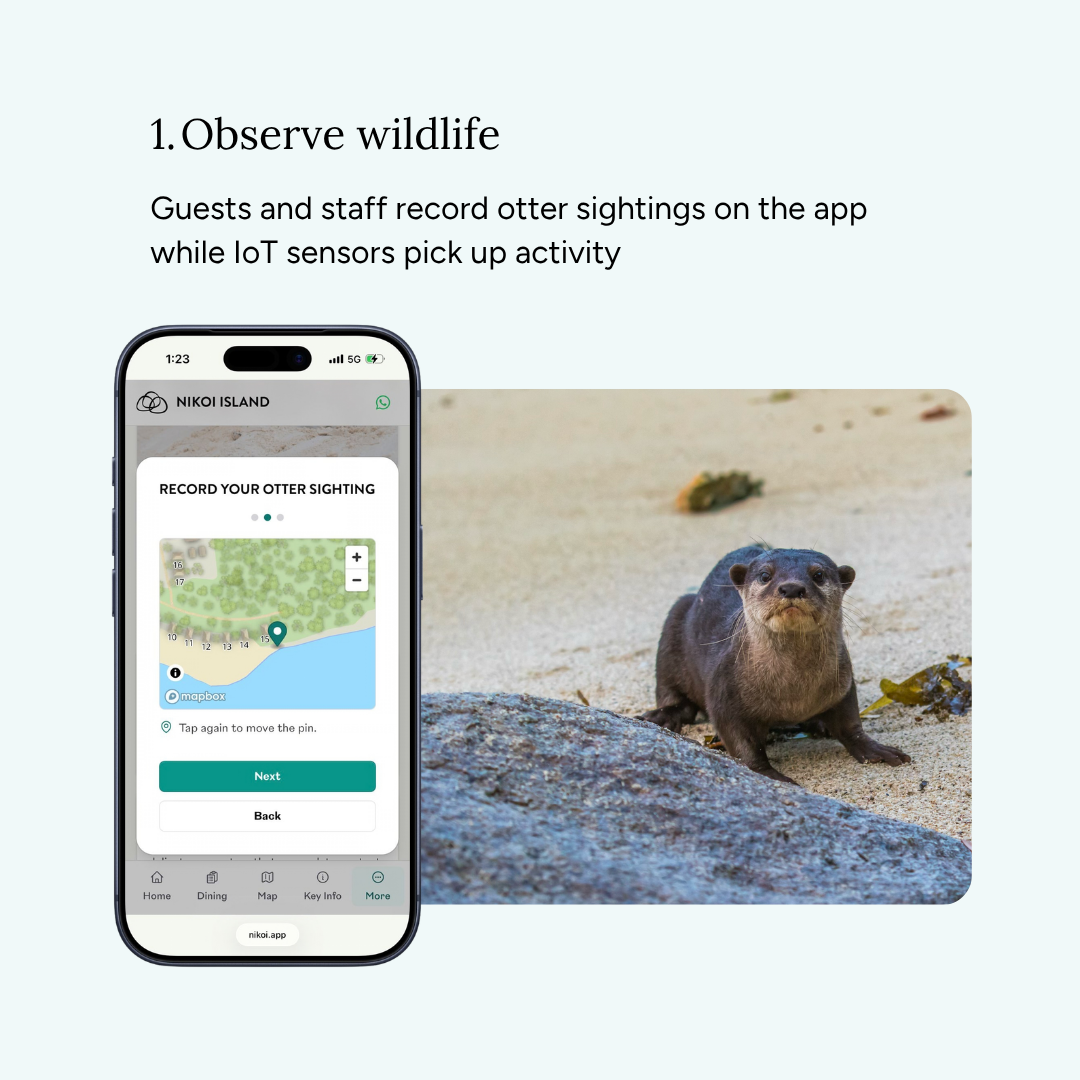
The furry locals who started it all
One of Nikoi's most iconic residents is the Asian small-clawed otter.
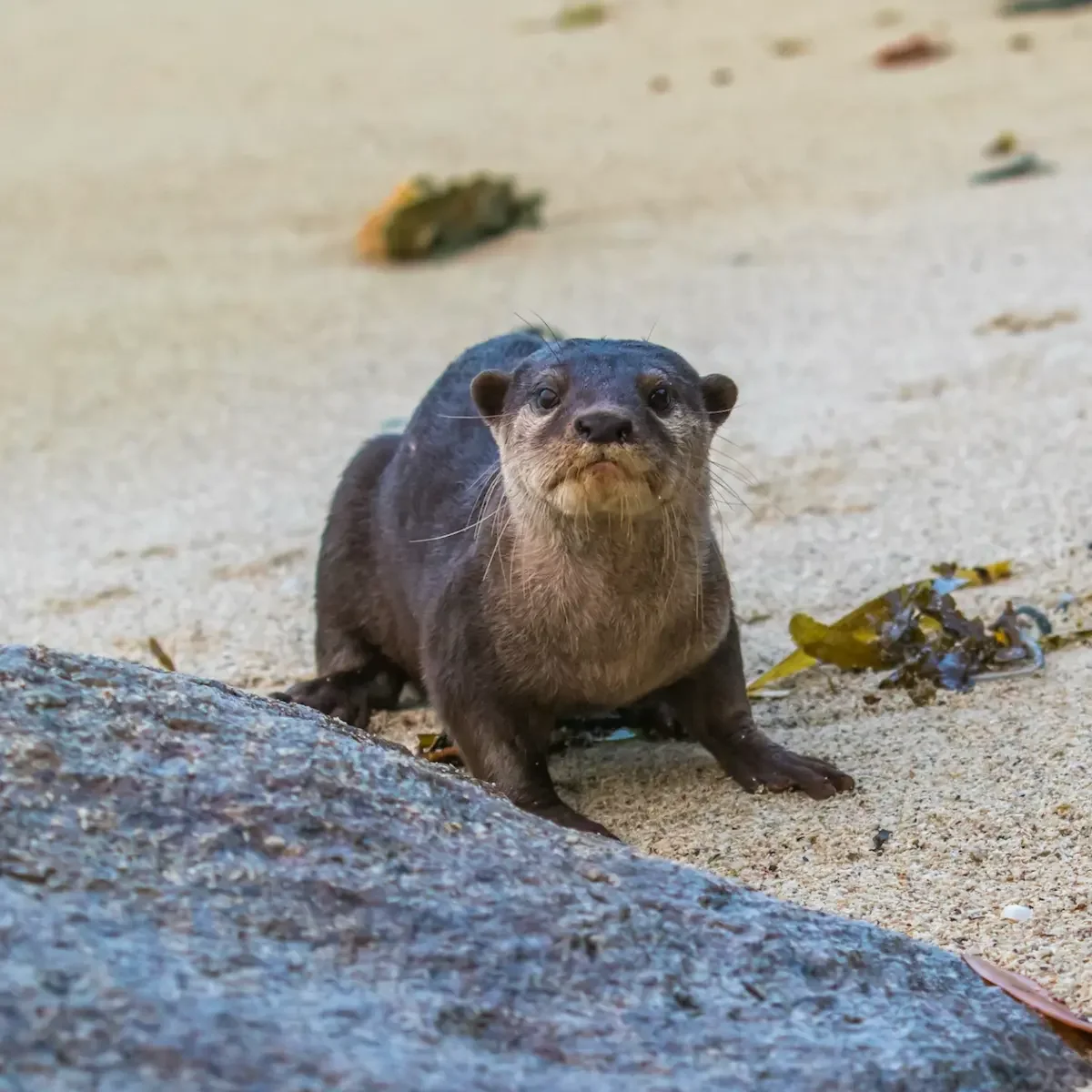
Meet the Asian small-clawed otter: highly social, curious and disrespectful of resort boundaries.
"Our team began seeing a group regularly since Covid," Ollie says. "They're highly social, curious, and not particularly respectful of resort boundaries." They dart between villas, turn up near guests without warning, and every so often, take a dip in the swimming pools.
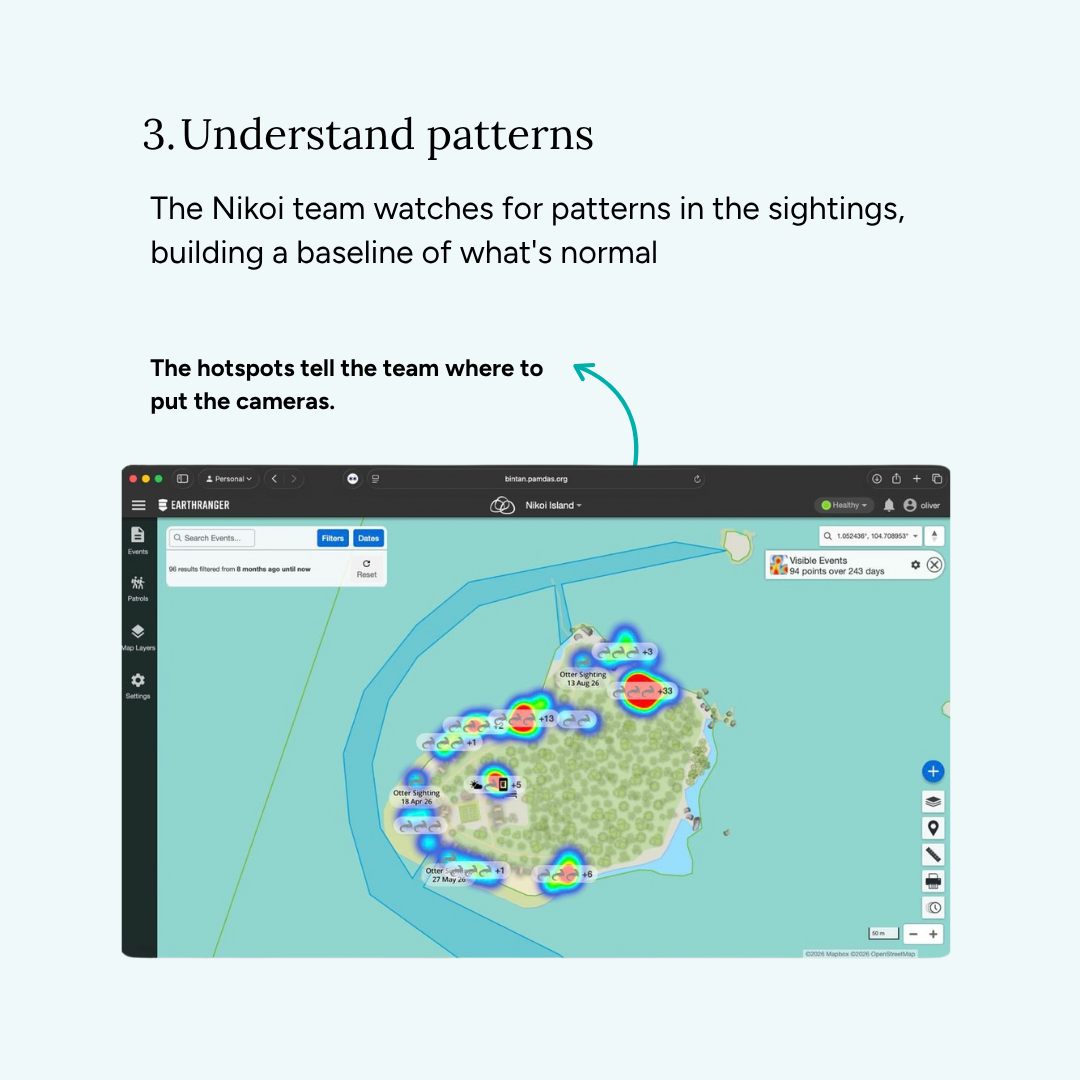
The goal was to understand where and when the otters were moving.
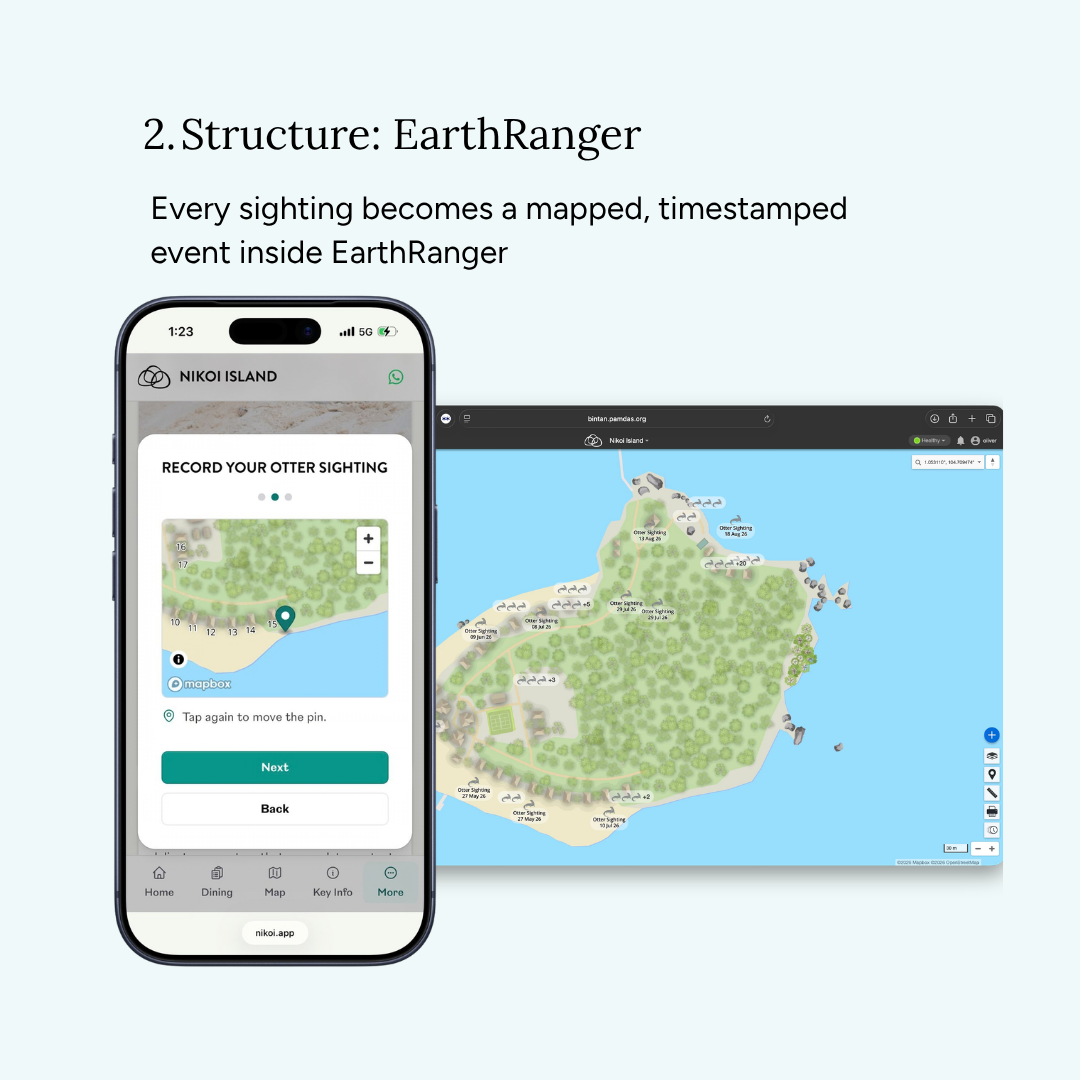
The island is small enough that guests and staff run into otters constantly, so the reporting had to stay light, or nobody would bother using it. Ollie designed a simple process: spot an otter, open the app, log roughly where and how many. And it all takes under a minute. From there, the report passes through a secure middleware and lands in EarthRanger as a timestamped, mapped event.
In the last three months guests have submitted 95 live otter sightings, giving the team a much clearer picture of where encounters are occurring around the island.
But these reports still depend on someone being there to see the otters.
The $100 cameras that track what people miss
To spot any activity people might miss after dark, they installed consumer-grade home security cameras in the otter "hotspots."
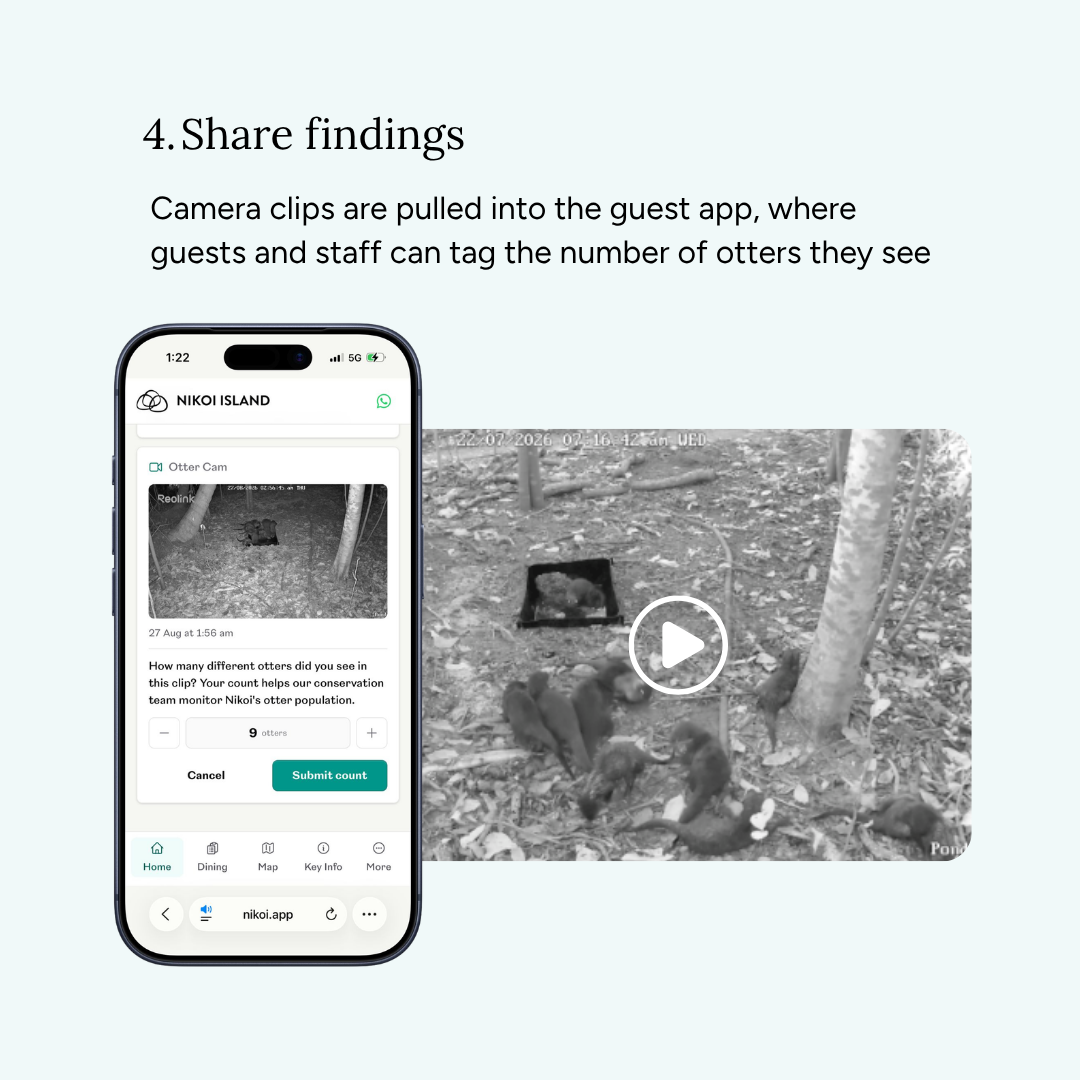
Nothing fancy, just off-the-shelf hardware for around $100. When the camera detects an otter, an event is created in EarthRanger.
Why AI can't count otters (yet)
AI may take over the world someday, but right now, it's not very good at reliably counting a tight, fast-moving group of otters.
Nikoi tested some advanced AI detection models, and they failed. That failure became a wonderful opportunity for guests to watch the videos, count otters, and report how many they see.
Back at Borana, where this idea started, the same idea runs deeper
Every sighting a guest logs at Borana, whether that’s wildlife or invasive alien plants, pops up on a screen in that same command centre, in real time.
Someone on duty checks it and validates before it counts as data. Ciara Hubble, Head of Conservation Data and Systems at Borana, explains: "That's truly another level of being able to validate the data that's coming in from citizen science."
📸 photographed by Brian Siambi.
It's inspiring how much guests notice once you give them something small and specific to look for, often more than your own team could catch alone. Neither Borana nor Nikoi's team asks guests to do conservation work on their holiday. They do it anyway, because it's fun, and everyone comes out ahead.