
The Ultimate Show of Trust: Two CEOs Swap Everything for a Month
How we created this article: The introduction is lovingly written by humans (and only humans). We used AI to clean up garbled sentences in the transcript from one of our internal community calls with Andrew and Louise. That’s how the following Q&A came about.
In April 2026, Louise Cottar, CEO of Cottar's Safaris in Kenya's Maasai Mara, and Andrew Dixon, CEO of Nikoi and Cempedak Private Islands in Indonesia, handed each other their businesses, their teams and their homes for a month. The story made international headlines, including this piece in Forbes. But the story behind the story is the one we can tell best: what it takes, and what it gives, to trust another founder with everything you've built.
Many of us work remotely, trading office chit-chat for screens. We barely know the names of our neighbours anymore, never mind relying on them for milk and tea like we once did. We’ve traded a village for a WhatsApp group we recently muted. And if we do belong to a community, it's likely to exist outside of work in the form of a running crew or book club. What we've gained in personal freedom, we've lost in community. It's the archetypal trade-off of modern living.
We can't tell you the number of times members from The Long Run, our community of nearly 130 nature-based tourism businesses, have met at our annual or regional gathering and discovered they'd spent twenty years asking the same questions in different contexts. It may sound too good to be true, but it makes sense. When you've spent most of your working life toiling over the same challenges, it can feel like a miracle to find a group of kindred spirits who can not only relate to you entirely but organise their passions and projects in the same 4C framework.
The Long Run is the kind of community where an idea tossed out on the way to the beach can change two businesses on opposite sides of the world. At our 2023 annual gathering on Nikoi, a private island off Indonesia, Andrew Dixon was busy hosting, and frantic. "Louise had a towel on her shoulder, heading down to the beach with a book on her arm, while I was getting stressed out about having 50 The Long Run members turn up," he recalls. "She made what I thought was a passing comment: why don't we do a CEO exchange? I was like, well, that's the last thing on my mind. But by the end of the five days, I went up to her and said, were you serious about that? Because it was bugging me the whole time."
It was, Louise confirms. "There'd never been an exchange at a very senior level. And we can't preach what we don't practice. So I asked Andrew."
In April 2026, Louise Cottar, CEO of Cottar's Safaris in Kenya's Maasai Mara, and Andrew Dixon, CEO of Nikoi and Cempedak Private Islands in Indonesia, handed each other their businesses, their teams and their homes for a month. The story made international headlines, including this piece in Forbes. But the story behind the story is the one we can tell best: what it takes, and what it gives, to trust another founder, another Long Run Global Ecosphere Retreat, with everything you've built.
In June, Louise and Andrew sat down together at Mandala Club in Singapore to reflect on the month. Here is that conversation, in their own words, edited and condensed for clarity.
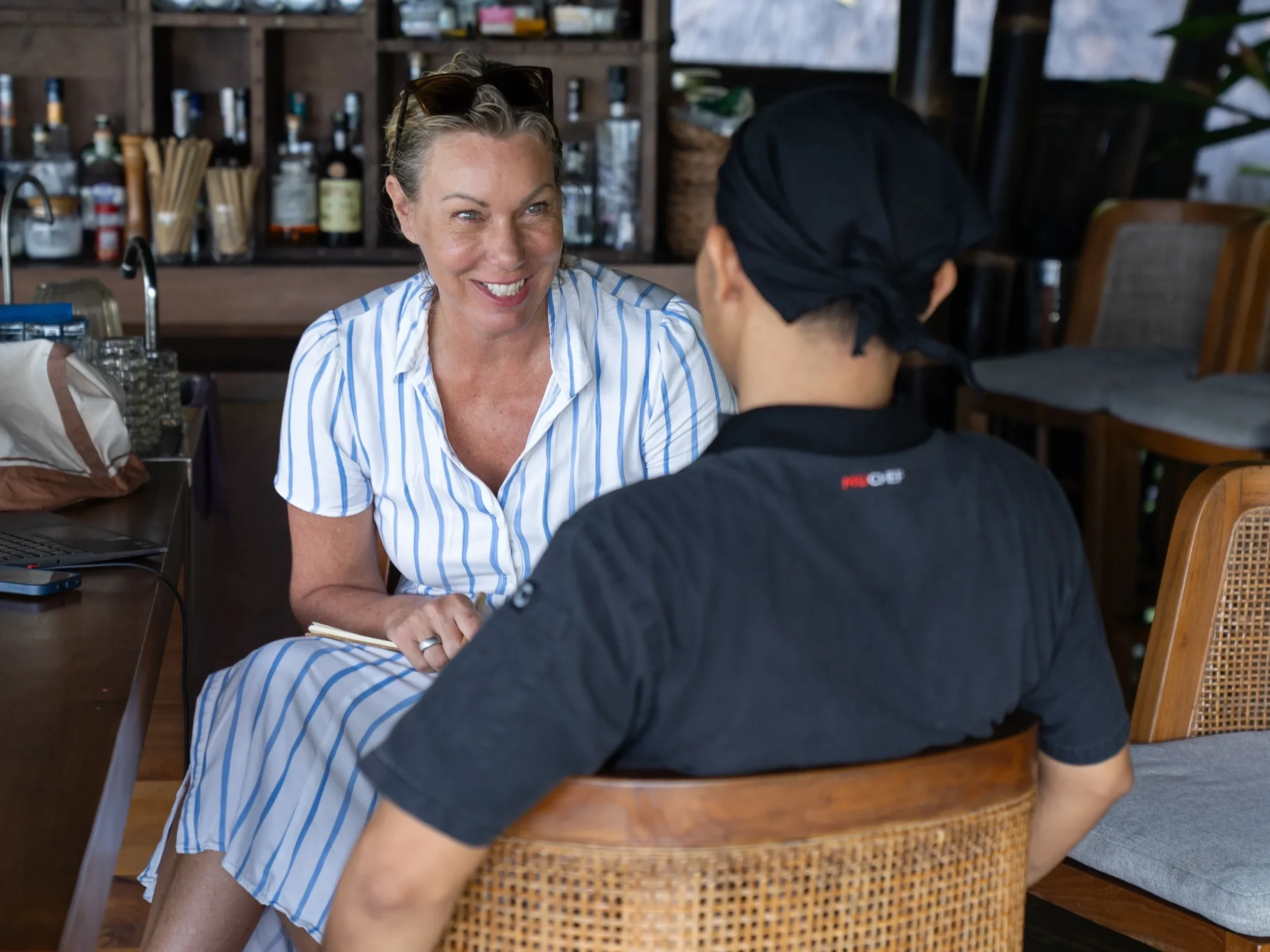
Louise Cottar with a member of Andrew's team on Nikoi. Both CEOs began their exchange the same way: staff first, listening before making any changes.
For those meeting us for the first time: what is The Long Run, and what membership mean to you as a tourism business?
LOUISE: The Long Run is a membership organisation for nature-based travel businesses that are trying to do really good things in the world. There are almost 130 members globally, and between us we're conserving around 23 million acres of land or marine areas, looking after thousands of species, including around 400 that are critically endangered or endangered. We're really pushing the boundaries of what the private sector can do for conservation and sustainability.
There's a Global Ecosphere Retreat® standard that members can work towards. It's not a tick-box exercise, it's about helping properties become globally significant. There are around 125 criteria, and it's a very hard standard to reach. Only 12 properties in the world have achieved it, and Nikoi and Cottar’s Safaris are two them..
We do exchanges once a year where we visit another property. It doesn't need to be similar to learn a lot. In fact, the differences can be very useful. We trust each other, so we talk openly about challenges. It's very refreshing.
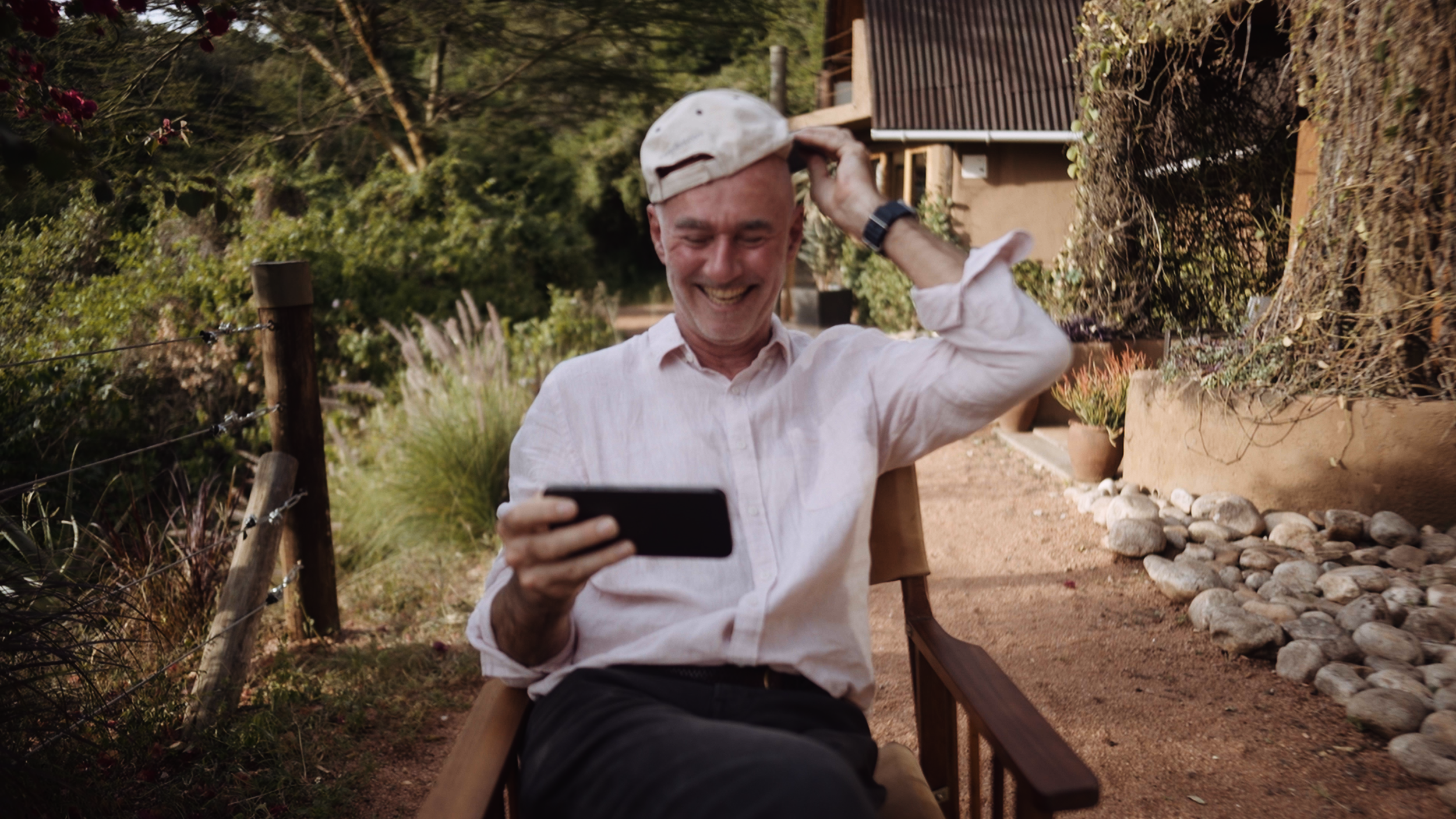
Andrew at Cottar's in a camp cap, wondering what on earth he'd signed up for (by day one he'd been enrolled in a Zumba class.)
ANDREW: I remember being asked once if we were 100% sustainable, and I thought, that's a strange question. How do you ever reach that benchmark? There isn't really an endpoint. Even if you got there, you'd want to go beyond it. We're all constantly on a journey to improve.
The Long Run framework captures it well. The 4Cs: community, culture, conservation and commerce. If you can balance those, you strengthen your business. It takes time, but you end up with very strong businesses.
A safari camp and a private island. What could they possibly have in common?
LOUISE: Lots, weirdly. Running a tourism business brings similar challenges: conservation funding, the bottom line, and customer journeys. Even some of the species overlapped. We have Tomb bats in Kenya, there were Tomb bats on the islands. Monitor lizards, the same rays, and turtles. I never would have expected that. We're both off-grid, so managing power is similar. I'm definitely going home with some tricks from Nikoi and Cempedak. There were more similarities than I anticipated.
And the conservation surprises kept coming. While I was on Nikoi, a group of researchers was surveying the reefs, and they came back one evening convinced they'd found new species, possibly eleven of them. In Kenya, we joke about "little brown jobs," the plain birds nobody photographs. These fish were the little brown jobs of the sea, not much to look at. But a new species, discovered while you're standing there? I got completely enthused. All of these species matter. For the record, we didn't agree on everything!
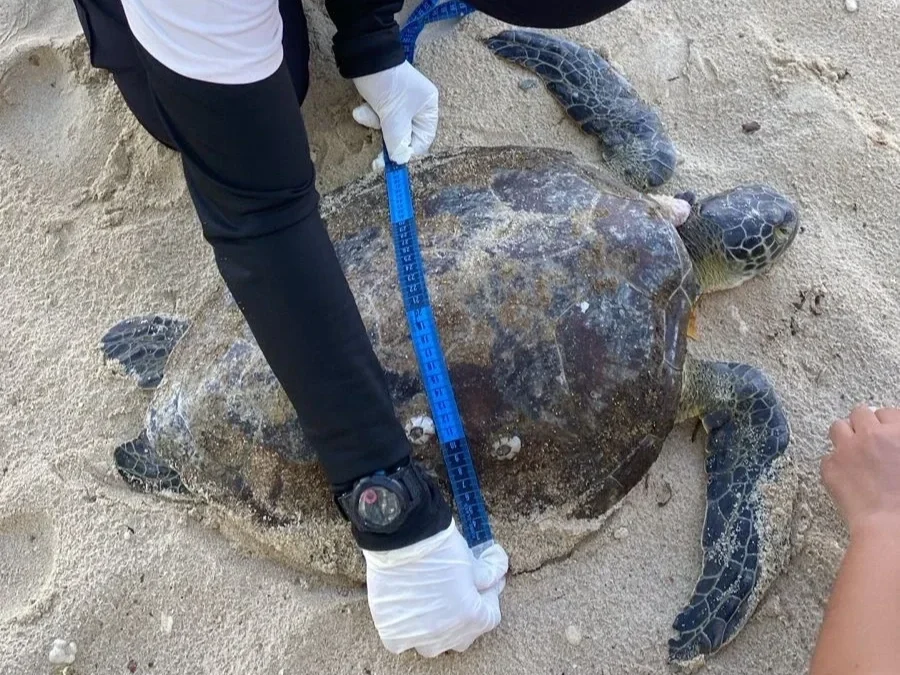
Louise watching a turtle being measured, an important part of Nikoi’s sea turtle conservation process.
How much of a swap was it, really?
ANDREW: That was something I thought about a lot. Louise initially suggested six months, which felt like quite a lot.
LOUISE: No, I don't think I did. I think it felt like six months for Andrew.
ANDREW: We ended up doing a month, which is short but also long enough to understand how a business operates. We started by setting goals for what we wanted to achieve. We were very open, including financials, but obviously, we weren't handing over bank accounts. There were limits. You wouldn't fire anyone or sell the business.
In many ways, it felt like being a guest CEO. The staff did come for guidance, and often it was more about discussing ideas with them rather than making decisions. It was quite collaborative.
One unexpected benefit was succession planning. It made us think about what would happen if we stepped away, and who would step up. I found that really interesting.
What does it actually take to hand someone your business?
LOUISE: Trust is absolutely critical. I call it sharing your "CEO undies". You're showing the rough edges of your business, the things you may not be able to speak to others about so openly. Don't do this if you don't have trust.
It's also very personal. It's like handing over your child for a month and trusting someone else to shape the child, believing that at the end they'll have more confidence and a greater ability to withstand risks and threats.
We had weekly calls to sense-check things, share what we were doing, and guide each other a bit.
“Trust is absolutely critical. I call it sharing your “CEO undies”. You’re showing the rough edges of your business, the things you may not be able to speak to others about so openly. Don’t do this if you don’t have trust.”
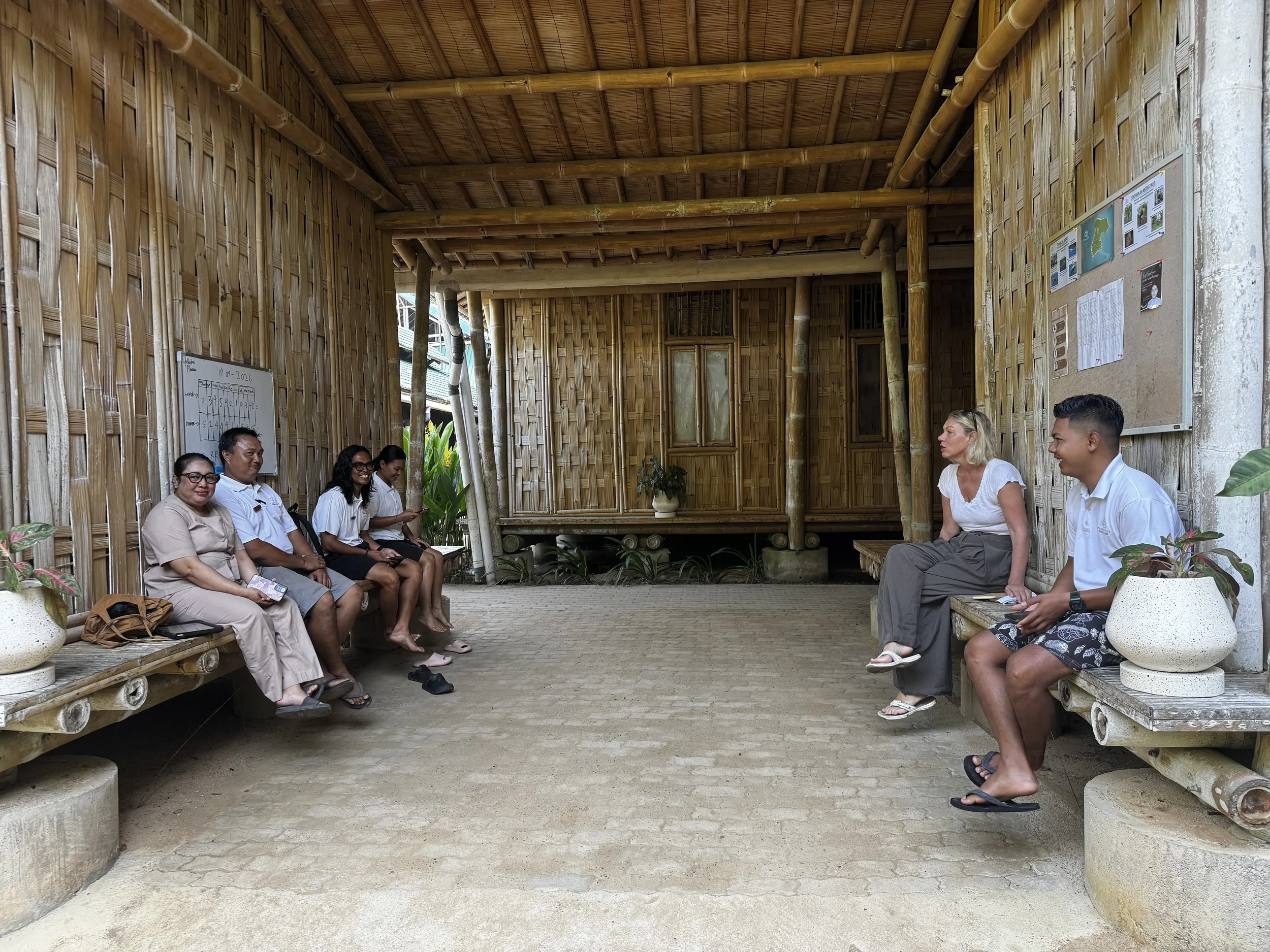
Louise chatting with Andrew's team at the morning operations meeting where the staff end by turning to each other and saying "happy working."
What was day one like?
ANDREW: The team had it all mapped out before I could object. I wanted to go straight down to the camp, but they insisted I spend the first week in Nairobi meeting everyone, and it was exactly the right thing to do. Then the next thing I know, I'm down at the camp and they've signed me up for a Zumba class at the staff gathering. So that was a bit of an eye opener. I focused on staff first, especially heads of department. I had long conversations with them, often running well over the allotted hour. I explained I wasn't there to audit or change things, just to listen and learn. That helped break the ice. After that, it was about observing how things worked during busy times and quiet times. Speaking to guests and spending time in the back of house, which is always key in hospitality.
LOUISE: Very similar for me. I sat down with the staff first. I listened, I learned. It's impossible to fully understand a business even after a month. Seeing things through the eyes of a guest was important, and also looking at the back of house, where guests don't usually go.
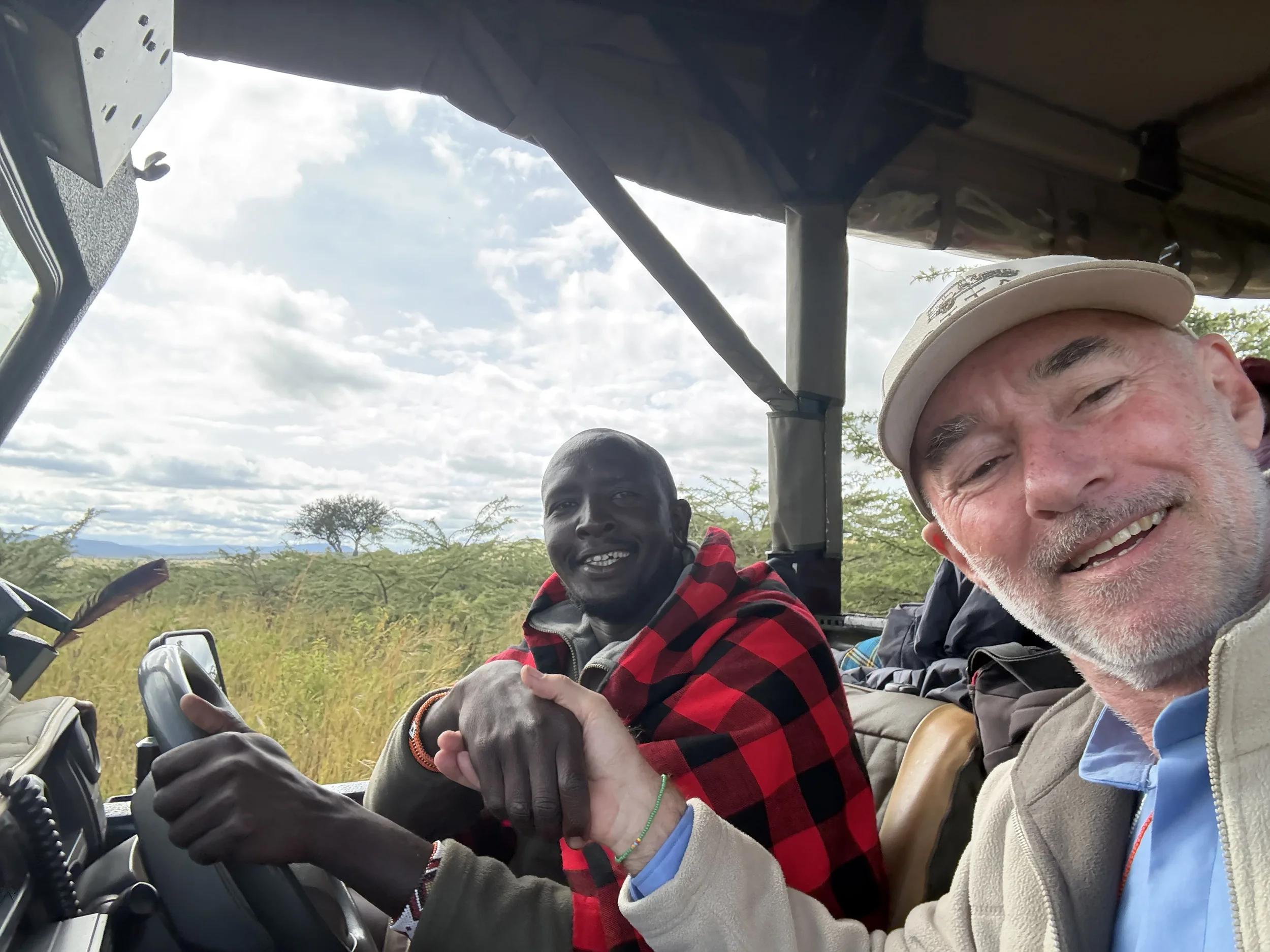
Andrew on a game drive with one of Louise’s team members.
Was anything uncomfortable?
LOUISE: The responsibility. I felt more pressure running Andrew's business than my own. What if I did it wrong? What if I didn't do well enough? Andrew is a colleague, but he's also a friend, and I didn't want to let him down.
There were also cultural differences. Some things are universal, like clear and direct communication, but team dynamics can be very local. So I navigated that space with light feet.
ANDREW: I felt similarly. The Kenyan team was incredibly warm and welcoming. It reminded me a lot of Indonesia, that same spirit of hospitality. They were a really delightful crew to work with.
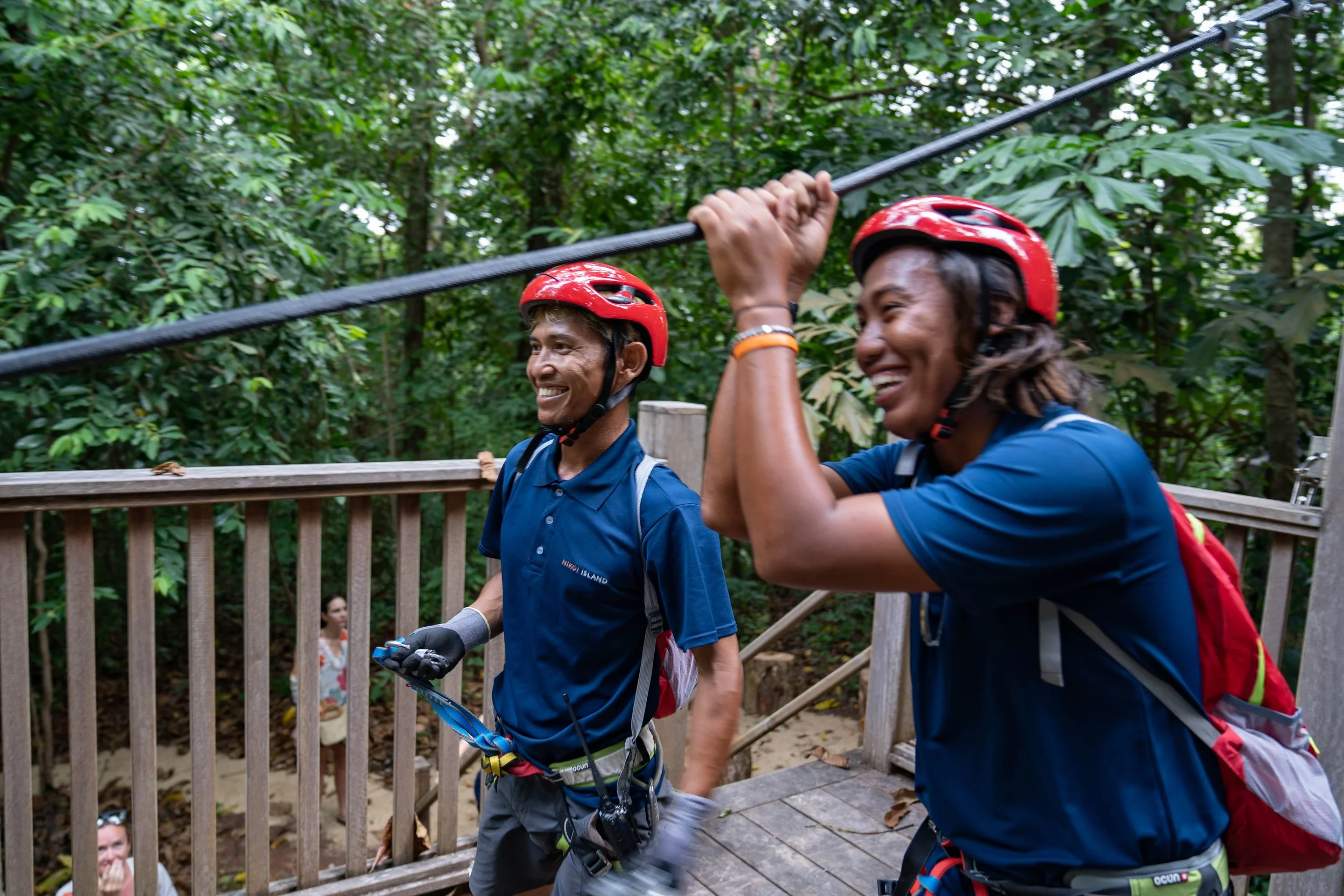
Louise spends time with Angus and Bruno, two members of Andrew’s team, at Nikoi’s jungle zip line.
What could a fellow CEO give you that a consultant never could?
LOUISE: When experts come into a business, they come with a particular angle. We were looking at it through multiple lenses, including being a client. Fresh eyes, because when you're in the business, you're too close to it sometimes and there are blind spots.
And I found a lot of validation in what Andrew does. It's a funny thing to say, because most of the time you talk to your board and they're looking at the bottom line. There's a lot in running a business that goes unnoticed. Just validating that Andrew does a lot of things really, really well, and for him to hear that, I think is important. A board oftentimes won't go into the nitty-gritty of running a business.
I also got properly excited. Fifteen pages of ideas and recommendations. Sorry, Andrew.
What's one thing you're taking back?
ANDREW: The canvas bathtubs. I've put in an order for two. And there's a really good Kenyan gin.
LOUISE: "Happy working." At the end of the morning operations meeting on Cempedak, the staff turn to each other and say, “happy working”. I couldn't believe it. Who starts the day like that? It was so pure and inspirational. Definitely taking that.
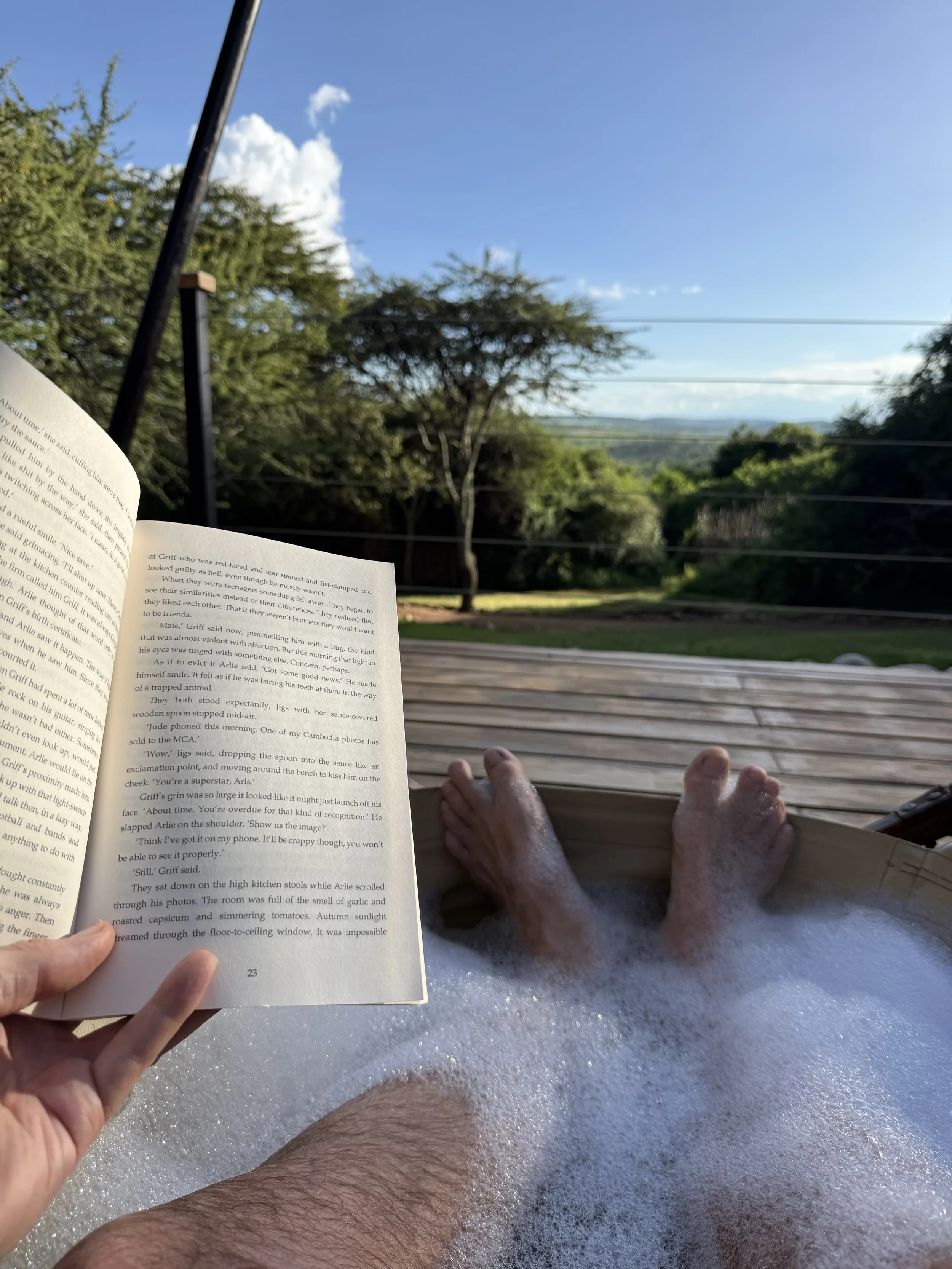
Andrew couldn’t get enough of the canvas bathtubs looking out onto the Maasai Mara.
Should other CEOs do this?
LOUISE: Yes but ask four questions first. Does it grow you? Does it help the other person? Does it benefit your business? Does it benefit theirs? If it doesn't answer all four, don't do it.
And two things we didn't factor in: rest and keeping a toe in your own business. You're never fully out of contact, and you shouldn't be.
ANDREW: I was exhausted by the end of the month. One suggestion I'd make to anyone: take a bit of a break in between.
LOUISE: But here's what I never anticipated when we wrote the terms of reference. It takes a couple of weeks to settle in, and while you're learning the other business, you're also disengaging from your own. Once that disengagement happens, maybe 80 or 90 percent, there's a real sense of being able to look up. The daily noise fades and you can see your business from a distance. That's helped me go back with energy, new ideas, and the will to address things I'd been putting off for a while.
ANDREW: It would have been very difficult to do this without the common framework we have through The Long Run. I've known Louise for more than ten years, and I'd visited her property. But having that shared framework made it a lot simpler, because there was a reference both businesses could come back to. Without that, it would take a lot more work to replicate.
“It would have been very difficult to do this without the common framework we have through The Long Run. I’ve known Louise for more than ten years, and I’d visited her property. But having that shared framework made it a lot simpler, because there was a reference both businesses could come back to. Without that, it would take a lot more work to replicate.”
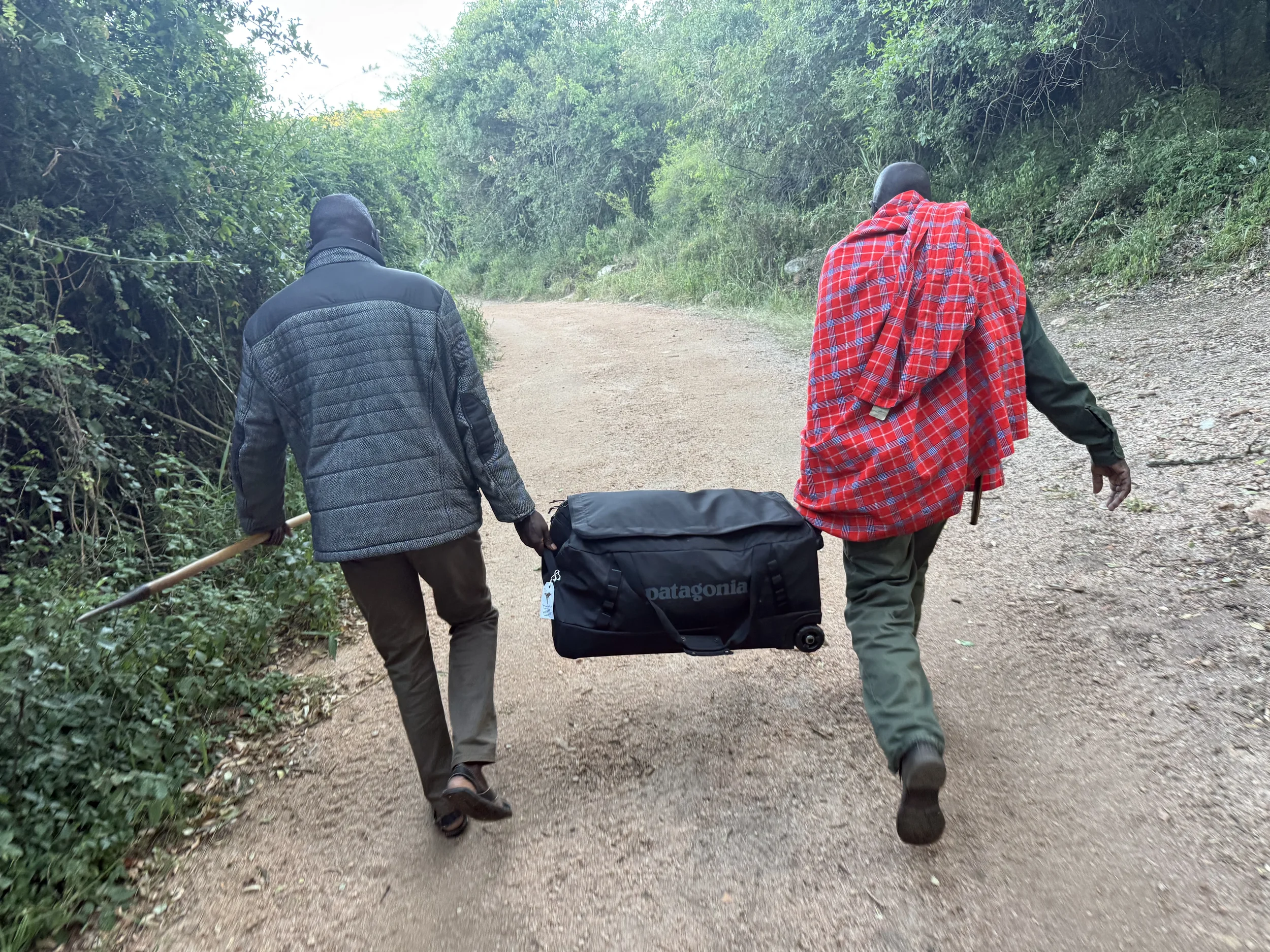
Home time for Andrew.