
Behind-the-scenes of our 2026 Asia Pacific Regional Hub Meeting
How we made this: We use AI tools to help us sift through 3 days of recordings while we sweat the details to make writing we can proudly stand behind. We’re fanatical about protecting, and spotlighting, the human voices in our community and we believe this is reflected in the article below.
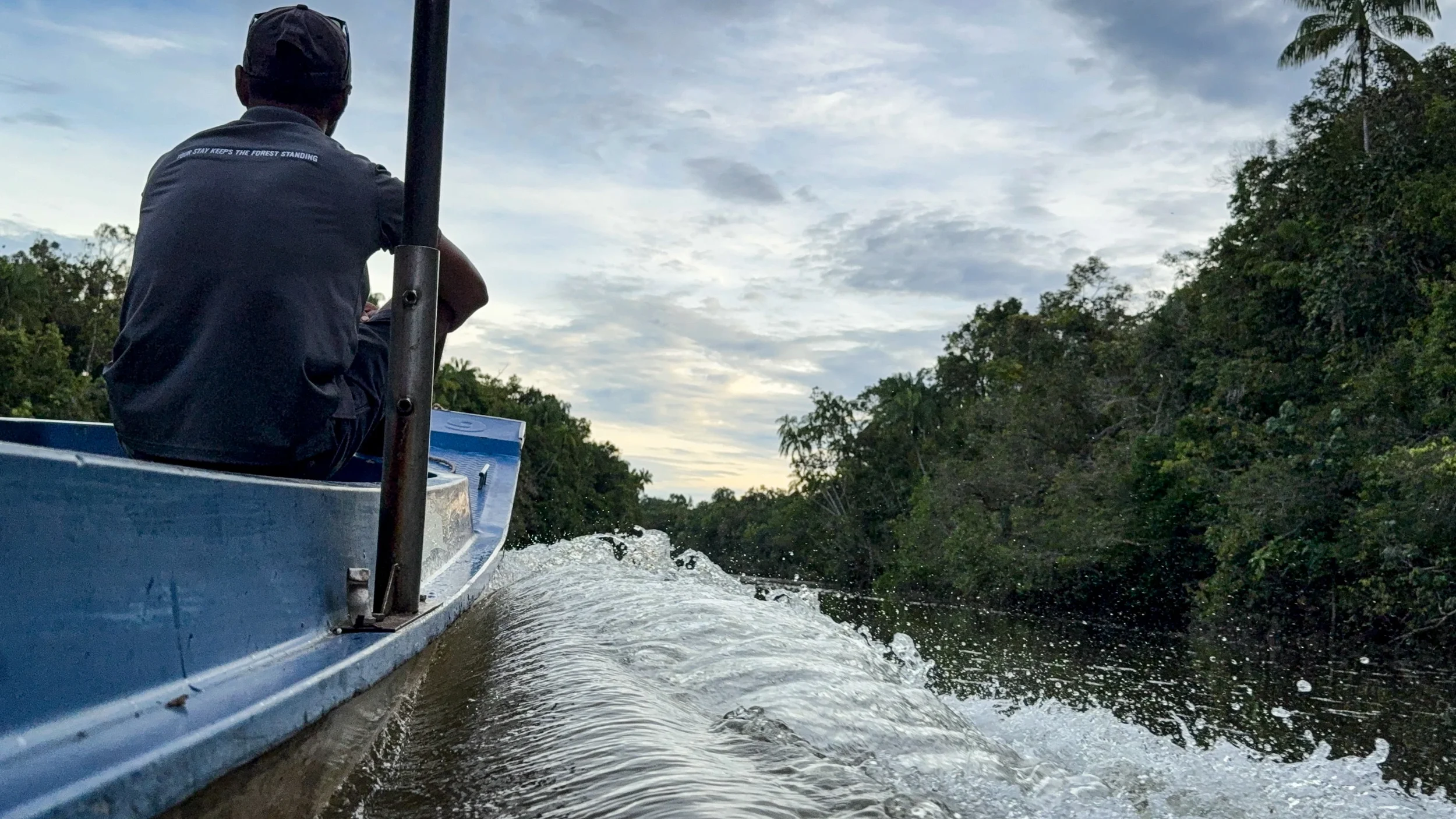
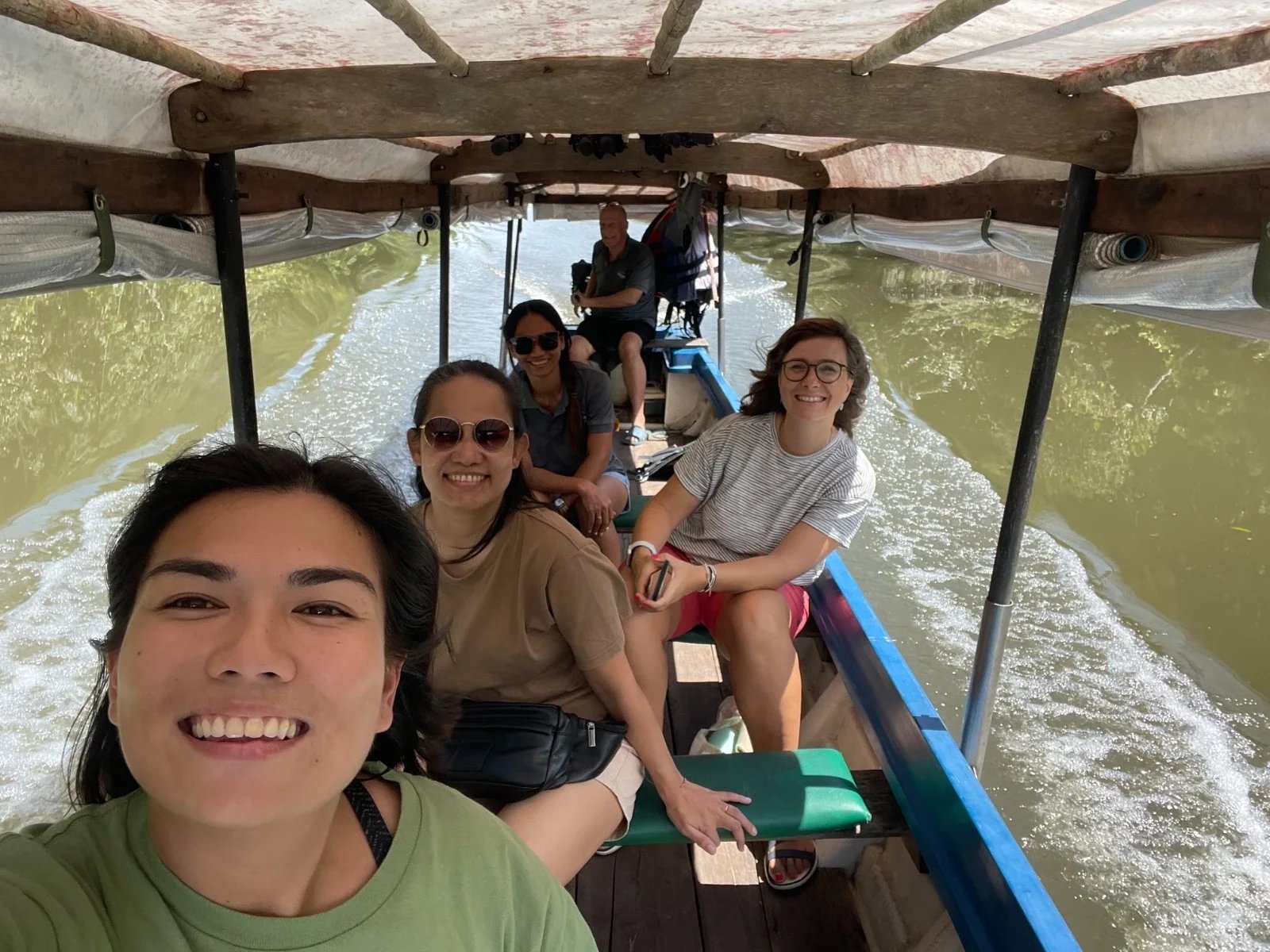
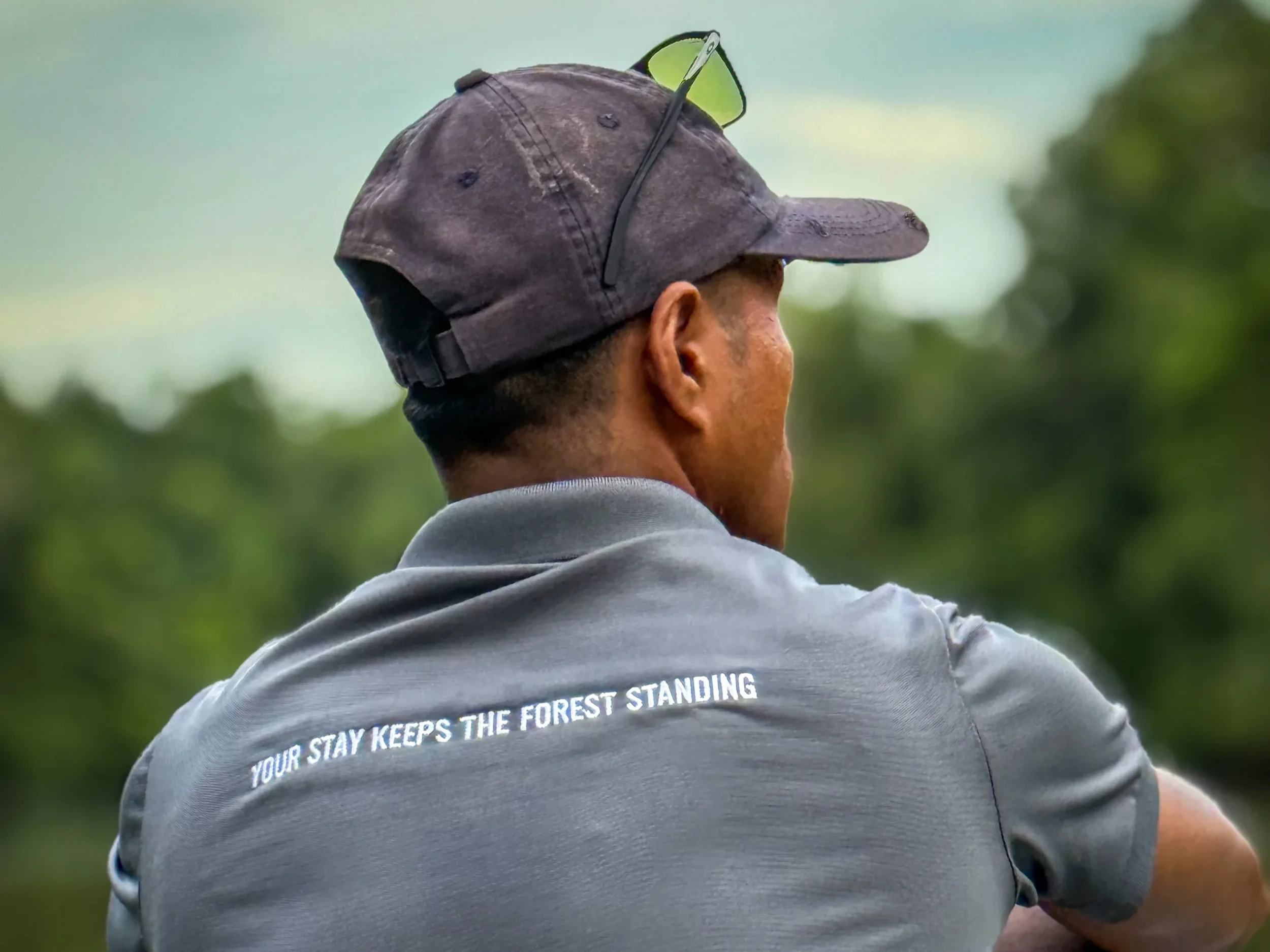
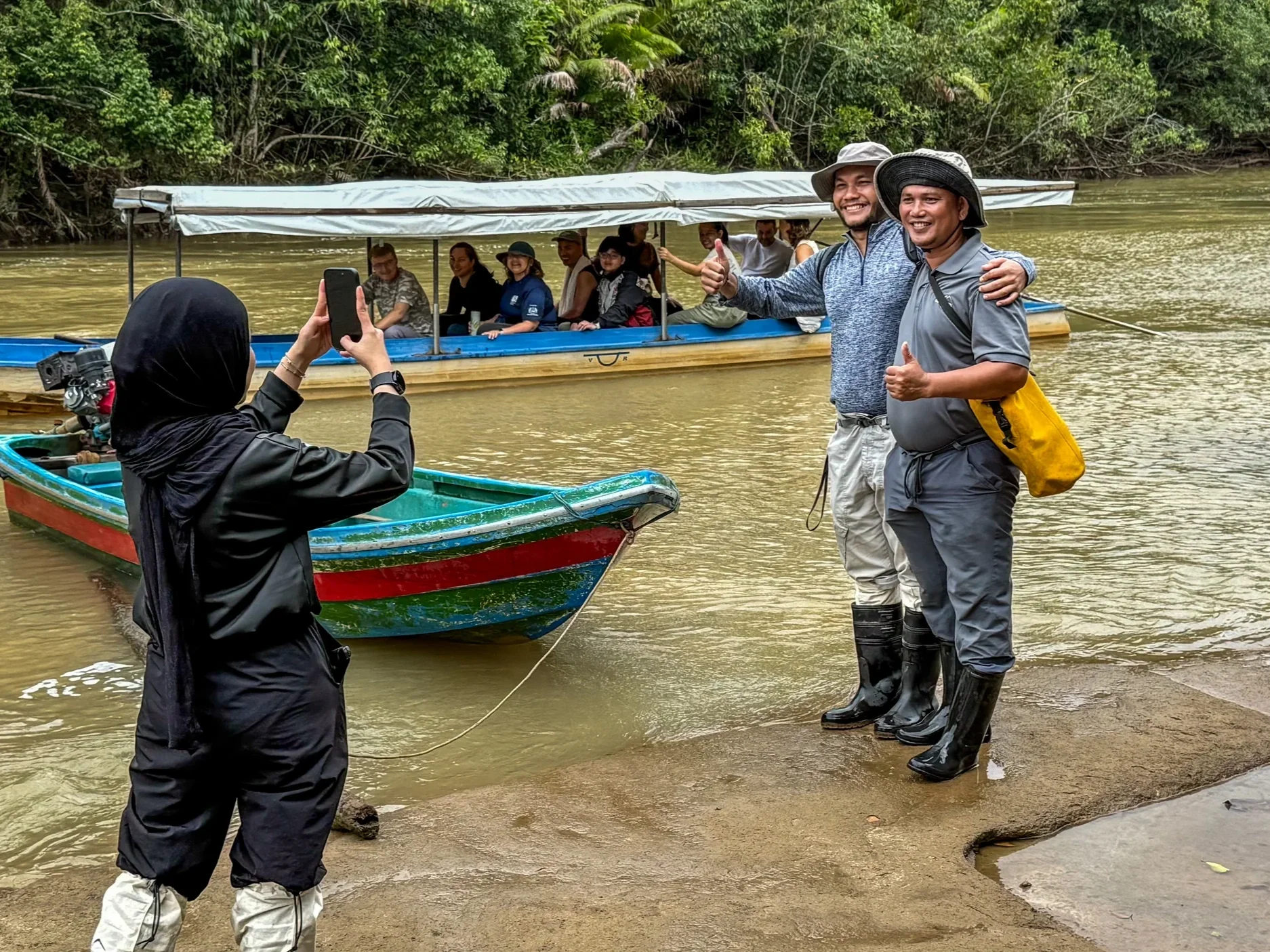
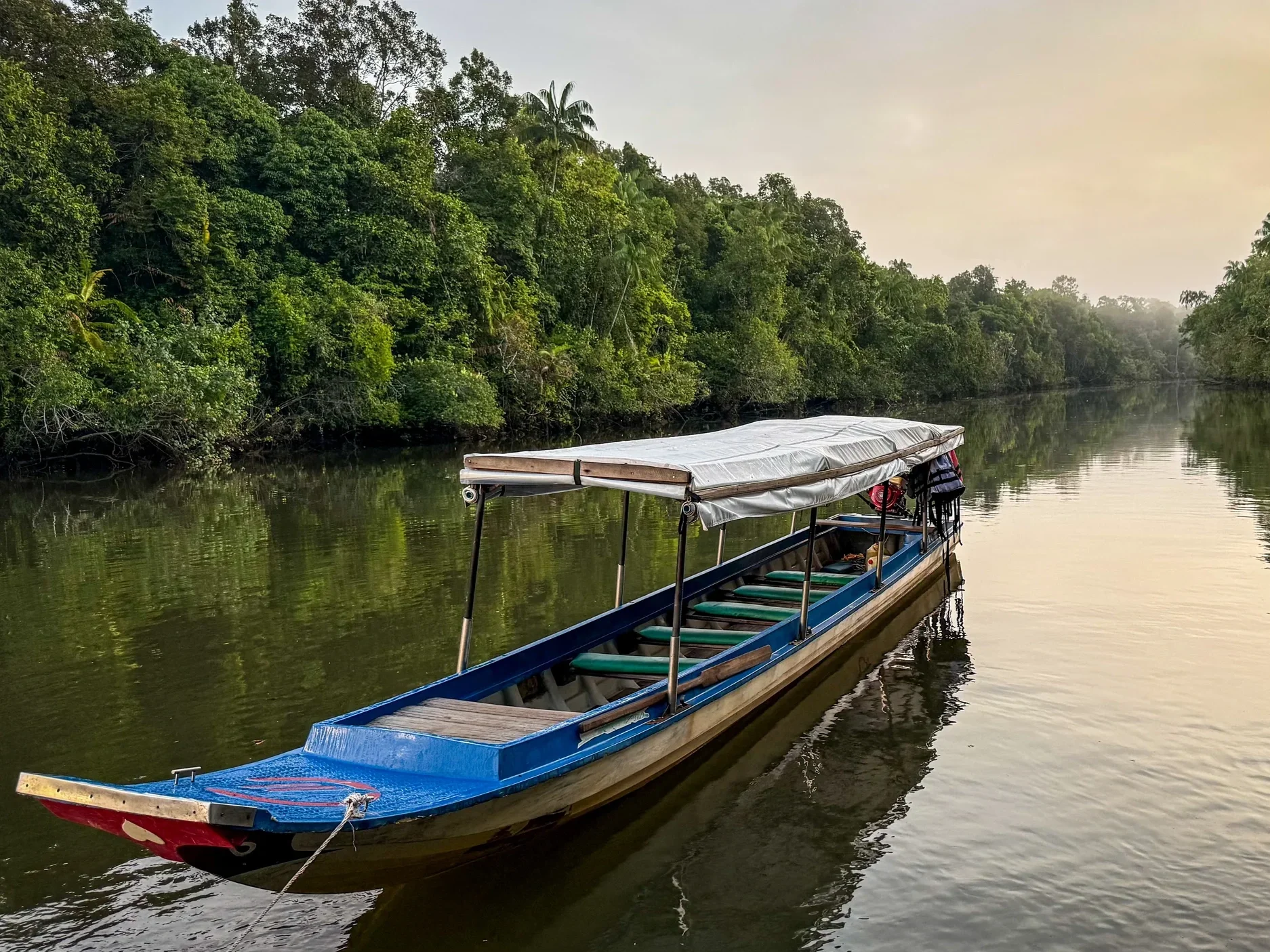
From the moment you arrive at Cardamom Tented Camp, a 40-minute journey upriver by boat, you are already part of the battle to save the forest around you. "Your Stay Keeps the Forest Standing," goes the camp's motto. This June, our Asia Pacific members gathered there to work through their hardest challenges as a community.
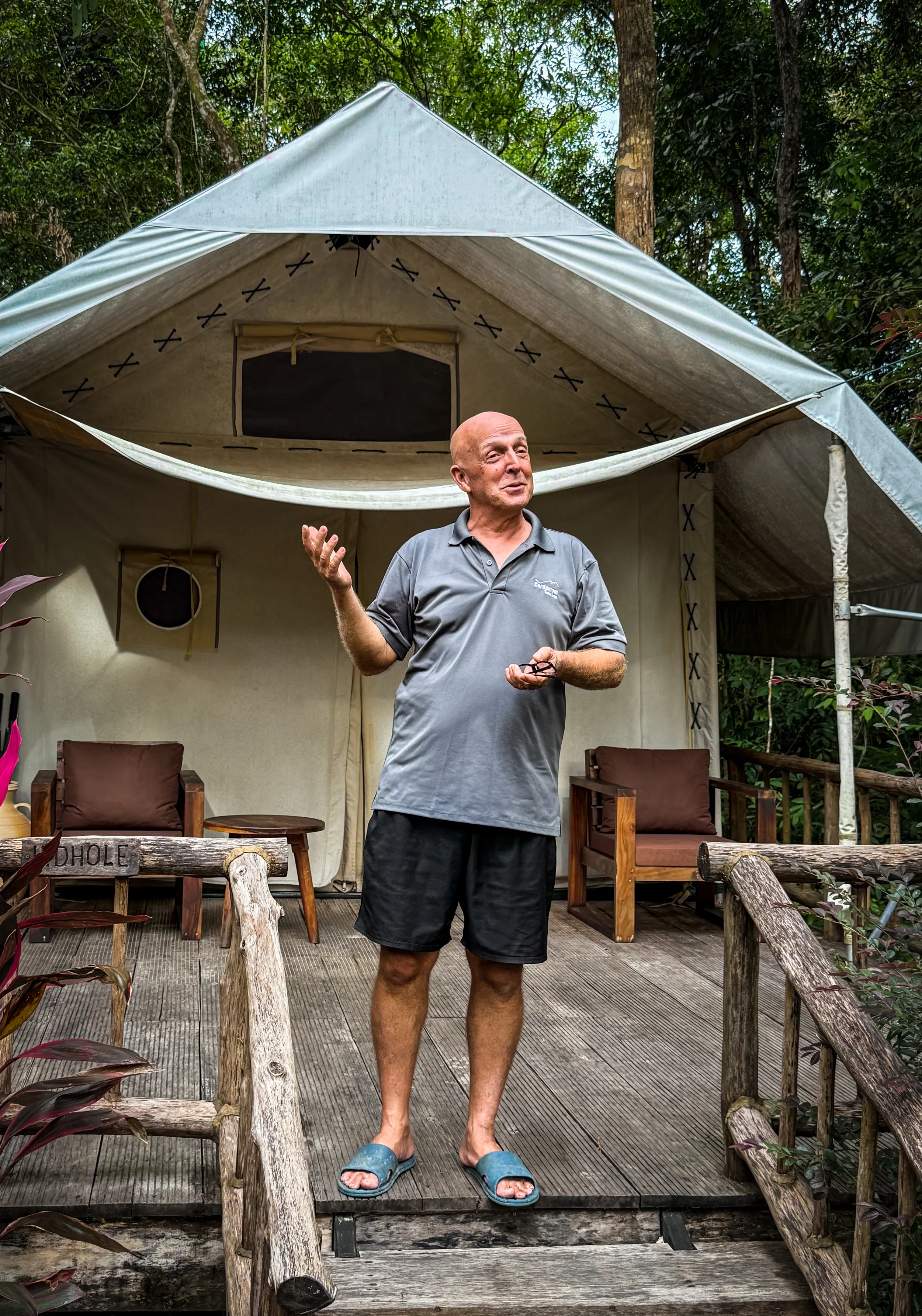
“The Long Run is an excellent network. It’s not the handing-out-business-cards-at-a-conference kind of network, but true alignment. A group genuinely wanting to do better in the world.”
The story behind Cardamom Tented Camp, our host venue in Cambodia
Rangers patrolling Botum Sakor National Park were once pulling more than 3,000 snares, along with dozens of chainsaws and guns, from the forest each year. Poachers and loggers were hollowing the forest out from the inside, and this vital elephant migration route was close to being lost to logging and slash-and-burn farming.
Cardamom Tented Camp was founded as a solution, a way to protect Botum Sakor National Park from poachers and loggers. It works as a three-way partnership: Wildlife Alliance brings the forest, its rangers, and the surrounding communities; YAANA Ventures brings tourism expertise; and Minor Hotels brings financial backing to build for impact rather than a quick return.
Allan Michaud, who runs the camp, was there when it began. After more than twenty years in Cambodia's forests, what struck him most as a measure of their impact was the absence of manmade sounds: "It had been a long while since I hadn't heard chainsaws revving 24/7." Held on an 18,073-hectare, 50-year conservation concession, the camp is deliberately hard to reach: twelve solar-powered tents, no road access, everything arriving by boat, run on one principle, "Your Stay Keeps the Forest Standing."
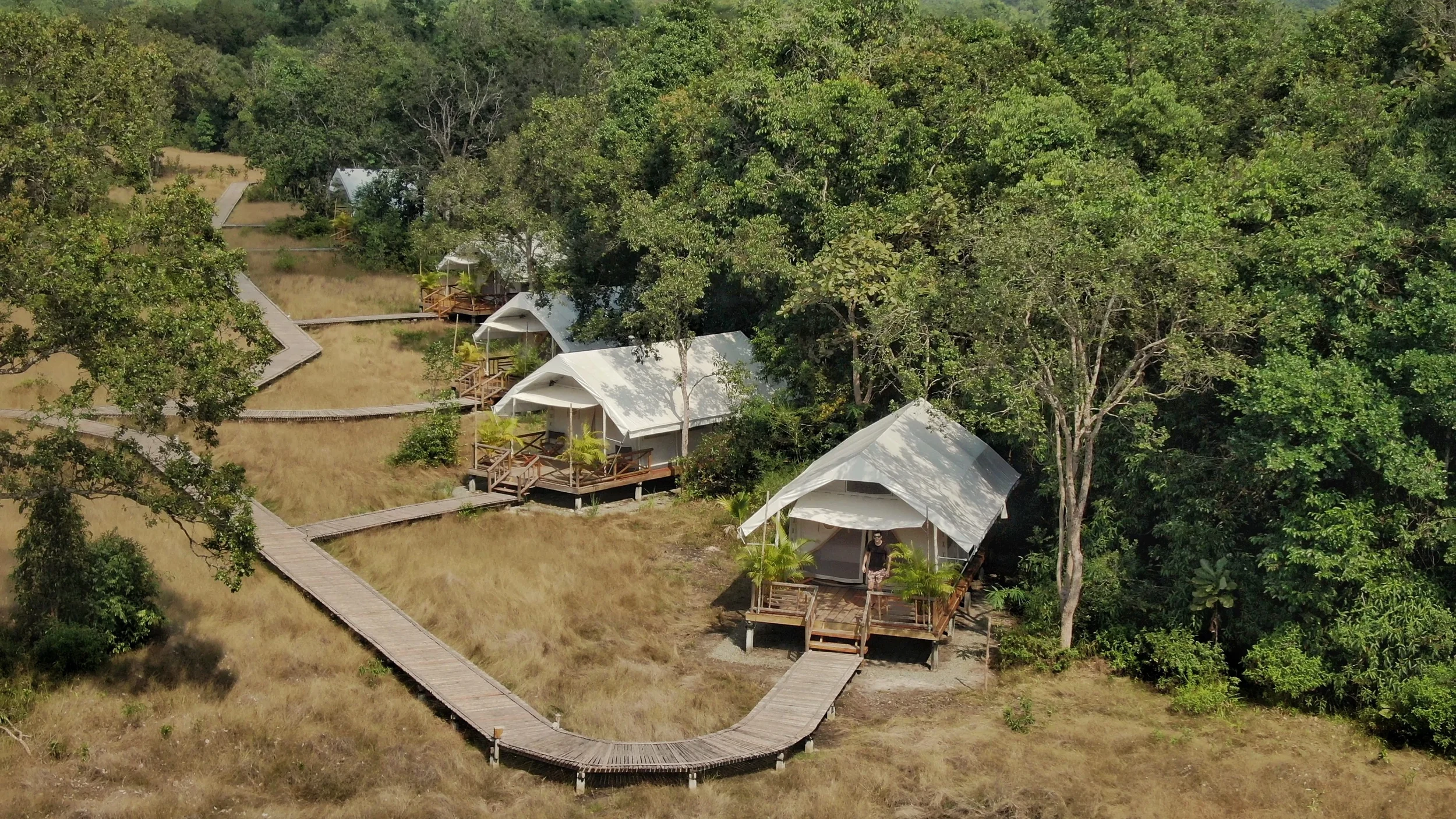
The tents don’t scrimp on creature comforts. The twelve luxury safari-style tents have proper beds and rain showers (powered, like everything else, by solar panels).
Guest stays fund the rangers who protect the forest, giving local people a steady income where poaching and logging once offered only an unpredictable one.
As Allan puts it, "We believe tourism is a good and sustainable way to preserve and help prosper the nature and communities in this protected area." A few dedicated people and a campsite are offering fresh hope to a place long at the mercy of exploitation, and a chance for travellers to see it for themselves.
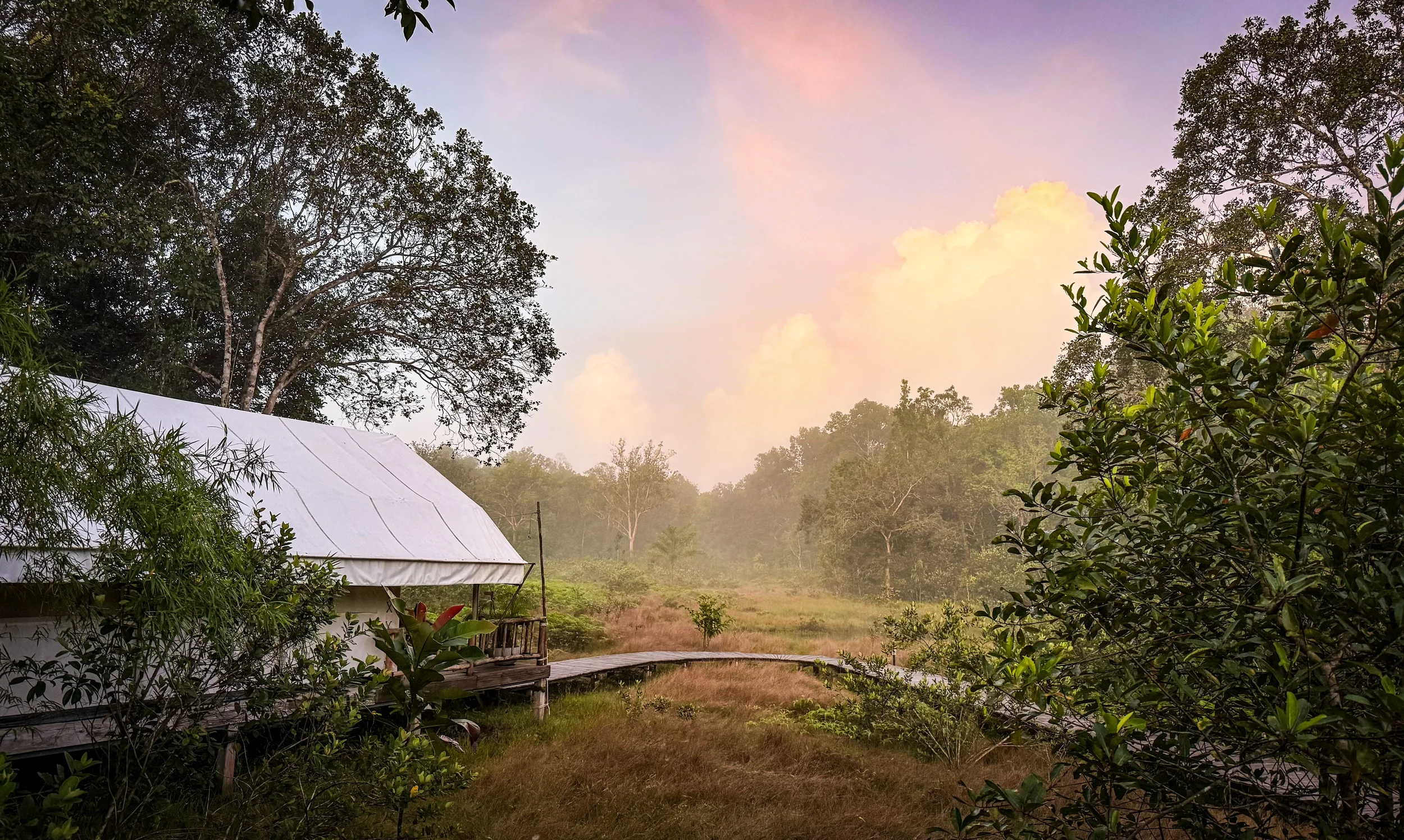
The camp at dawn. As Allan says, “We can’t ensure that you will see a monkey, let alone a gibbon, a bear or some of the rarer birds, but we can guarantee peace and quiet.”
The evidence is in the numbers, documented in their 2025 Impact Report. In 2025 alone, the rangers removed 819 snares and 632 metres of bird nets, cleared 15 illegal camps and confiscated 22 chainsaws. They rescued two Sunda pangolins, the most trafficked animal in the world. And with 25 new camera traps now watching the forest, the wildlife is returning: a rare marbled cat and four new snake species were spotted and recorded for the first time in 2025.
It is the clearest possible version of what The Long Run stands for: tourism that protects the nature it depends on. It is exactly why our members choose to work this way, and why it is fitting that Cardamom hosted this year's Asia Pacific Regional Hub Meeting, which brought our members together from across the region under the theme "From Influence to Evidence: The 4Cs in Practice."
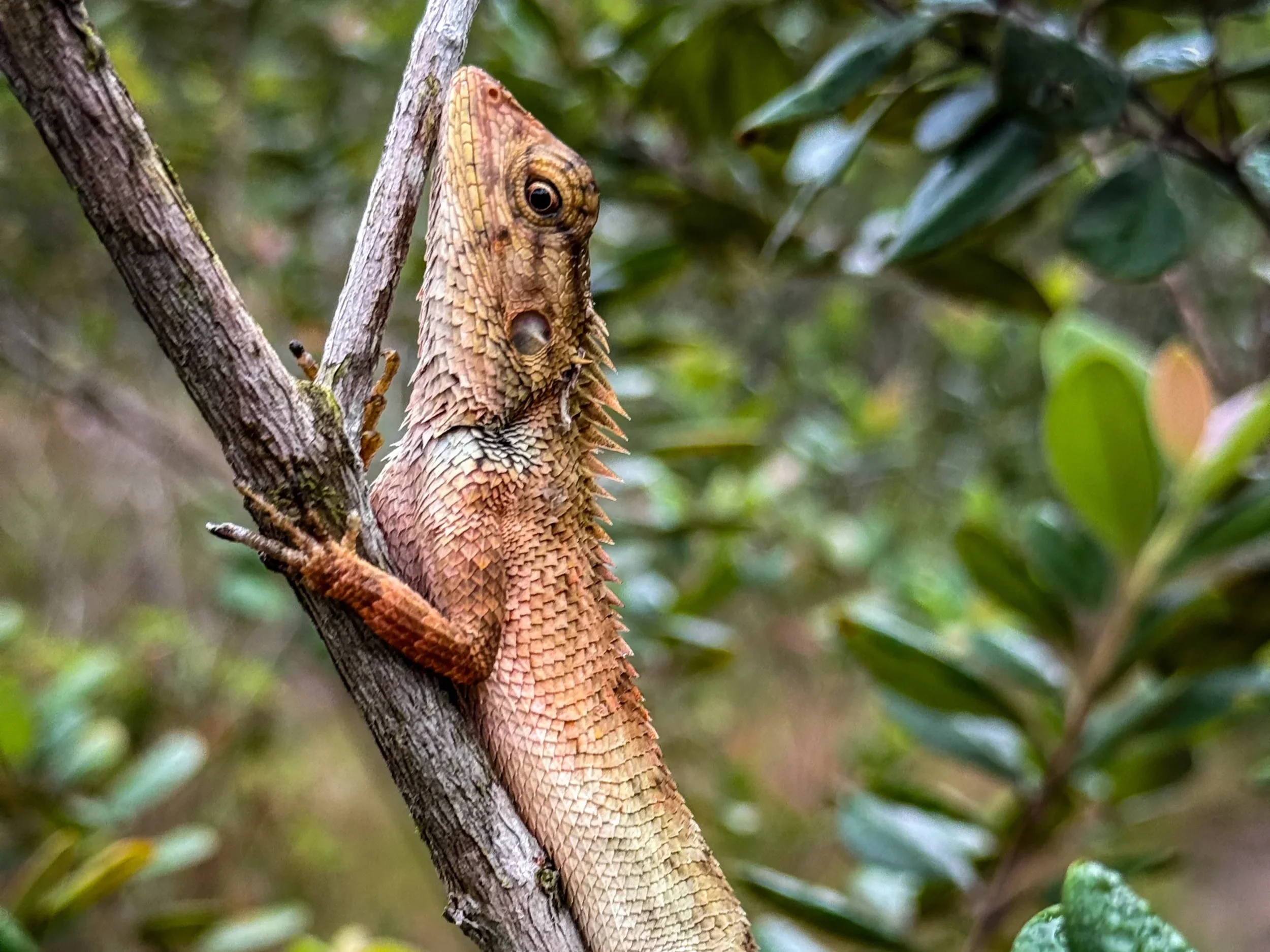
A Crested Forest Lizard (Calotes emma) lending a skeptical eye to Olivier Marchesin’s camera lens.
What makes this so different to a conference
Two things set our regional hub meetings apart from the usual industry gatherings:
Nothing here is a passive presentation. The meeting is deliberately designed so that every member arrives with a real, unresolved problem and leaves with the beginnings of an answer. The honest answers that emerge tell us, as a community, where our members really need support. Three of those challenges, and the solutions the room offered, are further down.
The back-of-house tour. Our members go deep into the everyday details with their host. Allan led the group through the operational heart of the camp for close to two hours, and it was a masterclass in conservation-led hospitality.
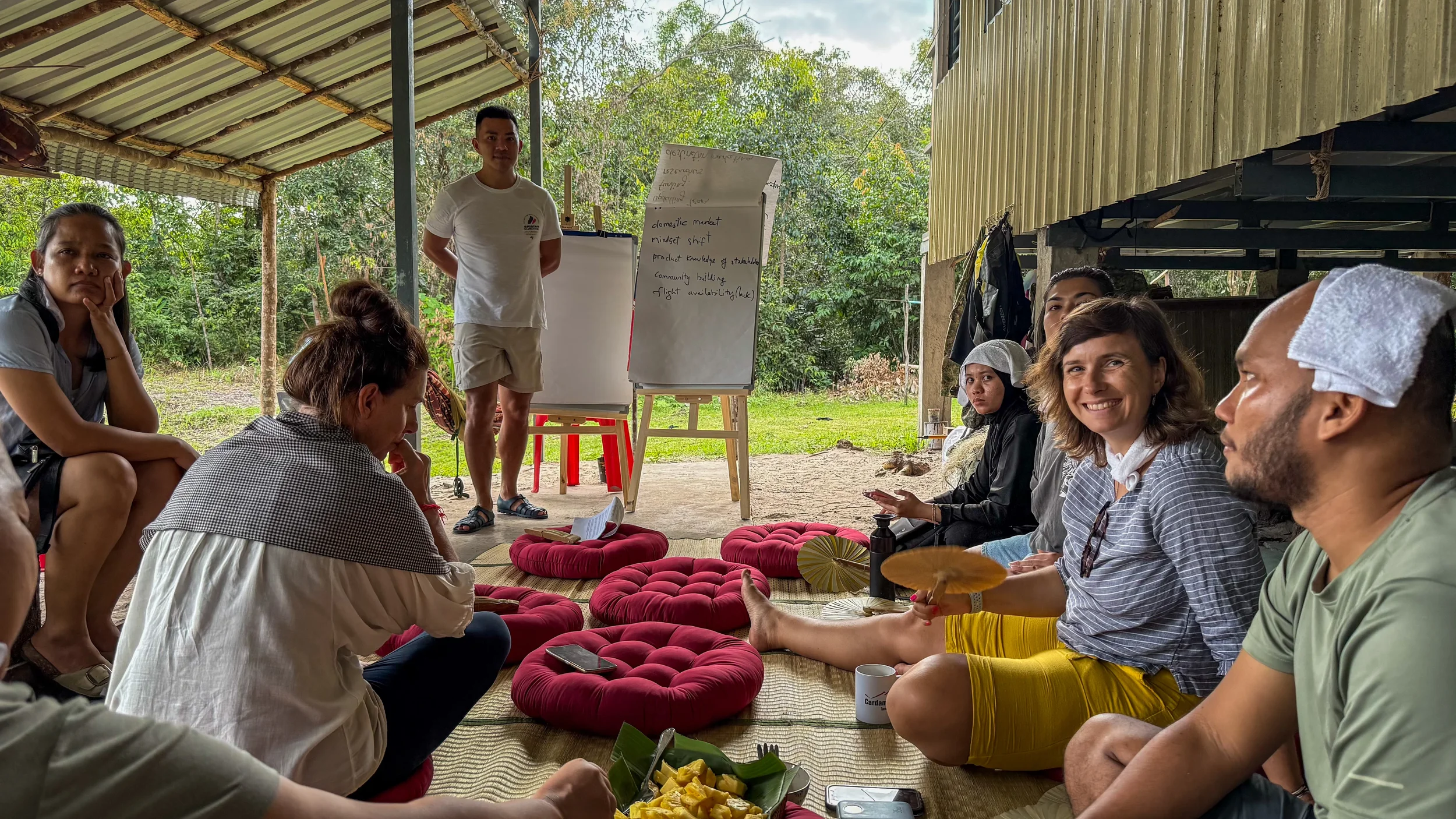
After a morning hike, the team settled into Jeremy’s session with pineapple pieces to snack on and cool cloths to fight the humidity.
Back-of-house highlights:
The camp separates several waste streams, including plastic, cardboard, cans, metal, cooking oil, and beer bottles, ensuring that as much material as possible is diverted from landfill
The entire camp runs on solar energy, which means no fuel deliveries by boat and no generator noise. The one real threat is lightning, so the panels now sit behind oversized rods after a strike once took out the entire system
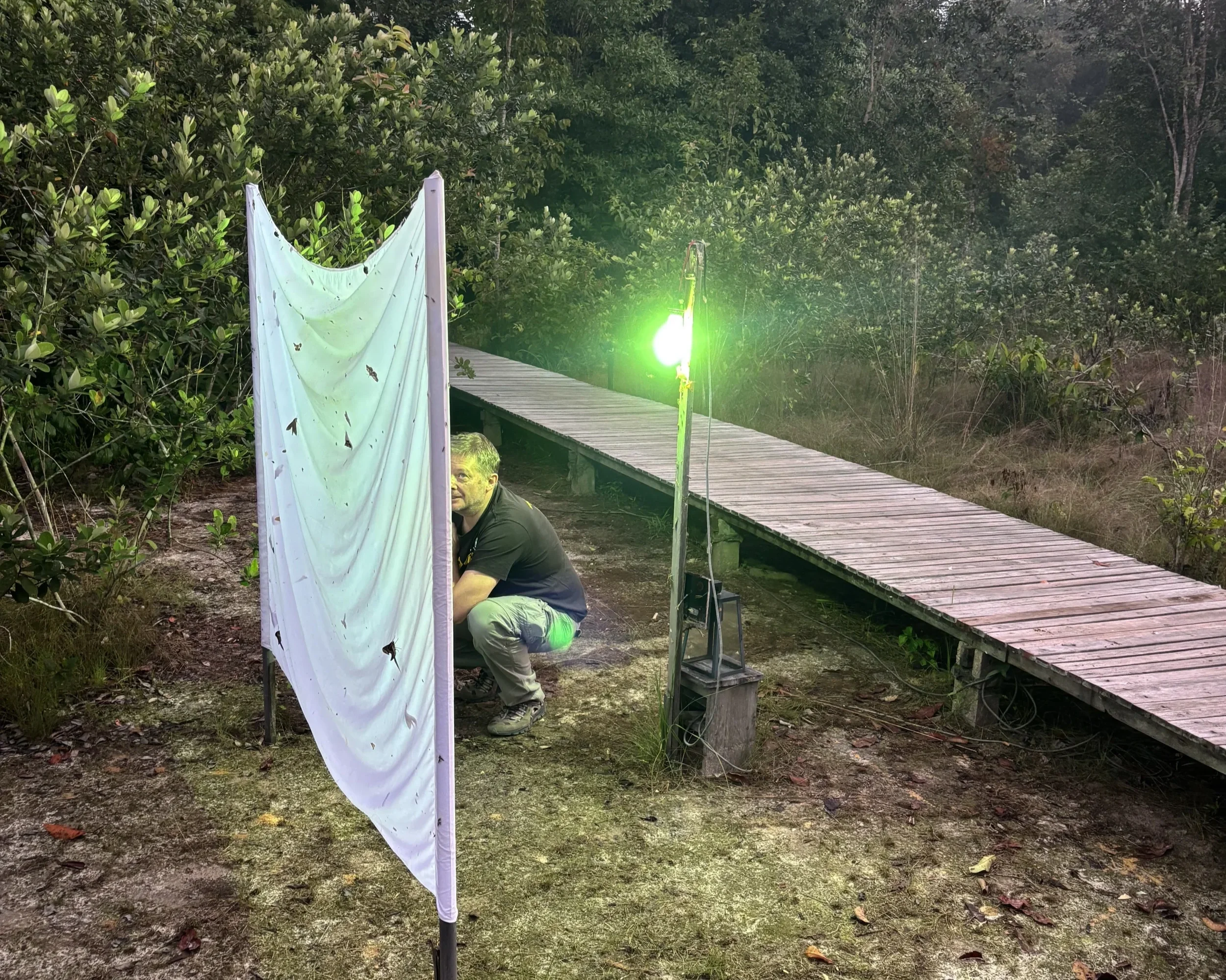
After dusk, a white cloth is strung up to draw moths and insects (known as ‘light-sheeting’). It’s a citizen science method to attract, observe, and document nocturnal moths and insects. Guests are welcome to discover the rich biodiversity thriving just steps from their tent. See below.


“We should not be scared of trying things or doing things, regardless of the capacity of the business. Some big, some small—the idea is to try. There’s no perfection. Perfection doesn’t exist in sustainability. It’s all about continuous progress.”
What we learned from the Cambodian rangers
For a deeper understanding of the challenges the area faces, guests can join a trek with the rangers. For many members, it was the first time meeting forest rangers up close, and there was real pride in simply being able to shake their hands. What stayed with the group was the scale of the ground these rangers cover and the risk inherent in the work.
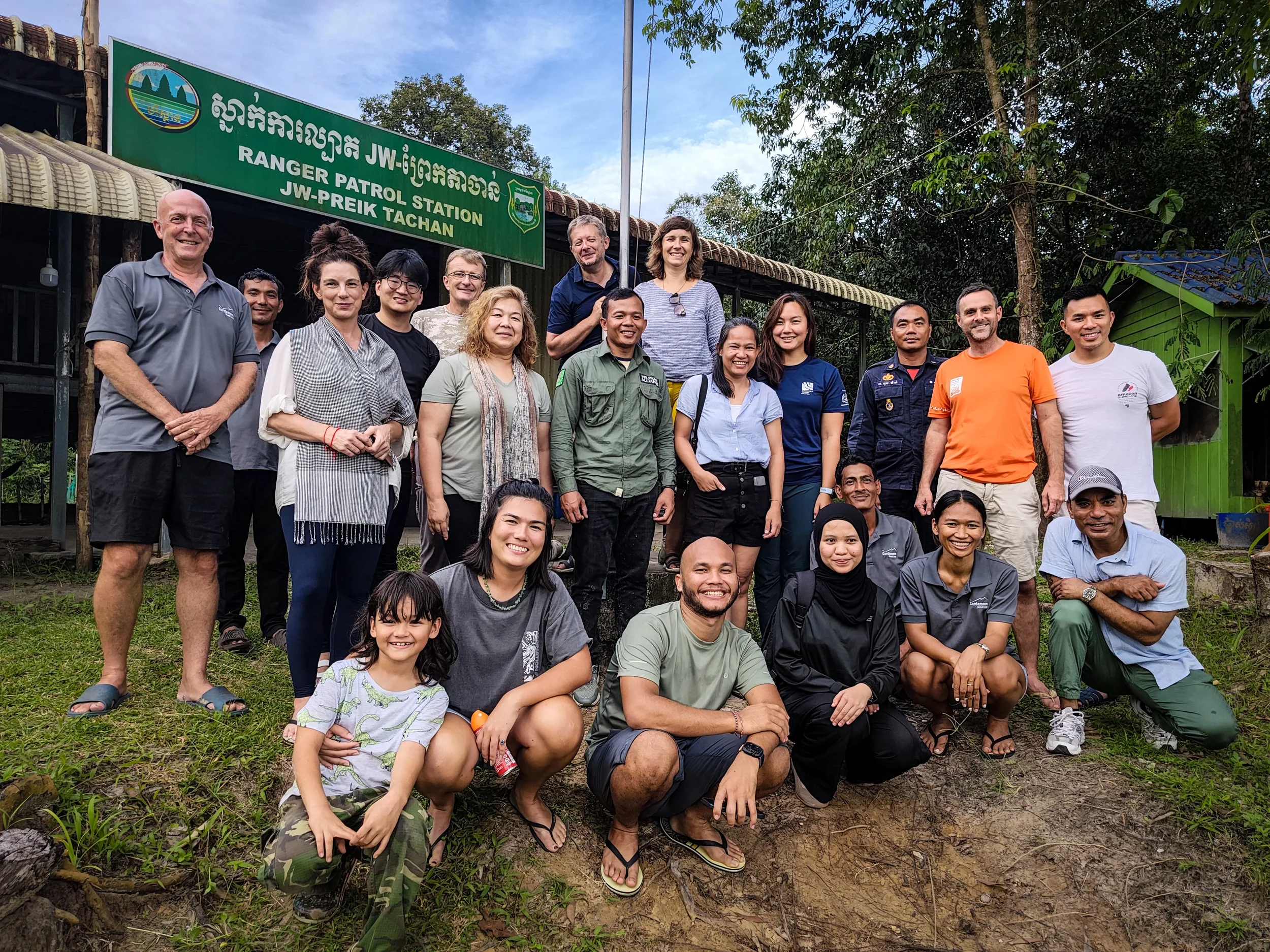
The group huddle at the ranger patrol station.
The station held chainsaws, snares and other equipment confiscated from poachers over the years. One ranger showed the group how a snare is actually set, and held up a homemade firearm that, in his words, "could kill a deer with one shot."
The rangers cover 18,000 hectares, but they do not patrol all of it. They watch specific "red zones" near the likely entry points and hold position, sometimes for two or three days, until they get a result. It is slow work, but the proof of their impact is in the numbers: rangers pulled 2,215 snares from this forest in 2014, and by 2018 that had fallen to 351, a decrease of more than 80% in just four years.
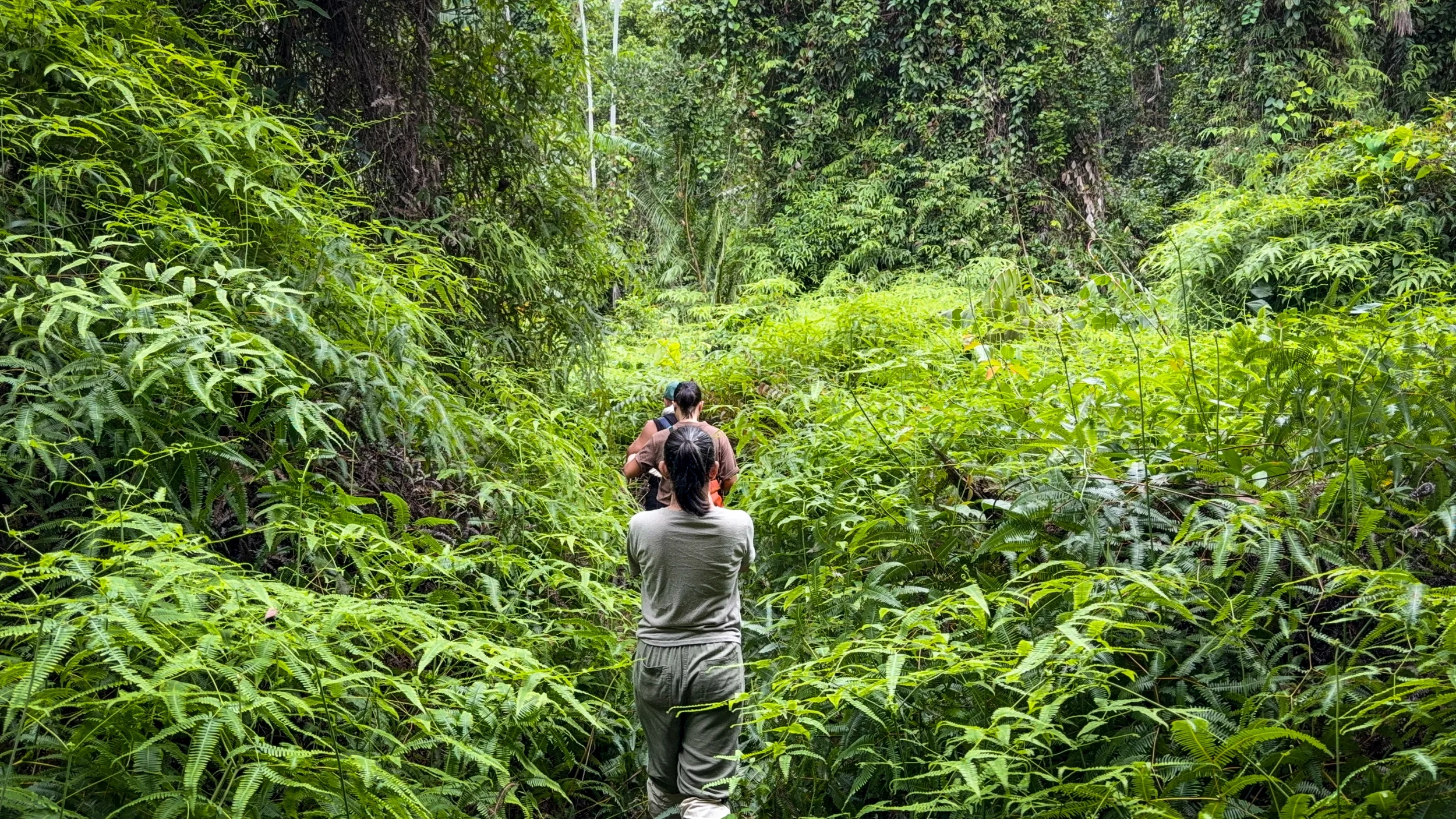
The walk itself, from the Old Ranger Station back to camp, took over an hour and turned into a masterclass in medicinal trees.
The relationship between the rangers and the surrounding villages cuts both ways. Many people report sightings to rangers urgently; others are harder to win over, and family loyalty can complicate an arrest. One ranger's proudest moment was the time villagers stepped in to help him when he was outnumbered and cornered during an arrest.
Asked what he would say if given a platform, his answer was as clear as the meeting's theme: without the forest there is no wildlife, and without wildlife he has no job, so protect the forest. When asked what communities actually need from those who want to help, he was just as direct: not one-off gifts of books or pens, but training them with marketable skills. Teaching someone to raise pigs only helps, he said, if there is somewhere to sell them.
Three honest challenges, with crowd-sourced solutions
Where you don’t have all the answers, collective minds in The Long Run community will.
Three core challenges surfaced that members across the region will recognise. None is fully solved, but each left the room with a clearer way forward.
Challenge: Funding the 3Cs
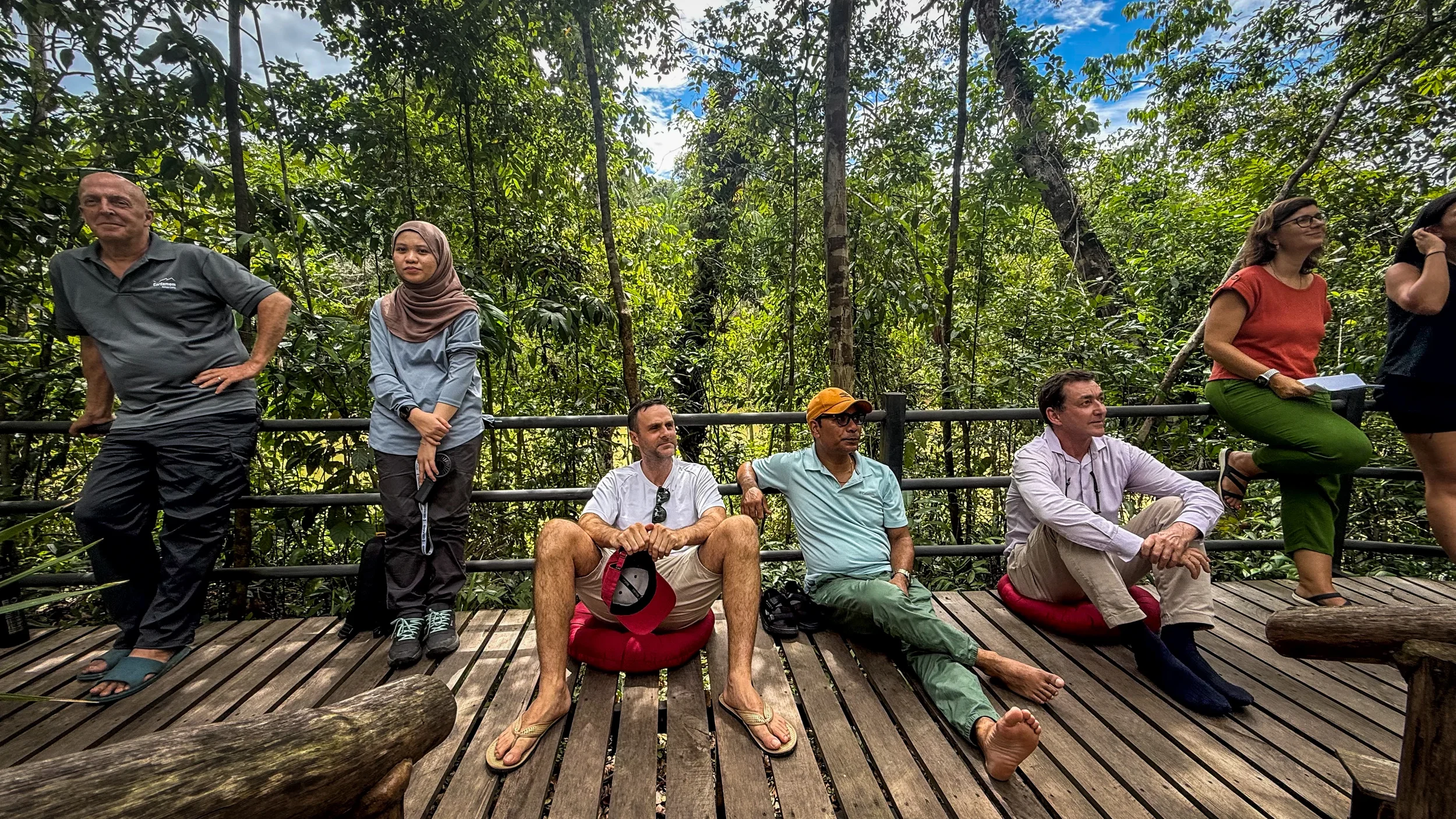
A room-wide exchange, opened by Hendry Sianipar of Cempedak and Nikoi and Sukhum Jarangdej of Khiri Travel.
Solution: Diversify your income, and connect guests to the cause
Three lessons came out of the exchange:
Conservation cannot depend on a single source of income. Hendry’s model at Cempedak Private Island is the example. Rather than depending on tourism profits alone, the Island Foundation draws on guest donations, fundraising, corporate partnerships and grants.
Guests who feel connected to the story give far more readily. Remi explains that when his team ties The Datai Langkawi’s guest levy to visible community projects rather than only environmental ones, guest buy-in jumped, and Jeremy and Justine made the same point from their own work: people feel more connected to the cause when they can empathise with the humans they’re impacting. Make sure those human stories are visible.
Make the charge simple, and ultra-clear where the money goes. Khiri Travel builds in 50c per traveller per day, capped at $10 however long the trip runs. The Datai adds a $12-per-room-per-night community and conservation charge to every bill by default, with a simple opt-out. Both work because guests can see exactly where their money lands.
Challenge: Communicating sustainability
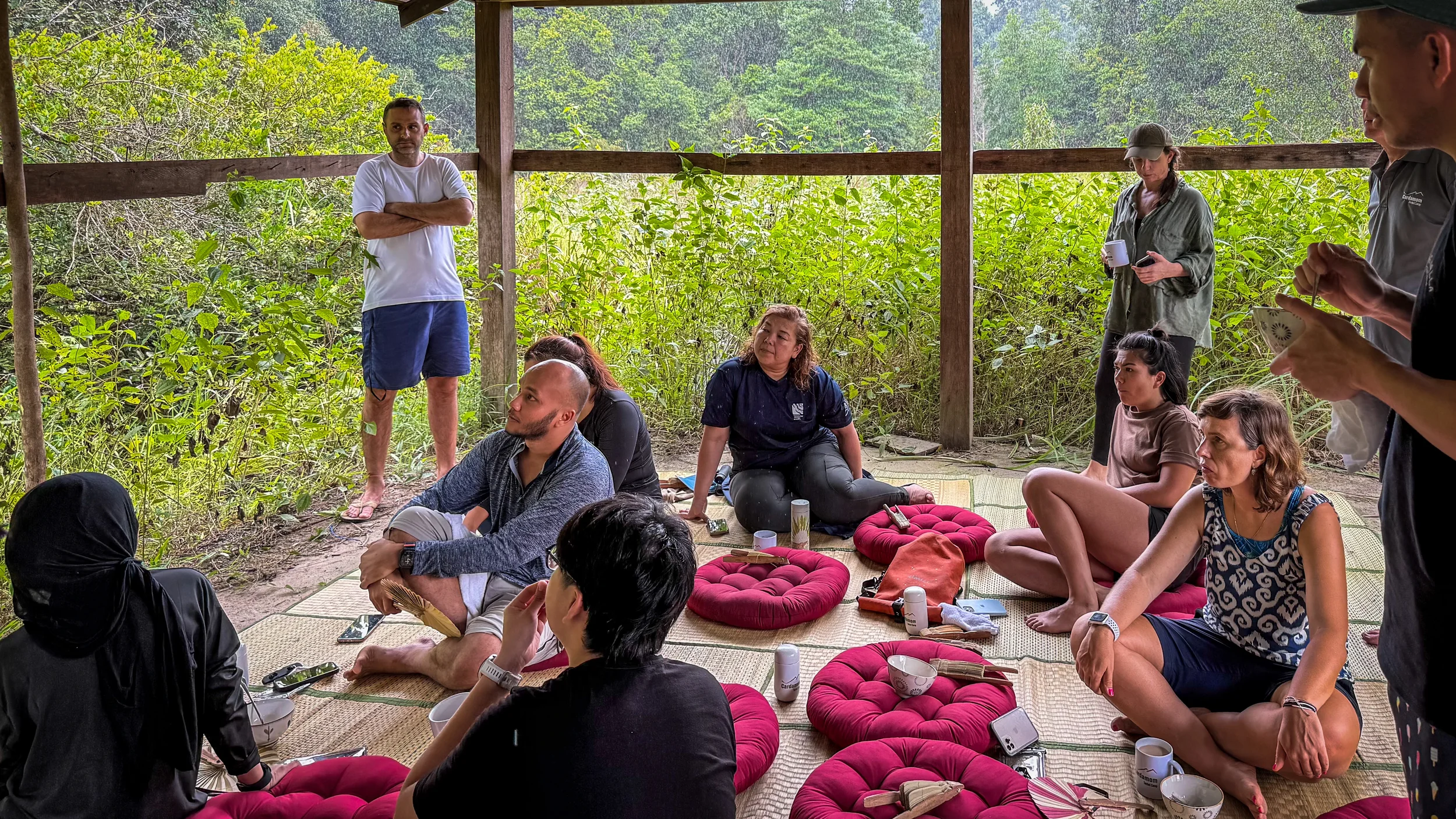
Raised by Natalie Van Ogtrop of Cardamom Tented Camp.
Solution: Tell the story more, and make the guest the hero
Natalie sought the group’s feedback on their sustainability storytelling: is Cardamom over-communicating its sustainability work, or under-communicating it? The group's answer leaned clearly towards under-communicating. What makes it harder is that the camp is built to disconnect, no Wi-Fi, poor cell reception, everything on solar, because being off the grid is the whole appeal. The thought running through the discussion was that an impact story rarely lands the first time. It has to be told again and again, in fresh and creative formats, before it truly sinks in. Their suggestions:
Lead with one vivid number that the guest is part of. Water and waste figures don't land because they are about the property, not the guest. The best marketing answers "What's in it for me?" The model the room kept pointing to comes from Jef Moons from Knai Bang Chatt: every guest who books a room there plants ten mangrove seedlings, offsetting roughly 7.7 tonnes of CO2 over twenty-five years. The guest goes home able to picture the impact they made.
Let your own people and guests carry the story, not an agency. The group questioned whether it is worth hiring social media managers who never set foot in the camp, or chasing an AI-driven approach, when being off-grid is the whole point. The proposed solution is both better and cheaper: leverage staff filming their own work and the wildlife, and guests posting once they are home.
Build the story in before guests arrive. With most stays only a night or two, the moment to involve people is at the point of booking. Folding community and conservation activities into the booking itself, the way The Datai Langkawi does, lifts participation before anyone steps off the boat.
Challenge: Commerce under pressure
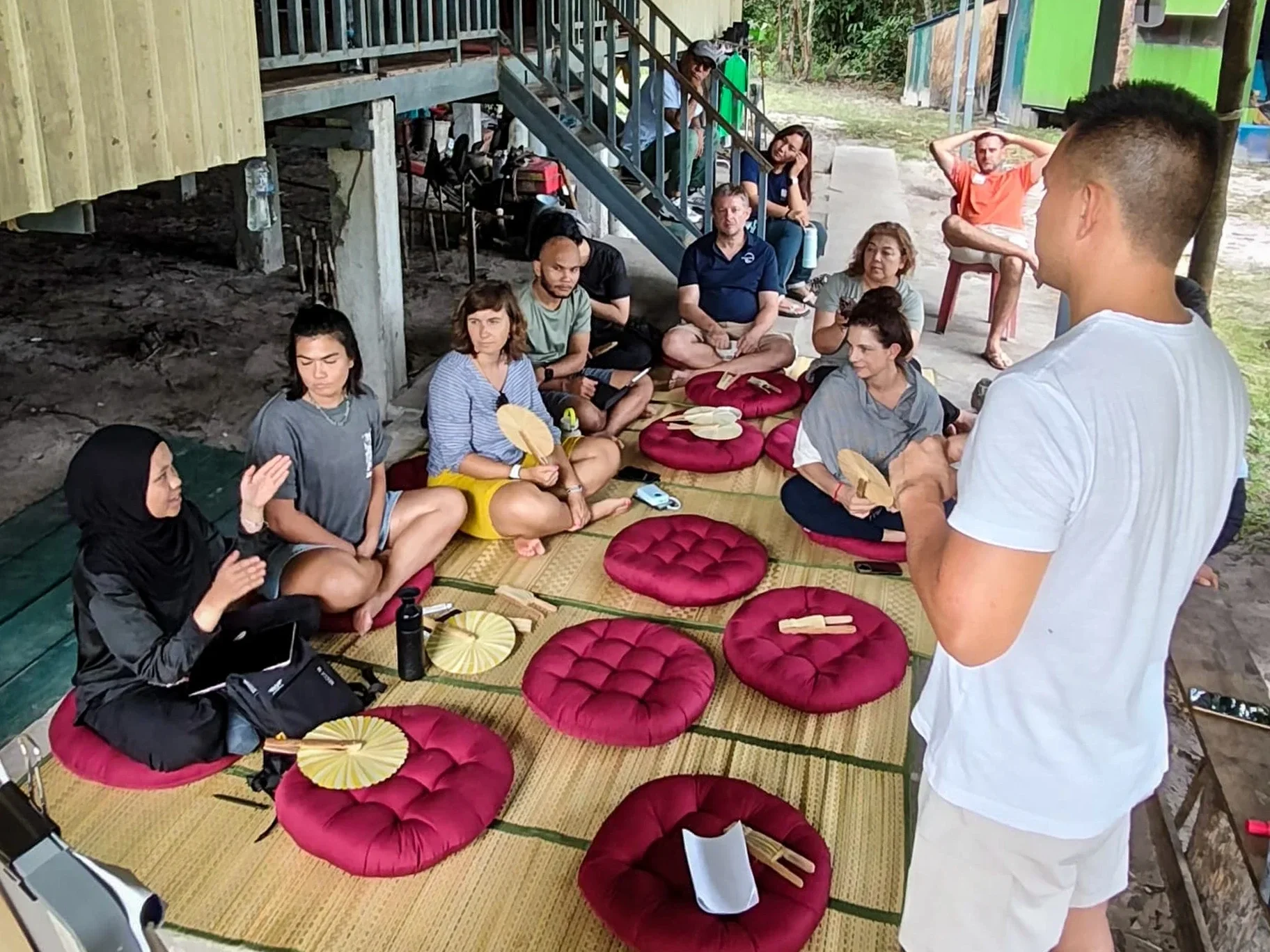
Led by Jeremy Tran of Asia Sustainable Travel
Solution: Focus on what you can actually control
Jeremy opened by asking everyone the same question: what is the one thing that keeps you up at night about your business? It has been a hard year for our APAC members, and the pressure built fast. Global instability, flights cancelled or priced out of reach, governments that nod along in the room and do nothing outside it, and a race to the bottom on price. The uncomfortable truth was that most of these sit well beyond any single business’s control. So the real question became where a sustainable tourism business can actually make a difference. The answers the room landed on:
Spend your energy where you have power. No single organisation will move an airline or a ministry. Some of our members have lobbied for years without meaningful change. Your effort is better spent on what is within reach: your own storytelling, your local relationships, and helping each other. Cardamom Tented Camp, Shinta Mani Wild and Song Saa Private Island already sell joint packages to bolster tourism in Cambodia.
The right small audience beats a big one. Cardamom Tented Camp dropped its prices and hosted influencers with a million-plus followers, and it changed nothing. Yet one unpaid visit from a small, well-matched creator brought twenty to thirty bookings. Social media is a gateway, not a booking button: a guest usually needs to see you around seven times before they act. Know your niche and seek out those micro-influencers who share your values.
Empower your team and lead wholeheartedly. Olivier, Founder of Lost Road Travel, tells new staff "now you are the boss," hands them real decisions, and is openly vulnerable about what he does not know. That is what builds the ownership that frees a leader from constant firefighting.
Dig deep and go direct. When the Middle East crisis pushed Nay Palad Hideaway toward 63 projected zero-occupancy days, direct sales calls helped cut that to just 28 within weeks.
“The diversity in the group is a big strength. If you’re all the same, you don’t learn by being challenged by others. Being challenged is how we learn and grow. ”
What members actually take home
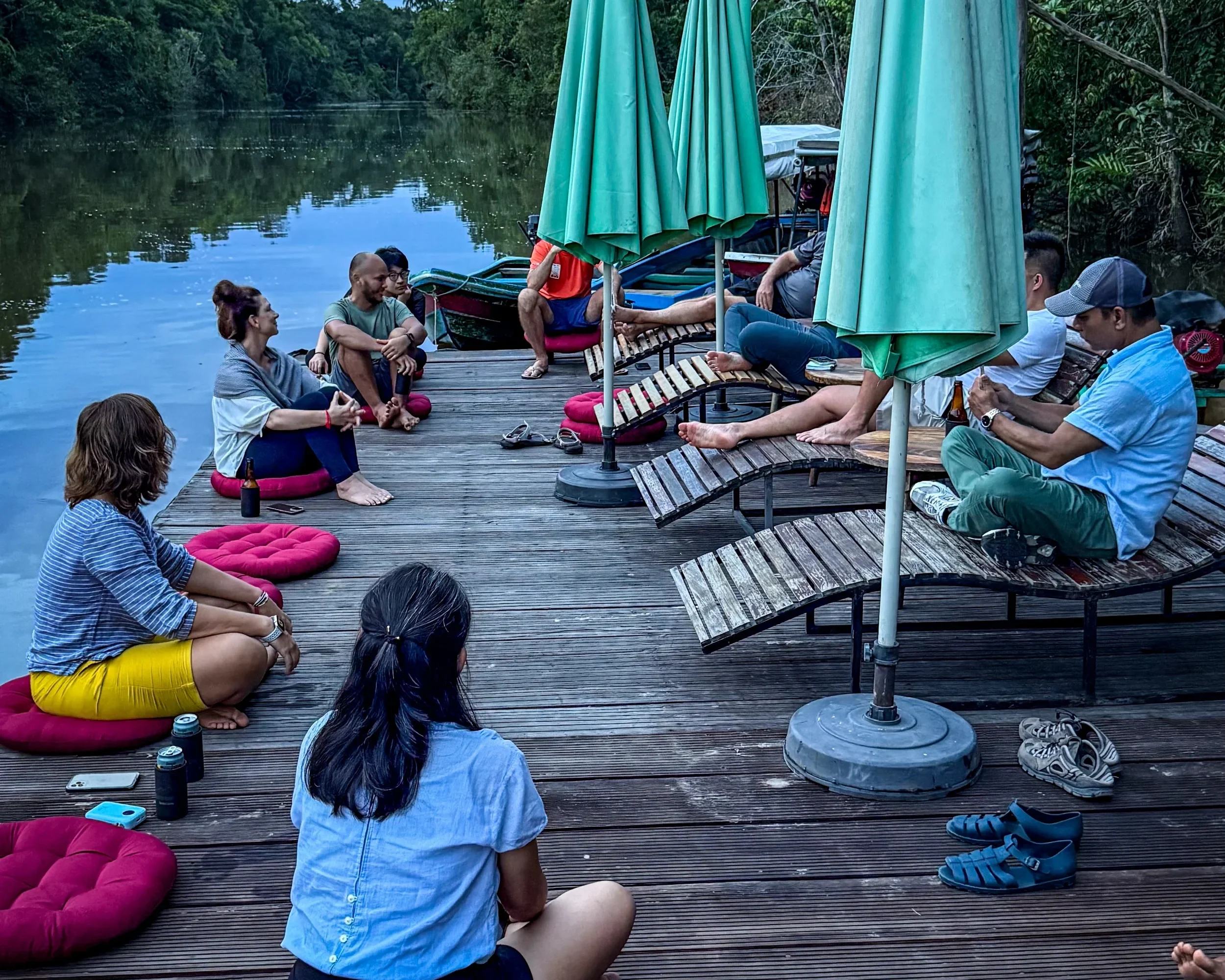
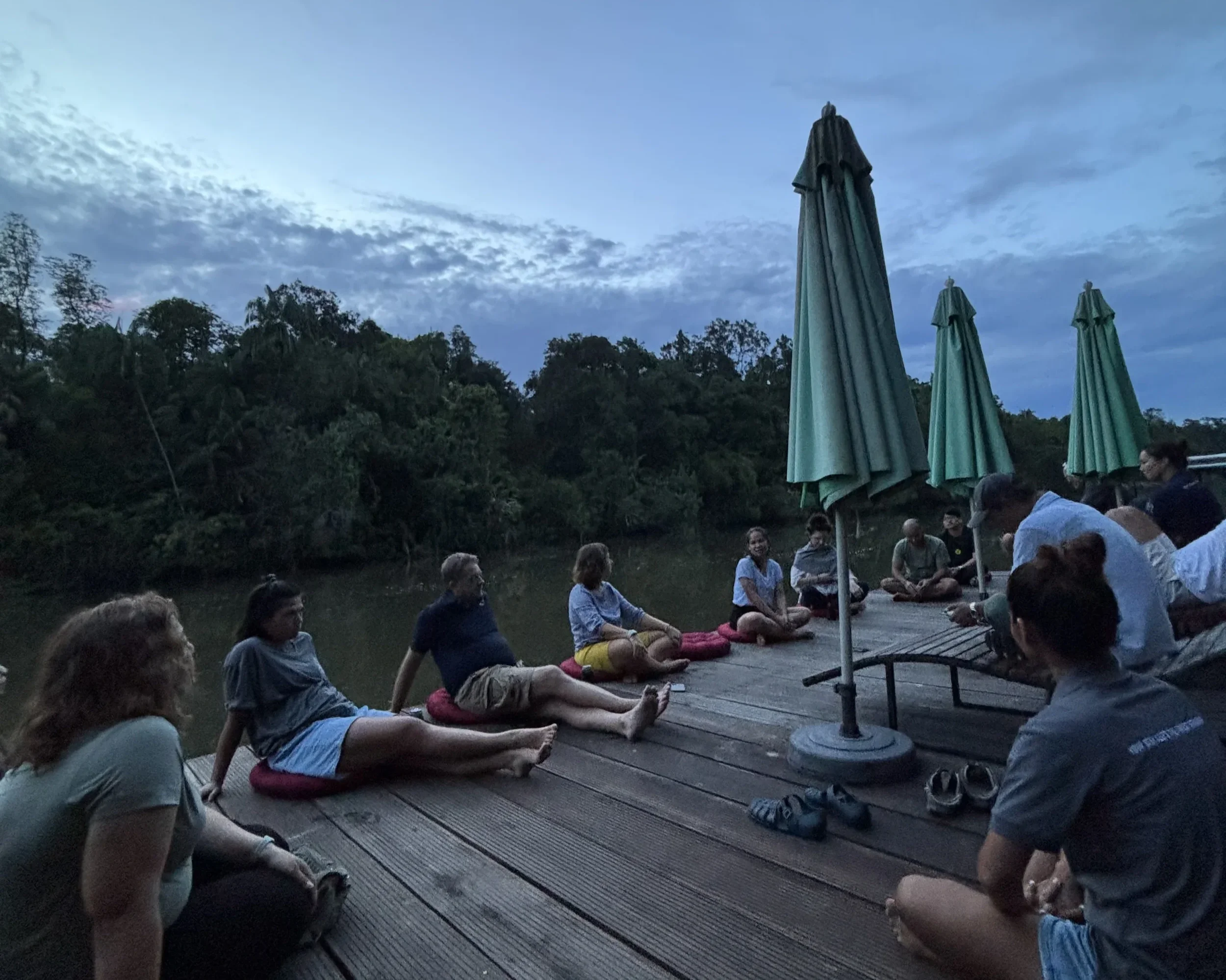
For all the practical lessons, the thing members talk about afterwards is each other. Connections deepen once you share a meal or a kayak trip after months or years of video calls. In the opening circle, where a talking stick was passed around, the conversation became very honest fast: the overarching sentiment shared by the members was the burden of never quite knowing if you are doing sustainability right, and the exhaustion of keeping a small operation in step with much bigger ones. By the end of the meeting, they all left knowing they’re not alone on this journey, with friendships forged to sustain the great work they’re all doing.
“This group is a big support team. I’m not very adventurous, and there were a lot of firsts for me. My first night safari, my first time kayaking. You all encouraged me to take that first step. It’s my first conference with such a diverse group, so it’s been a wake-up call, bringing me out of my shell both personally and professionally.”
As Olivier Marchesin of Lost Road Travel wrote afterwards, "These meetings go far beyond professional exchange. They are raw, open, and deeply human." The thread running through the three days was that none of us has it all figured out, and that real community means sharing your problems rather than hiding them. There were firsts too, a first kayak for some, a first night safari for others, and more than one member left realising that sustainability touches more of their work than they had assumed.
Hendry, who ran a hands-on soil session for the group, caught it best: "I came to Cambodia expecting to learn from others. I left remembering a part of myself that I had almost forgotten."
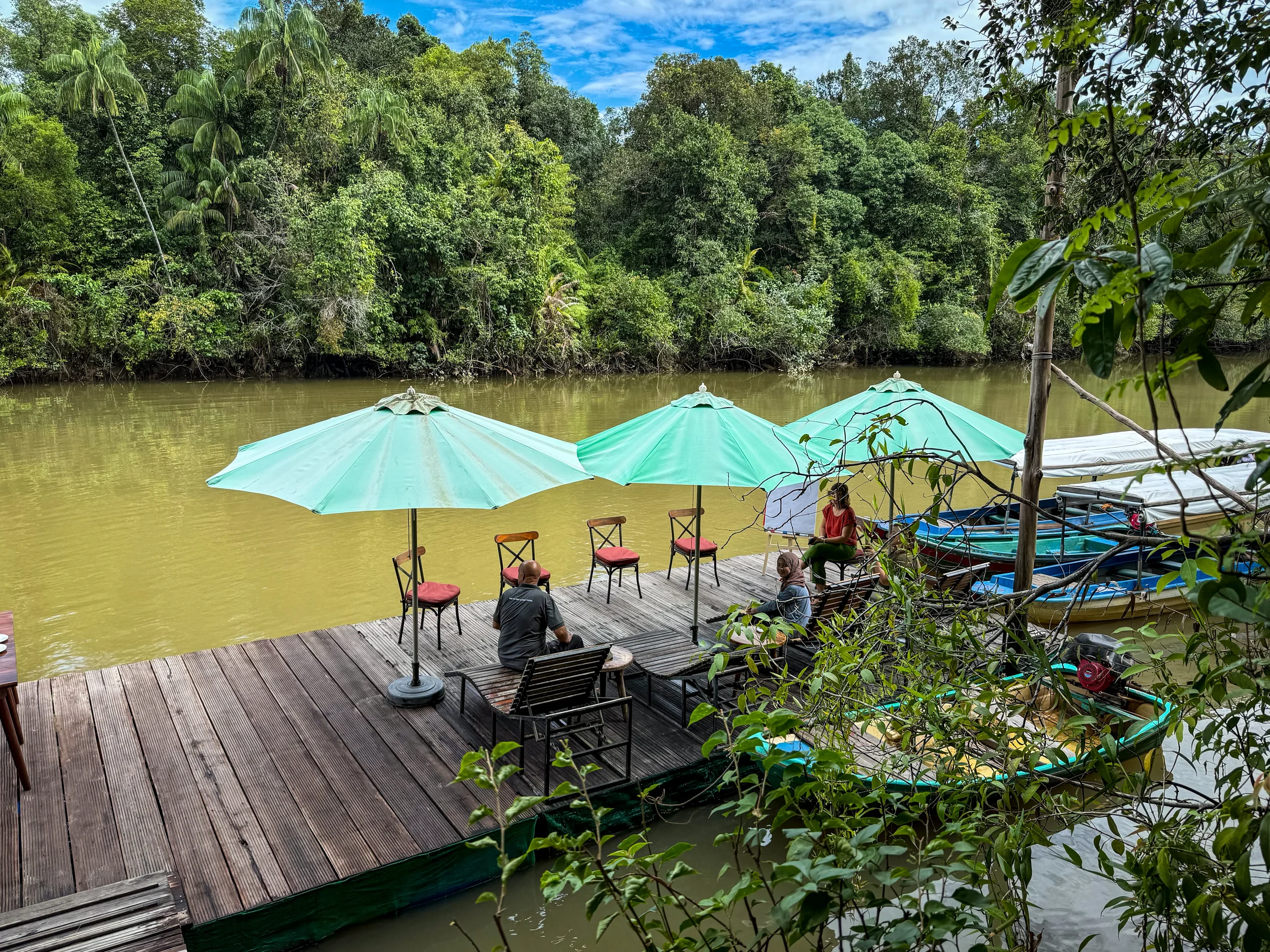
The meeting closed the way it began, at the jetty, drinks in hand and feet in the river, the last light going down over camp. Our heartfelt thanks to Allan and the whole Cardamom Tented Camp team for their warm hospitality, for sharing the work and the lessons behind the scenes.
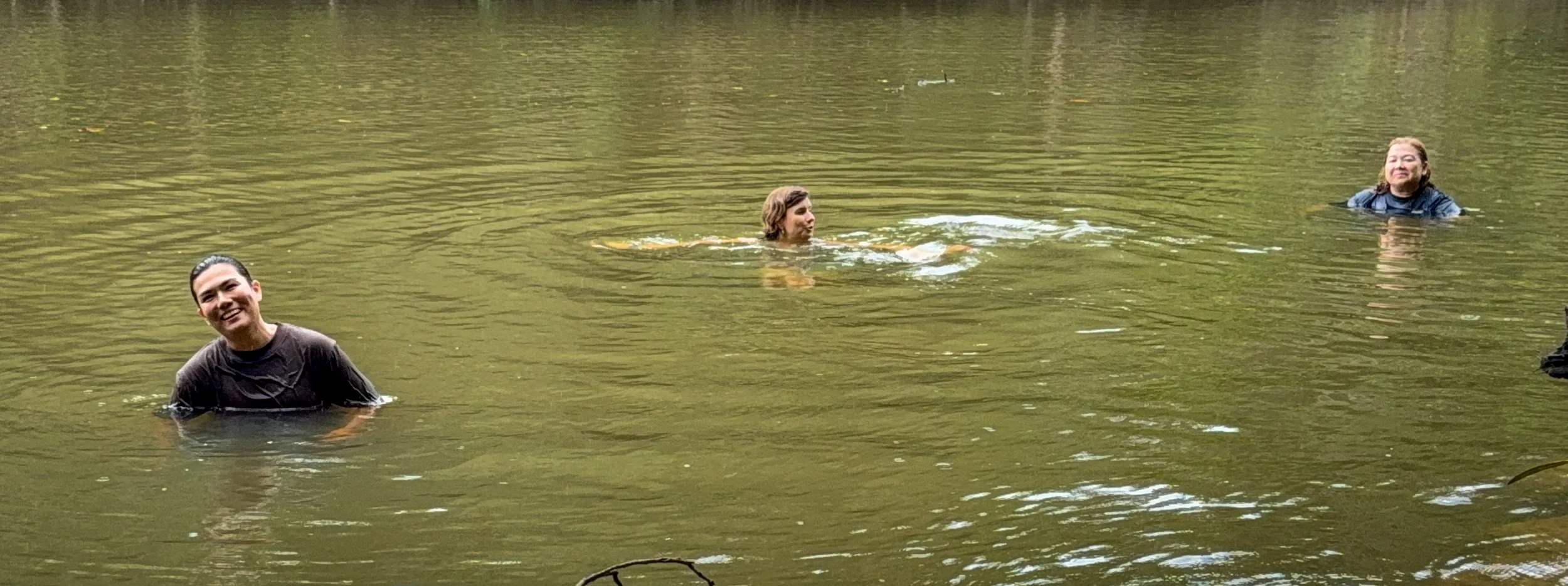
Members cooling off after a long day in the pristine Prek Tachan River.